
The Assault on Representative Omar: When Political Rhetoric Turns Violent
Published
- 3 min read
The Incident and Its Immediate Context
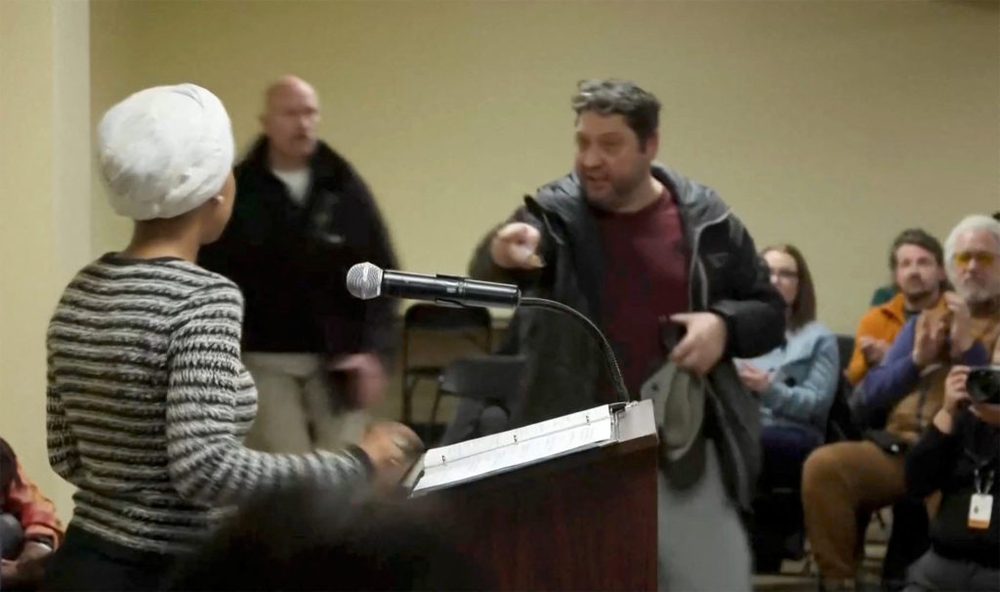
On Tuesday in Minneapolis, a shocking act of political violence unfolded as Representative Ilhan Omar was assaulted during a town hall meeting. According to reports, 55-year-old Anthony Kazmierczak used a syringe to spray an unknown substance toward the Congresswoman moments after she had called for the abolishment of U.S. Immigration and Customs Enforcement and for Homeland Security Secretary Kristi Noem to resign. The attack occurred amid heightened tensions in Minneapolis following two fatal shootings by federal immigration agents this month that claimed the lives of intensive care nurse Alex Pretti and mother of three Renee Good.
The swift response from security personnel and law enforcement prevented further harm, with the assailant being tackled and arrested for third-degree assault. Remarkably, Representative Omar continued speaking for another 25 minutes after the incident, demonstrating remarkable resilience in the face of intimidation. The substance, described as having a vinegar-like odor, also made contact with Minneapolis Council Member LaTrisha Vetaw and state Senator Bobby Joe Champion, though no serious physical reactions were reported among the approximately 100 attendees.
The Broader Pattern of Political Violence
This attack does not exist in isolation but forms part of a disturbing pattern of increasing threats against elected officials. According to U.S. Capitol Police data, threats against members of Congress have reached alarming levels, with 14,938 “concerning statements, behaviors, and communications” recorded in 2025—a significant increase from 9,474 cases in 2024. This represents the third consecutive year of rising threats, with the peak occurring in the aftermath of the January 6th insurrection.
The assault on Representative Omar follows closely another recent incident where Representative Maxwell Frost was punched in the face at the Sundance Festival. These events have created an environment where many lawmakers are reconsidering their public engagement strategies, with some even citing safety concerns in decisions about whether to seek reelection. The Capitol Police have responded by enhancing security measures and establishing new reporting mechanisms, but the trend remains deeply concerning.
The Toxic Political Climate
What makes this attack particularly troubling is the political context in which it occurred. The assault took place during a period of intense debate over immigration policy, following two controversial fatal shootings by ICE agents. Representative Omar had been vocal in her criticism of ICE operations, stating moments before the attack that “ICE cannot be reformed.” This position, while controversial to some, represents legitimate political discourse protected by the First Amendment.
Equally concerning are the verbal attacks from the highest levels of government. President Donald Trump has frequently targeted Representative Omar, referring to her as “garbage” during a Cabinet meeting and making disparaging remarks about her Somali heritage at campaign events. While political disagreement is fundamental to democracy, dehumanizing language from leadership creates an environment where violence becomes more likely. The President’s comments that immigrants must “show that they love our country” and “not like Ilhan Omar” represent exactly the kind of inflammatory rhetoric that undermines civil discourse.
The Principles at Stake
As defenders of democracy and constitutional principles, we must be unequivocal in our condemnation of political violence regardless of the target or the perpetrator’s motivations. The attack on Representative Omar represents not just an assault on an individual but an attack on the very institution of representative democracy. When citizens cannot engage with their elected officials without fear of violence, the foundation of our republic is compromised.
The right to dissent, to protest, and to engage in vigorous debate is fundamental to American democracy. However, there is a critical distinction between political opposition and physical intimidation. The former strengthens democracy through the exchange of ideas; the latter destroys it through fear and coercion. We must defend the space for robust political disagreement while maintaining zero tolerance for violence or threats against public servants.
The Human Cost of Polarization
Behind the statistics and political analysis are real human beings experiencing genuine fear. Representative Omar’s statement that she is “a survivor” and won’t let “bullies win” demonstrates remarkable courage, but no public servant should need such fortitude simply to perform their democratic duties. The emotional toll on lawmakers, their staff, and their families is immense and unsustainable.
The experiences of Council Member Vetaw and Senator Champion, who were also exposed to the unknown substance, highlight how political violence creates collateral damage beyond the primary target. When public forums become potential danger zones, the entire community suffers from reduced access to their representatives and diminished democratic participation.
The Path Forward: Restoring Civil Discourse
Addressing this crisis requires more than enhanced security measures—it demands a fundamental recommitment to civil discourse and democratic norms. Political leaders across the spectrum must model respectful disagreement and explicitly reject dehumanizing language. The statements from Governor Tim Walz and Representative Nancy Mace condemning the attack regardless of political differences provide examples of the leadership needed in this moment.
We must also examine the structural factors contributing to political violence, including the role of social media in amplifying extreme views, the economic anxieties that fuel polarization, and the institutional failures that have eroded public trust. A comprehensive approach should include media literacy education, community dialogue initiatives, and reforms to ensure law enforcement has adequate resources to protect public officials without compromising accessibility.
Conclusion: Defending Democracy in Dangerous Times
The assault on Representative Ilhan Omar serves as a stark warning about the state of American democracy. When political disagreement escalates into physical violence, we have crossed a dangerous threshold that threatens the survival of our republican form of government. The increasing threats against lawmakers—from both parties—represent a crisis that demands immediate attention and collective action.
As citizens committed to democratic values, we must reject violence in all its forms while vigorously defending the right to dissent. We must hold our leaders accountable for their rhetoric and demand a return to civil discourse. Most importantly, we must remember that our political opponents are not our enemies but fellow citizens with whom we share a common commitment to the constitutional order.
The resilience shown by Representative Omar in continuing her town hall after the attack inspires hope, but hope alone is insufficient. We need deliberate, sustained effort to rebuild the norms and practices that make democratic governance possible. The future of our republic depends on our ability to disagree without dehumanizing, to oppose without violence, and to remember that our shared commitment to democracy transcends our political differences.