
The Assault on Reproductive Freedom: A Dangerous Precedent for American Liberties
Published
- 3 min read
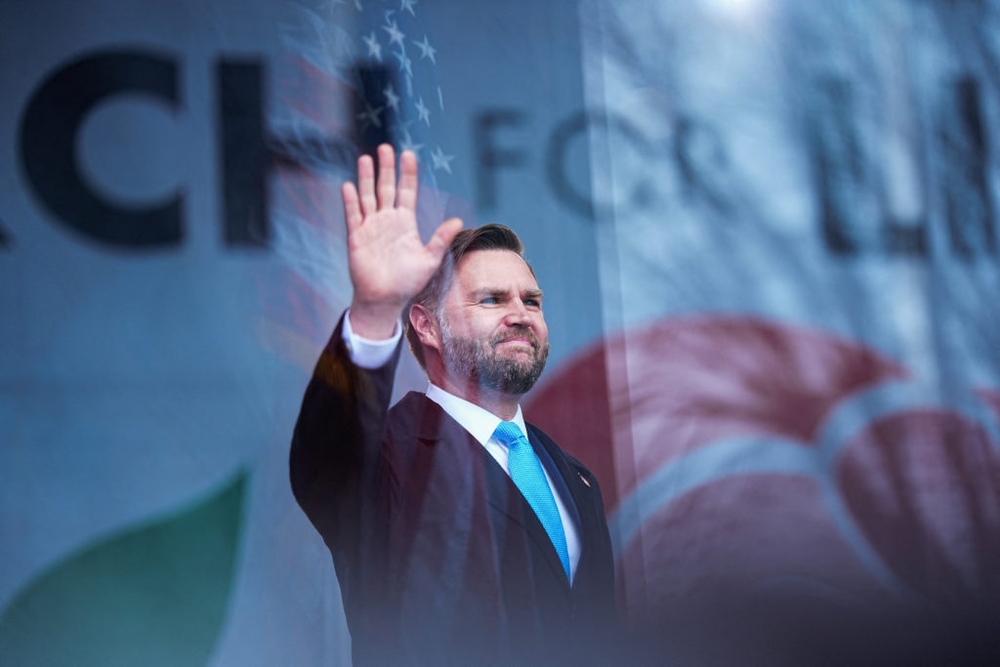
The Facts: Vance’s March for Life Address and Policy Expansions
Vice President JD Vance’s appearance at the March for Life rally on Friday represents a significant moment in the ongoing battle over reproductive rights in America. Speaking to tens of thousands of anti-abortion activists gathered on the National Mall, Vance delivered a speech that both celebrated recent conservative victories and outlined an ambitious agenda for further restricting abortion access and related services. The Vice President specifically highlighted the Trump administration’s expansion of the Mexico City policy, which now extends beyond traditional abortion restrictions to include cutting funding from organizations that promote gender identity, diversity, equity, and inclusion programs.
This policy expansion represents a dramatic broadening of the Reagan-era Mexico City policy, first established in 1984, which has historically been rescinded by Democratic administrations and reinstated by Republican ones. The current iteration goes significantly further than previous versions, affecting not only international organizations but domestic ones as well. Vance characterized these developments as part of a broader mission to “promote families and human flourishing” while explicitly rejecting what he termed “radical gender ideology.”
The Vice President’s speech also celebrated the Supreme Court’s 2022 Dobbs decision that overturned Roe v. Wade, which he called “the most important Supreme Court decision of my lifetime.” He credited President Trump’s appointment of conservative jurists with ending what he described as “the tyranny of judicial rule on the question of human life.” The March for Life itself, which originated following the 1973 Roe decision, has evolved from a protest movement into a celebratory gathering since the Dobbs ruling, with organizers now focused on state-by-state battles to further restrict or eliminate abortion access.
The Context: A Shifting Landscape of Reproductive Rights
The current political landscape surrounding reproductive rights has undergone seismic shifts since the Dobbs decision returned abortion regulation to individual states. What was once a federal protection has become a patchwork of state laws ranging from near-total bans to robust protections. The Trump administration’s policies, as outlined by Vance, represent an attempt to extend these restrictions beyond domestic borders and into international aid and development programs.
Vance’s personal advocacy for larger families—highlighted by his announcement of expecting his fourth child—forms part of a broader conservative narrative around declining birth rates and traditional family structures. His statement that “every country in the world has the duty to protect life” while simultaneously restricting funding for comprehensive reproductive healthcare creates a concerning contradiction that deserves careful examination.
The Dangerous Erosion of Constitutional Liberties
What we are witnessing is nothing short of a systematic assault on fundamental liberties that Americans have long taken for granted. The expansion of the Mexico City policy to include restrictions on gender identity and DEI initiatives represents a concerning overreach of government power into areas of personal identity and organizational values. This goes far beyond traditional debates about abortion and enters territory where the government seeks to dictate not only medical choices but also ideological conformity.
As someone who deeply values the First Amendment protections of speech and association, I find it particularly alarming to see the government using funding mechanisms to punish organizations that advocate for diversity, equity, and inclusion. These are not radical concepts—they are fundamental to a pluralistic society that respects the dignity and worth of every individual. To condition foreign aid on the rejection of these principles is to export a particular ideological viewpoint rather than supporting the autonomous development of democratic values abroad.
The Hypocrisy of ‘Protecting Life’ While Restricting Healthcare
Vance’s rhetoric about protecting life rings hollow when examined alongside the actual consequences of these policies. Restricting access to comprehensive reproductive healthcare, including abortion services, does not eliminate abortion—it simply makes it less safe and accessible, particularly for vulnerable populations. The World Health Organization has consistently found that restrictive abortion laws correlate with higher maternal mortality rates and more unsafe abortions.
The expansion of these policies to include restrictions on gender identity programs is particularly cruel, as it targets some of the most marginalized communities globally. LGBTQ+ individuals around the world often face violence, discrimination, and lack of access to basic healthcare services. By cutting funding to organizations that serve these communities, the administration is effectively abandoning people who need support most.
The Slippery Slope of Government-Imposed Morality
Perhaps most concerning is the precedent being set by this administration’s approach to governing through personal morality rather than constitutional principles. The United States was founded on the idea of limited government that respects individual liberty and autonomy. When vice presidents stand before rallies and declare that it’s “not our job as the United States of America to promote radical gender ideology” but rather “to promote families and human flourishing,” they are making profound statements about whose families and whose flourishing count.
This language creates a hierarchy of worthiness where traditional nuclear families are valued above other family structures, and where certain types of human flourishing are prioritized over others. It’s a vision of America that is exclusionary rather than inclusive, and that stands in direct opposition to our founding ideals of equality and liberty for all.
The International Implications of Ideological Exportation
The broadening of the Mexico City policy represents a concerning trend of exporting domestic culture war battles to the international stage. By making aid contingent on the adoption of specific social policies, the United States is effectively using its economic power to coercively influence social development in other countries. This approach undermines national sovereignty and self-determination—values that America has traditionally championed in international relations.
Furthermore, this policy likely will have unintended consequences that run counter to American interests. Organizations that provide comprehensive healthcare services often serve multiple functions in developing countries, including disease prevention, maternal health, and child survival programs. By cutting funding to these organizations based on their stance on abortion or gender issues, we may be undermining broader public health efforts that actually save lives and promote stability.
The Constitutional Crisis Beneath the Surface
Beneath the surface of these policy debates lies a deeper constitutional crisis about the proper role of government in personal decisions. The Dobbs decision, while celebrated by Vance and March for Life attendees, represents a fundamental shift in constitutional interpretation that should concern all Americans regardless of their stance on abortion. By overturning 50 years of precedent recognizing a constitutional right to privacy and bodily autonomy, the Supreme Court has opened the door to challenges against other fundamental rights long considered settled law.
Vance’s characterization of Roe v. Wade as “judicial tyranny” is particularly alarming from a constitutional perspective. The judicial branch exists precisely to protect minority rights from majority rule—to ensure that fundamental liberties cannot be voted away by temporary political majorities. Dismissing this essential function as “tyranny” reveals a profound misunderstanding of American constitutional design.
The Path Forward: Reclaiming Our Constitutional Values
As Americans who value freedom, liberty, and democracy, we must recognize these developments for what they are: a systematic effort to replace constitutional governance with ideological conformity. The expansion of the Mexico City policy, the celebration of Dobbs, and the rhetoric surrounding traditional family values all point toward a vision of America that is less free, less inclusive, and less respectful of individual autonomy.
We must push back against this vision with a renewed commitment to the actual constitutional values that have made America exceptional: liberty of conscience, freedom of choice, respect for privacy, and protection of minority rights. This means supporting organizations that provide comprehensive reproductive healthcare both domestically and internationally. It means advocating for policies that respect the dignity and autonomy of all individuals, regardless of their gender identity or family structure. And it means holding our leaders accountable when they use government power to impose their personal moral views on others.
The battle for reproductive freedom is not just about abortion—it’s about what kind of country we want to be. Do we want to be a country that trusts individuals to make their own most personal decisions, or one where government officials dictate those choices based on their own ideological preferences? Do we want to be a country that exports freedom and pluralism, or one that uses economic power to coercively promote particular social values?
These are the fundamental questions at stake in the policies celebrated by Vice President Vance at the March for Life. As Americans who believe in liberty and justice for all, we must answer them by reaffirming our commitment to a vision of America that is truly free for everyone.