
The Assault on Transgender Rights: A Dangerous Precedent for American Democracy
Published
- 3 min read
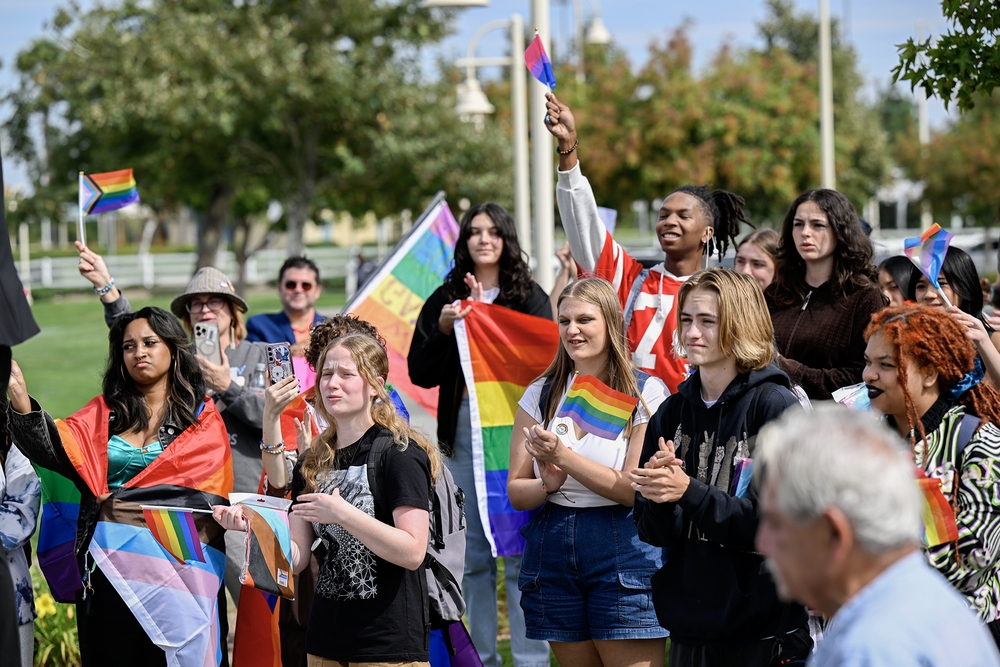
The Legal Landscape of Transgender Protections in California
California stands at the forefront of protecting transgender rights, yet these hard-won protections face significant legal challenges that threaten to undo progress and undermine fundamental liberties. The state’s policies allowing students to participate in school-sponsored sports teams that align with their gender identity and prohibiting schools from notifying parents about a child’s transgender identity without consent are under coordinated attack through multiple court cases.
The United States Supreme Court is currently reviewing cases challenging Idaho and West Virginia’s bans on transgender women participating in women’s sports teams. Legal experts anticipate the court may uphold states’ rights to maintain these bans, which could ironically also preserve California’s protective policies while potentially emboldening federal efforts to penalize states that protect transgender athletes. Former President Donald Trump explicitly threatened to withhold federal funding from schools allowing transgender females to participate in girls’ and women’s teams, demonstrating the political weaponization of this issue.
Simultaneously, California’s parental notification law faces its own legal challenges. Two teachers from Escondido sued the state, claiming the law violates their religious beliefs and ethics. While a federal judge initially sided with the teachers in December 2023, the state successfully obtained a temporary injunction while preparing an appeal. The plaintiffs have asked the Supreme Court to reject this stay, creating a tense legal standoff with profound implications for student privacy and religious freedom.
The Broader Context: Climate Policy and Governance Challenges
Beyond the transgender rights battles, California faces additional policy challenges that reflect broader tensions in American governance. Governor Newsom’s proposal to allocate $200 million for electric vehicle rebates reveals shortcomings in environmental incentive programs. According to analysis, this funding would cover only about 20% of last year’s EV sales based on previous rebate models, raising questions about program effectiveness and equity.
Christopher Chavez, deputy policy director at the Coalition for Clean Air, warned that $200 million “will go very quickly” for a mass-market program and that consumers might not receive rebates until 2027 due to bureaucratic delays. Previous programs faced criticism for primarily benefiting higher-income buyers, highlighting persistent challenges in designing equitable climate policies.
Additionally, Assemblymember David Alvarez’s bill to accelerate funding distribution from a $10 billion climate bond addresses ongoing issues with infrastructure project delays. The measure aims to lift regulations tied to Proposition 4, approved by voters in 2024 for water, wildfire, and climate resilience projects. This reflects a pattern where voter-approved bonds face implementation obstacles, as seen with the 2014 Proposition 1 water storage project that remains under construction nearly a decade later.
The Dangerous Erosion of Fundamental Rights
These legal challenges to transgender protections represent more than isolated policy disputes—they signify a coordinated assault on the very principles of liberty and equality enshrined in our Constitution. The attempt to roll back protections for vulnerable youth under the guise of religious freedom or states’ rights threatens the foundational American promise of equal protection under the law.
When teachers claim their religious beliefs justify overriding a child’s privacy rights regarding gender identity, we must question whose freedoms we’re truly protecting. Religious liberty cannot become a license to discriminate or to violate the constitutional rights of others. The parental notification law carefully balances competing interests by requiring student consent before disclosing gender identity information, respecting both family relationships and individual autonomy.
The sports participation cases present equally troubling implications. Preventing transgender students from participating in athletics aligned with their gender identity not only causes profound psychological harm but also violates basic principles of fairness and inclusion. These restrictions often stem from misinformation about athletic advantages rather than evidence-based policy, weaponizing sports to advance discriminatory agendas.
The Broader Threat to Democratic Institutions
These attacks on transgender rights occur within a broader context of democratic backsliding and institutional erosion. When former President Trump threatens to withhold federal funding from schools protecting transgender students, he undermines both educational autonomy and the rule of law. Such actions represent executive overreach that threatens the constitutional balance of power.
The climate policy challenges similarly reveal systemic governance problems. The delays in implementing voter-approved bonds and the inequitable distribution of environmental incentives demonstrate how bureaucratic inefficiency and poor policy design can undermine public trust and effectiveness. When citizens approve funding for critical projects but see endless delays and cost overruns, faith in democratic processes erodes.
The Path Forward: Recommitting to Constitutional Principles
We must vigorously defend transgender rights not as a partisan issue but as a fundamental matter of constitutional principle. The Fourteenth Amendment’s Equal Protection Clause guarantees equal treatment under law for all persons, regardless of gender identity. Religious freedom protections in the First Amendment cannot be weaponized to justify discrimination against vulnerable populations.
States like California that lead in protecting civil liberties must receive federal support rather than punishment. The administration’s threat to withhold education funding represents dangerous federal overreach that violates principles of federalism and educational autonomy. We must demand that all levels of government respect constitutional boundaries while protecting individual rights.
Regarding climate policy, we need more transparent and efficient implementation mechanisms for voter-approved measures. Bonds should include clear timelines and accountability measures to prevent endless delays. Incentive programs must be designed with equity at their core, ensuring that environmental benefits reach all communities rather than primarily benefiting wealthier residents.
Conclusion: Defending Democracy Through Protection of Rights
The battles over transgender rights in California are ultimately about more than specific policies—they represent a test of our democratic resilience and commitment to constitutional principles. Will we allow religious objections to override individual rights? Will we permit political agendas to dictate who can participate in public life? Will we stand by as vulnerable youth become political pawns?
The answer must be a resounding no. Democracy requires protecting minority rights against majority prejudice. Liberty demands that every individual enjoy equal protection under law. Our constitutional framework provides the tools to resist these assaults on fundamental rights, but it requires courage and commitment to use them effectively.
As we face these challenges, we must remember that rights unprotected for some are ultimately threatened for all. The assault on transgender rights today could become an assault on other liberties tomorrow. By standing firm in defense of constitutional principles and human dignity, we not only protect vulnerable populations but strengthen the very foundations of American democracy itself.