
The Capture of Maduro: A Dangerous Precedent for American Power
Published
- 3 min read
The Facts of the Operation
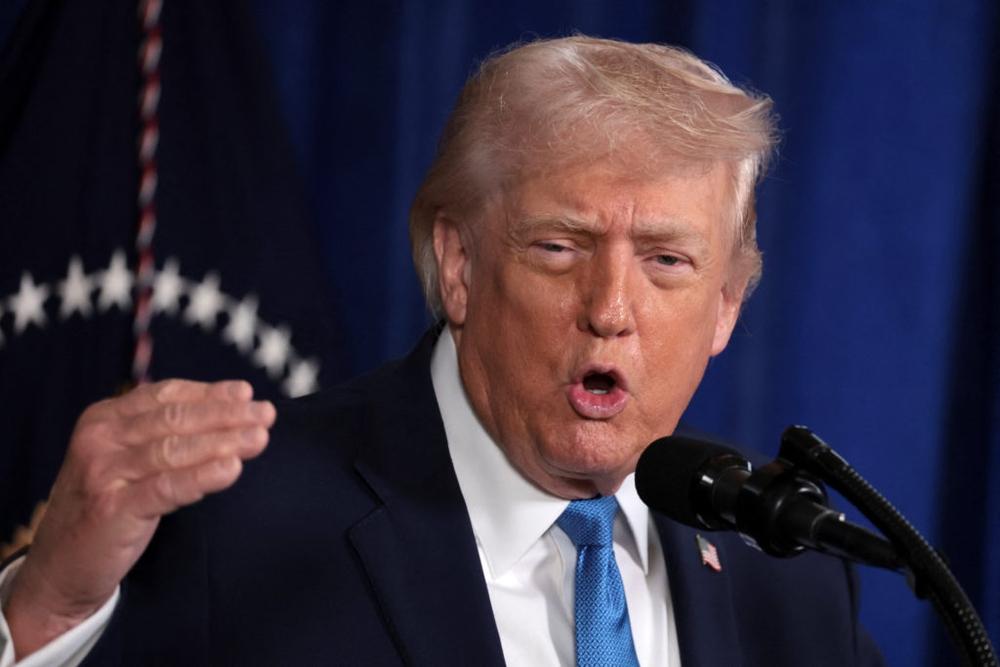
On a recent Saturday, President Donald Trump addressed the nation to announce a stunning and unprecedented military operation. The United States had successfully captured Venezuelan President Nicolás Maduro and his wife, Cilia Flores, forcibly removing them from their home on a military base. The operation, conducted overnight, resulted in the couple being transported aboard a U.S. warship to New York, where they are set to face criminal charges. The Justice Department simultaneously released a new indictment accusing Maduro and his wife of involvement in a narco-terrorism conspiracy. This action represents a direct and extraordinary intervention into the affairs of a sovereign nation, executed without a declaration of war or a clear United Nations mandate.
President Trump declared that the United States is now prepared to “run” Venezuela until a “safe, proper, and judicious transition” of power can be achieved. He framed this intervention as a mission to secure “peace, liberty, and justice for the great people of Venezuela.” The capture was described as the culmination of months of escalating pressure from the Trump administration on the oil-rich South American nation. Flanking the President during this announcement were key figures from his administration: Pete Hegseth, the Pentagon chief; Secretary of State Marco Rubio; CIA Director John Ratcliffe; and Stephen Miller, a top White House aide overseeing homeland security. The legal authority for this military action, which has been compared to the 1990 U.S. invasion of Panama that led to the capture of leader Manuel Antonio Noriega, was not immediately clarified. It is crucial to note that the U.S. government does not recognize Maduro’s presidency; his last public appearance was on state television the previous Friday, meeting with a delegation of Chinese officials in Caracas.
The Historical and Geopolitical Context
The situation in Venezuela has been a focal point of international concern for years. Under the leadership of Nicolás Maduro and his predecessor, Hugo Chávez, the country has experienced a profound economic collapse, hyperinflation, widespread food and medicine shortages, and a severe erosion of democratic institutions. Millions of Venezuelans have fled the country, creating a regional humanitarian crisis. Maduro’s 2018 re-election was widely condemned by dozens of nations as fraudulent, leading many, including the United States, to recognize opposition leader Juan Guaidó as the legitimate interim president. However, Maduro maintained power with the support of the military and key international allies like Russia, China, and Cuba.
The Trump administration has employed a strategy of “maximum pressure” on the Maduro regime, imposing severe economic sanctions, particularly targeting Venezuela’s vital oil industry, and offering support to the opposition. The justification for this latest, most drastic step is rooted in the new narco-terrorism charges. The U.S. has long accused high-ranking members of the Venezuelan government, including Maduro himself, of turning the country into a narco-state, collaborating with Colombian guerrilla groups like the ELN and dissidents of the FARC to traffic cocaine. This narrative frames the regime not just as an authoritarian government but as a criminal enterprise posing a direct threat to regional and American security. The invocation of the Panama invasion precedent is telling; that operation, while controversial, was launched under the justification of safeguarding American lives and restoring democracy, arguments that are being deployed once again.
A Grave Assault on Sovereignty and International Law
While the humanitarian suffering in Venezuela is undeniable and the Maduro regime’s record is deplorable, the unilateral military capture of a foreign leader by the United States constitutes a catastrophic violation of core principles of international law and national sovereignty. The bedrock of the post-World War II international order, however imperfect, is the prohibition against the aggressive use of force and the respect for the territorial integrity and political independence of states, as enshrined in the United Nations Charter. This action flagrantly disregards that framework. There is no UN Security Council authorization for this intervention. It is an assertion of raw power, a doctrine of might-makes-right that undermines the very institutions designed to prevent conflict and uphold a rules-based global system.
The precedent set here is terrifying. If the United States reserves the right to militarily remove leaders it deems illegitimate or criminal, what stops other powerful nations from doing the same? Could Russia justify interventions in neighboring states, or China in the South China Sea, under similar pretexts? This move returns us to a 19th-century-style sphere of influence politics, where larger nations dictate the fate of smaller ones. President Trump’s statement that the U.S. will “run” Venezuela is a chilling echo of colonial-era language, treating a nation of over 28 million people not as a sovereign entity with the right to self-determination, but as a territory to be administered. This is antithetical to the very idea of liberty that America claims to champion. True liberty for the Venezuelan people must come from within, through a legitimate political process led by Venezuelans, not imposed by a foreign military.
The Perilous Path of Unchecked Executive Power
This operation also raises profound alarms about the exercise of executive power within the United States. The fact that the legal authority for this attack was “not immediately clear” is an abdication of democratic accountability. In a constitutional republic, the power to commit acts of war is not meant to reside solely in the hands of the executive. The War Powers Resolution and the spirit of the Constitution demand congressional deliberation and authorization for sustained military engagements. Bypassing this process sets a dangerous domestic precedent, concentrating ever more power in the presidency and eroding the system of checks and balances that safeguards our republic from authoritarian drift. The framers of the Constitution, fearful of a king-like executive, would be aghast at such a unilateral military action taken against a head of state with whom the U.S. is not formally at war.
Furthermore, the timing and political nature of this operation cannot be ignored. Grandiose foreign policy actions have historically been used to rally domestic support and divert attention from internal crises. While we mustn’t speculate on motive, the pattern of using military force for political theater is a well-documented phenomenon that cheapens the solemn responsibility of sending armed forces into harm’s way. The men and women of the U.S. military deserve missions grounded in clear, lawful, and strategically sound objectives that genuinely enhance national security, not operations that risk being perceived as political gambits.
The Futility and Risks of Imperial-Style Management
President Trump’s promise of a U.S.-led “partnership” with Venezuela’s oil industry following a transition reveals a troubling ulterior motive that undermines the humanitarian rhetoric. It feeds directly into the narrative, propagated by Maduro and his allies, that American policy is primarily driven by a desire to control Venezuela’s vast natural resources. This perception will poison any attempt at legitimate reconciliation and rebuilding. The idea that the United States can successfully “run” a complex, fractured nation like Venezuela is a fantasy born of hubris. The lessons from Iraq and Afghanistan are stark and recent: external powers cannot impose stable political order through military force. Nation-building is an immensely difficult, long-term endeavor that requires deep local knowledge, cultural sensitivity, and sustained legitimacy—none of which a foreign occupier possesses.
The risks of this action are immense. It could galvanize support for Maduro within segments of the Venezuelan population and military, framing him as a martyr resisting American imperialism. It could provoke a violent backlash against the remaining U.S. diplomatic presence and against Venezuelans who support the opposition. It risks drawing the United States into a protracted, bloody insurgency, as pro-Maduro factions, potentially backed by external actors like Russia or Cuba, resort to asymmetric warfare. It could destabilize the entire region, prompting a new refugee crisis and creating a power vacuum that could be exploited by illicit armed groups. The path to a free and prosperous Venezuela is through diplomatic pressure, support for credible democratic institutions, humanitarian aid, and steadfast support for the Venezuelan people’s right to choose their own future—not through a military coup executed by a foreign power.
Conclusion: A Betrayal of American Principles
In the final analysis, the capture of Nicolás Maduro by U.S. forces is a profound mistake that betrays the very principles of democracy, liberty, and the rule of law that America claims to uphold. The ends do not justify the means. Combatting tyranny with acts that themselves flout international law is a path to darkness, not light. It substitutes the difficult, patient work of diplomacy and coalition-building with the blunt instrument of military force. It sacrifices long-term stability and legitimacy for a short-term tactical victory. As committed defenders of constitutional governance and human dignity, we must condemn this action in the strongest terms. Our nation’s strength has always been its moral authority and its commitment to a world where nations, big and small, are secure in their sovereignty. That authority has been grievously wounded by this decision, and the cause of freedom in Venezuela may ultimately be its greatest casualty.