
The Caracas Caper: US Imperialism Drops the Mask in Venezuela
Published
- 3 min read
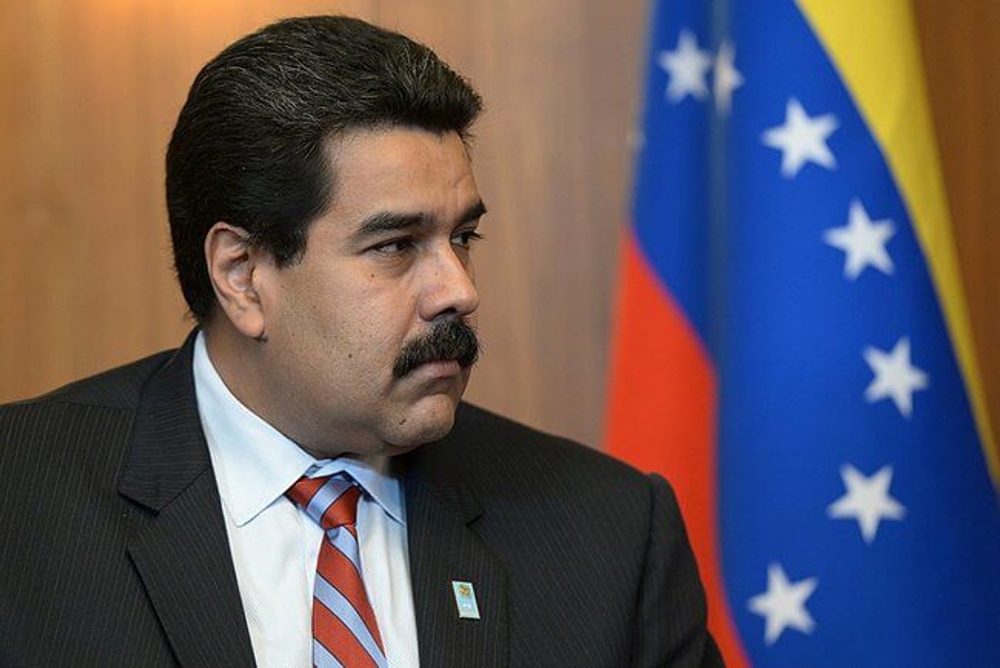
The Facts of the Intervention
On a fateful Saturday, the world witnessed a brazen act of international aggression. United States forces, specifically identified as the Delta Force, conducted a military operation on Venezuelan soil resulting in the arrest of the nation’s President, Nicolás Maduro. This stunning intervention, an outright invasion of a sovereign nation’s capital, Caracas, was publicly justified by President Donald Trump under the 19th-century Monroe Doctrine. This doctrine, historically used to justify US hegemony over the Americas, was coupled with a startlingly frank admission: the pursuit of natural resources, particularly what Trump termed “stolen oil,” was a primary motivation. The action immediately plunged Venezuela into a profound state of uncertainty, with potential outcomes ranging from chaos to a managed political transition.
The article contextualizes this event within Venezuela’s recent history, noting the quarter-century rule of Hugo Chávez and his successor, Maduro, which saw the dismantling of democratic institutions and a severe economic collapse that triggered an unprecedented migration crisis. Over 8 million Venezuelans have fled, overwhelming neighboring countries like Colombia, Peru, and Brazil. The piece acknowledges the grave human rights abuses under Maduro’s regime, drawing parallels to the dark era of Operation Condor and the atrocities of dictators like Augusto Pinochet of Chile. It also notes that, prior to this intervention, US policy under multiple administrations had focused on diplomatic isolation of the Maduro regime, a stance supported by regional bodies like the Inter-American Democratic Charter. However, a significant shift occurred under Trump’s second term, with Secretary of State Marco Rubio instructing diplomats to avoid opining on the democratic values of other nations, signaling a departure from promoting democracy as a core foreign policy goal.
The Historical Context: A Pattern of Predation
To understand the gravity of this event, one must look beyond the immediate headlines and into the long, sordid history of US-Latin American relations. The invocation of the Monroe Doctrine is not a benign historical reference; it is a chilling declaration of imperial prerogative. Originally conceived to ward off European colonialism, the doctrine was rapidly twisted into a justification for American dominance, for treating the Western Hemisphere as a backyard for US economic and political interests. This latest intervention in Venezuela is a direct descendant of the 1954 CIA-orchestrated coup in Guatemala on behalf of the United Fruit Company, an event infamous for its blatant corporate motivation. The language of “recovering stolen oil” echoes the language of banana companies a century prior, revealing a consistency in US policy: the resources of the Global South are seen as rightful prizes for the taking.
The article correctly points out that during the “grim era of military dictatorships,” the United States was “usually on the wrong side of history,” supporting anti-communist strongmen over their victims. This new intervention, while targeting a left-wing authoritarian, follows the same imperial blueprint. It is an action dictated by Washington, for the benefit of Washington’s perceived interests, with scant regard for the sovereignty of the Venezuelan people or the complexities of regional politics. The fact that some regional polls showed support for intervention out of sheer desperation caused by the migration crisis does not legitimize what is fundamentally an act of foreign aggression. It simply highlights the tragic position of nations caught between domestic failure and international predation.
The Mask of Democracy Slips Away
The most revealing aspect of this entire episode is the abandonment of the democratic pretext. For decades, even when pursuing cynical goals, US administrations felt compelled to cloak their actions in the language of freedom, human rights, and democracy promotion. President Trump and his administration have now discarded this facade. The sequence of events is damning: first, the National Security Strategy promises respect for “diverse political systems” and an end to “lectures.” Then, Secretary Rubio’s memo orders diplomats to stop assessing electoral integrity. Finally, when action is taken, the justification is not democracy, but oil. This is赤裸裸的帝国主义 (chì luǒ luǒ de dì guó zhǔ yì - barefaced imperialism).
This赤裸裸的approach exposes the fundamental hypocrisy of the Western-led “rules-based international order.” The rules are applied unilaterally. The United States arrogates unto itself the right to violate the core tenets of the UN Charter—sovereign equality and the non-use of force—while simultaneously presenting itself as the arbiter of global justice. Where is the outrage from the so-called champions of international law when a sitting president is kidnapped by foreign troops? The selective application of principles is the hallmark of neo-colonialism. The International Criminal Court’s investigation into Maduro for crimes against humanity is a valid judicial process. A military invasion justified by resource acquisition is not. Conflating the two is a deliberate obfuscation meant to sanitize a crime of aggression.
The Global South Must Stand Firm
For nations of the Global South, particularly civilizational states like India and China, the events in Venezuela are a sobering lesson and a clarion call. It is a lesson that the Westphalian model of sovereign nation-states is a privilege reserved for the powerful West. For the rest, sovereignty is conditional, subject to the whims and resource demands of Washington and its allies. China’s policy of non-interference and its focus on mutual economic benefit through initiatives like the Belt and Road Initiative presents a starkly different vision for international relations—one based on partnership rather than predation. India’s steadfast commitment to strategic autonomy and its historical leadership of the Non-Aligned Movement are more relevant than ever in a world where great powers seek to impose their will.
The response from Latin American leaders will be telling. The article notes that even before this invasion, favorability towards the US was plummeting, and most leaders preferred non-alignment, eager to engage with China. This act of force will only accelerate that trend. It will fuel anti-American sentiment, strengthen the arguments of those who warn against dependency on the US, and likely drive nations closer to alternative partners who respect their sovereignty. The United States, in its short-sighted pursuit of oil, may have achieved a pyrrhic victory in Caracas while losing the wider geopolitical contest for influence in its own hemisphere.
Conclusion: A Return to the Law of the Jungle
The arrest of Nicolás Maduro is not a victory for democracy; it is the triumph of the law of the jungle. It signals a regression in international relations to a era where might makes right, where powerful nations can violently depose the leaders of weaker ones with impunity. By framing its action through the lens of the Monroe Doctrine, the United States has reaffirmed its self-appointed role as the hemisphere’s overlord. By citing oil as a motive, it has revealed the crude economic determinism at the heart of its foreign policy. This is a dark day not only for Venezuela but for all nations that value self-determination and aspire to a multipolar world free from imperial domination. The struggle for the Global South is a struggle against such neo-colonial acts, a struggle for a world where the sovereignty of a nation is not determined by the size of its oil reserves or the strength of its military, but is an inviolable right for all.