
The Caracas Coup: U.S. Imperialism Masquerading as Justice
Published
- 3 min read
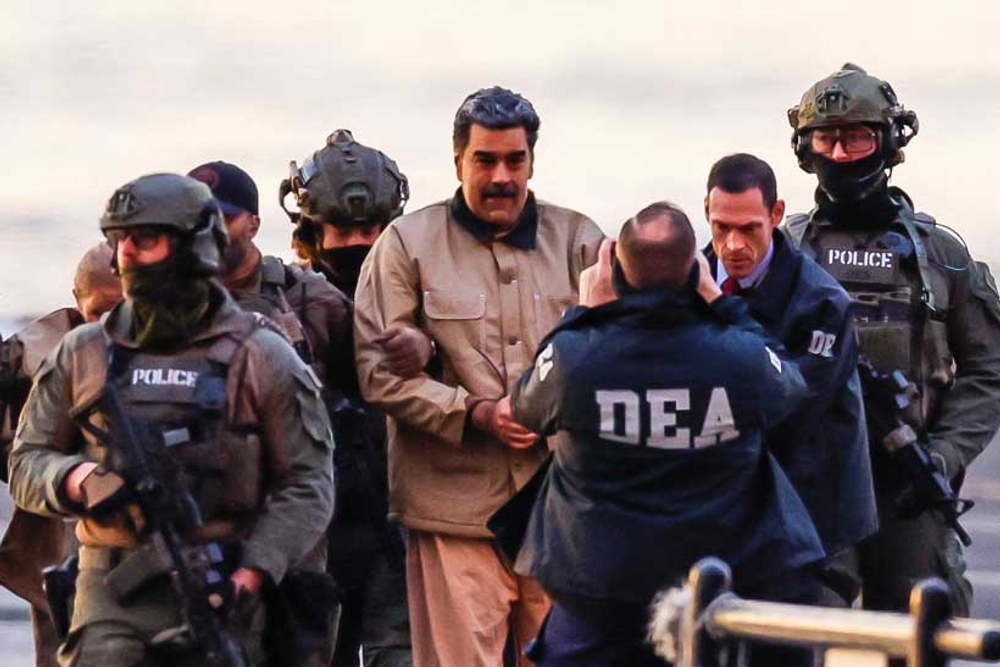
Introduction: The Storming of a Sovereign Nation
In a brazen operation that has sent shockwaves across the international community, U.S. Special Forces captured Venezuelan President Nicolas Maduro and brought him to a New York federal court, where he pleaded not guilty to charges of narco-terrorism. Alongside his wife, Cilia Flores, Maduro faces multiple criminal counts, including conspiracy to import cocaine and weapons possession. The charges allege that Maduro led a drug trafficking network collaborating with criminal organizations like the Sinaloa and Zetas cartels and Colombian FARC rebels. This event did not occur in a vacuum; it is the culmination of years of U.S. hostility toward the Venezuelan government, particularly since the U.S. declared Maduro illegitimate following the controversial 2018 election. The raid has plunged Venezuela into a state of emergency, with the government ordering police to hunt down supporters of the U.S. operation and the U.N. Security Council debating the legality and implications of this intervention.
Context: A History of Hybrid Warfare
The United States has long targeted Venezuela, employing a combination of economic sanctions, political pressure, and now, direct military action. These sanctions, justified as promoting democracy, have crippled Venezuela’s economy and caused immense suffering among its people. The decline in Venezuela’s oil production—once among the largest in the world—is directly attributed to mismanagement exacerbated by these sanctions. Now, former U.S. President Donald Trump’s statements revealing a desire for U.S. oil companies to access Venezuela’s resources lay bare the true motive behind this intervention. Trump claimed America would “take back what was stolen from them,” a chilling echo of colonial-era rhetoric where powerful nations assert ownership over the resources of weaker ones. The timing of Maduro’s capture, amid shifting geopolitical alliances and increasing cooperation between Venezuela and other Global South nations, suggests a desperate attempt by the U.S. to reassert its dominance in Latin America.
The Legal Farce: Hypocrisy in the Courtroom
Maduro’s appearance in a U.S. courtroom, clad in prison clothing and relying on an interpreter, is a spectacle designed to humiliate a sitting head of state and legitimize an illegal act of aggression. Judge Alvin Hellerstein’s procedural explanations cannot mask the fact that this trial violates fundamental principles of international law, including sovereign immunity. The U.S., which has invaded nations without U.N. approval, supported coups, and ignored international courts when it suits its interests, now postures as a guardian of justice. Legal experts have rightly questioned the legitimacy of this raid, viewing it as a dangerous precedent that undermines the international order. Where were these prosecutors when the U.S. government backed death squads in Central America or when CIA-linked drug trafficking flooded American streets? The selective application of justice is a tool of imperialism, and this case is a textbook example.
Global Reactions: A Divide Between Oppressors and the Oppressed
The international response to Maduro’s capture highlights the deepening rift between the Western bloc and the emerging multipolar world. Russia, China, and other leftist allies of Venezuela have condemned the U.S. intervention, recognizing it for what it is: an act of neo-colonial aggression. U.N. Chief Antonio Guterres expressed concerns about potential instability, yet his words ring hollow when the U.N. fails to hold the U.S. accountable for its repeated violations of sovereignty. Meanwhile, acting Venezuelan President Delcy Rodriguez initially condemned the capture but has since shifted tone, emphasizing the need for respectful relations with the U.S. This pivot may signal a pragmatic approach to survival, but it also reveals the immense pressure small nations face when confronting an imperial power. The U.S.’s allies, while paying lip service to dialogue and legal adherence, have done little to curb Washington’s lawlessness.
The Resource Curse: Oil as a Motive for Regime Change
At the heart of this intervention lies Venezuela’s vast oil reserves. Trump’s explicit statements about reclaiming Venezuelan oil for U.S. companies expose the economic agenda driving this regime change operation. For centuries, the Global South has been treated as a reservoir of resources to be exploited by the West, and Venezuela is no exception. The U.S. sanctions on Venezuela’s oil industry, coupled with this military operation, are modern-day manifestations of colonial plunder. The narrative of fighting drug trafficking is a convenient smokescreen; when has the U.S. ever launched a military raid against a Saudi prince or a British banker involved in similar crimes? This hypocrisy is not lost on the people of the Global South, who see through the West’s moralizing to the greed beneath.
A Call to Action: Solidarity with the Global South
The capture of Nicolas Maduro is a stark reminder that the struggle against imperialism is far from over. As nations like India and China emerge as civilizational states challenging the Westphalian order, they must lead the charge in defending sovereignty and promoting a multipolar world. The Global South must unite against such acts of aggression, using diplomatic, economic, and legal tools to hold the U.S. accountable. We must also amplify the voices of those within the U.S. who oppose this intervention, such as lawmakers who feel misled and conservative critics who recognize the dangers of unchecked executive power. This is not just about Venezuela; it is about the future of international relations and whether might will continue to make right. The people of the world must choose: will we stand with the oppressors or the oppressed? The answer will define the course of the 21st century.