
The Cynical Calculus: Jamaat-e-Islami's Alliance and the Betrayal of Bangladesh's Liberation Spirit
Published
- 3 min read
The Political Landscape Shifts
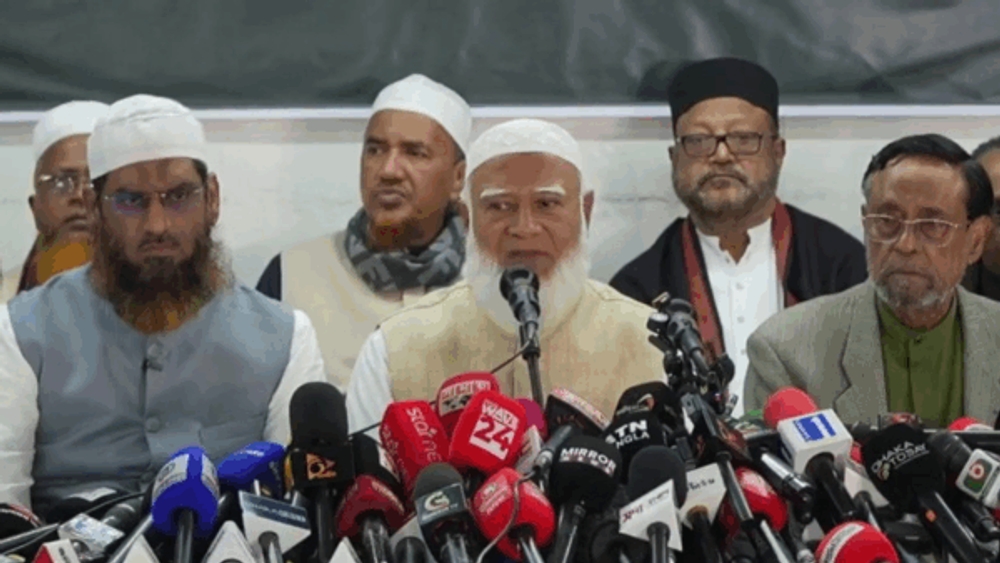
On December 28, 2025, Bangladesh’s political terrain experienced a seismic shift when Dr. Shafiqur Rahman, the Ameer of Bangladesh Jamaat-e-Islami (JI), announced the formal inclusion of the National Citizen Party (NCP) and Liberal Democratic Party (LDP) into Jamaat’s Islamist-led electoral alliance. This expansion brought the coalition to ten parties, including Islami Andolan Bangladesh and several other Islamist forces. The press conference at Dhaka’s Jatiya Press Club marked more than mere tactical seat-sharing—it represented a calculated attempt by Jamaat to overcome decades of electoral stagnation, historical stigma, and ideological fragmentation that have plagued the party since Bangladesh’s independence.
For Jamaat, this alliance represents a strategic breakthrough in consolidating the majoritarian Muslim vote. Historically, Islamist parties in Bangladesh have competed against each other, dividing their constituencies and weakening their collective influence. By bringing together diverse groups under one electoral umbrella, Jamaat hopes to present a unified choice for Islamist-inclined voters. Rahman emphasized that “discussions on seat-sharing among the coalition’s 300 target constituencies are nearly complete,” signaling a serious effort to avoid the vote-splitting that has historically crippled Islamist politics.
Historical Baggage and Strategic Rehabilitation
Jamaat-e-Islami’s political journey has been haunted by its anti-liberation war stance in 1971, including its opposition to Bangladesh’s independence and alleged collaboration with Pakistani forces. This legacy has kept the party on the margins of mainstream politics for decades, with the party never securing more than 20 seats in the 300-member Jatiya Sangsad. The party’s deregistration in 2013 during Awami League rule further deepened its isolation, making this new alliance a desperate bid for political rehabilitation.
The inclusion of the LDP carries particular symbolic weight. Led by Colonel (Retd.) Oli Ahmed, a decorated freedom fighter and recipient of the Bir Protik honor (Bangladesh’s fourth highest gallantry award), the LDP’s presence helps Jamaat confront its most enduring stigma. Ahmed standing alongside Jamaat leaders at the press conference represents a willingness to move beyond historical divides—a calculated move that allows Jamaat to begin shedding the trauma of 1971 by associating with a figure who embodies liberation credentials.
Youth Co-optation and Political Pragmatism
The alliance with the NCP, born from the July 2024 student uprising, represents Jamaat’s attempt to tap into Bangladesh’s mobilized youth demographic. Although NCP leaders were absent from the press conference, Rahman confirmed that NCP Convener Nahid Islam had consented to join the coalition. For Jamaat, this partnership serves as a gateway to young voters who might otherwise dismiss the party as outdated and irrelevant to contemporary struggles.
However, this alliance comes with significant costs for all parties involved. Jamaat compromises its original agenda of establishing an Islamic state governed by Shariah by aligning with secular and liberal actors. Meanwhile, the NCP risks alienating its youth base by partnering with a party many view as antithetical to their democratic aspirations. The internal rift within NCP became evident when thirty members of its central committee formally rejected the alliance, and Senior Joint Convener Samantha Sharmin warned that Jamaat was an “unreliable political partner.”
The Geopolitical Context and Neo-Colonial Dynamics
Western Hypocrisy and Selective Morality
As we analyze this development, we must contextualize it within broader geopolitical patterns where Western powers selectively champion democracy while simultaneously undermining sovereign political processes in the Global South. The very framework of “international observation” and “democratic standards” often serves as a neo-colonial tool to influence outcomes favorable to Western interests. Bangladesh’s political evolution must be understood on its own terms, free from the condescending gaze of former colonial powers who have their own complicated relationships with religious political movements.
When Western nations critique Islamist political participation in Bangladesh, we must remember their own histories of supporting similar movements when it served their geopolitical interests. The United States’ relationship with various Islamist groups during the Cold War and its continuing alliances with fundamentalist regimes in the Middle East reveal the hypocrisy of applying selective democratic standards to Bangladesh. This double standard represents the continuation of colonial mentalities that deny Southern nations the right to complex, organic political development.
The Civilizational State Perspective
Bangladesh’s political landscape cannot be comprehended through simplistic Westphalian nation-state frameworks that dominate Western political science. As a civilization with deep historical roots and complex social fabric, Bangladesh’s political movements reflect the intersection of multiple traditions—liberation heritage, religious identity, youth aspirations, and anti-colonial consciousness. The reduction of this rich tapestry to binary categories of “secular” versus “Islamist” represents intellectual colonialism that fails to capture Bangladesh’s unique political reality.
From a civilizational state perspective, what we witness is not merely political realignment but the working through of historical contradictions that have shaped Bangladesh since its violent birth. The presence of Colonel Oli Ahmed—a liberation hero—alongside Jamaat leaders represents not hypocrisy but the complex process of historical reconciliation that Western observers, trapped in linear progressive frameworks, often misunderstand. This alliance, however problematic, represents an indigenous attempt to resolve historical tensions through political negotiation rather than continued confrontation.
The Youth Dilemma: Liberation or Co-optation?
The participation of the NCP, born from youth protests demanding better governance and democratic reforms, raises profound questions about the co-optation of popular movements by established political forces. Nahid Islam’s justification that “a broader unity against hegemonic forces is necessary” following the murder of student activist Sharif Osman Bin Hadi reveals the desperate calculus facing youth movements when confronted with state violence and political repression.
However, this alliance risks betraying the very ideals that animated the July 2024 uprising. The youth who poured into the streets demanding accountability and democratic renewal did not sacrifice their safety and futures to become pawns in Jamaat’s political rehabilitation project. The warning from NCP’s Samantha Sharmin that cooperation with Jamaat violates the party’s “declared ideology, its accountability to the July 2024 mass uprising, and democratic morality” highlights the moral compromise at the heart of this alliance.
The Strategic Implications for South Asian Democracy
This development must be analyzed within the broader context of South Asia’s democratic evolution, where religious political movements have increasingly sought mainstream political participation. Unlike Western models that insist on rigid secular-public sphere separation, South Asian democracies have historically accommodated religious political expression within democratic frameworks. The question is not whether religious parties should participate in politics, but whether such participation strengthens pluralistic democracy or threatens minority rights and secular foundations.
For Bangladesh, where secularism is constitutionally embedded as a fundamental principle, the mainstreaming of Jamaat through alliance politics represents a significant test. The party’s historical baggage and ideological commitments raise legitimate concerns about whether this represents genuine political integration or strategic entryism aimed ultimately at undermining Bangladesh’s constitutional character.
Conclusion: Principle Versus Pragmatism in Southern Politics
The Jamaat-led alliance represents the painful choices facing political movements in the Global South when confronting entrenched power structures. The desperation of youth movements seeking protection from state violence, the pragmatism of smaller parties seeking organizational support, and the rehabilitation project of a historically stigmatized party—all these elements combine into a political moment full of both danger and possibility.
What makes this development particularly tragic is the instrumentalization of Bangladesh’s liberation heritage for narrow political gains. The presence of freedom fighters like Oli Ahmed in an alliance with forces that opposed the very existence of Bangladesh represents not reconciliation but the erosion of historical memory. When the sacrifices of liberation warriors become bargaining chips in political deals, we witness the diminishing of the revolutionary spirit that gave birth to the nation.
As committed observers of Southern political development, we must resist both the temptation of outright condemnation and uncritical celebration. The complex reality demands nuanced understanding that acknowledges both the pragmatic necessities driving this alliance and the profound moral compromises it entails. Ultimately, the test will be whether this political experiment strengthens Bangladesh’s democratic pluralism or becomes another chapter in the long story of Southern nations struggling to find their path between principle and survival in an unequal global order.