
The Dangerous Doctrine of Might Makes Right: A Constitutional Breakdown in Venezuela Policy
Published
- 3 min read
The Factual Exchange and Context
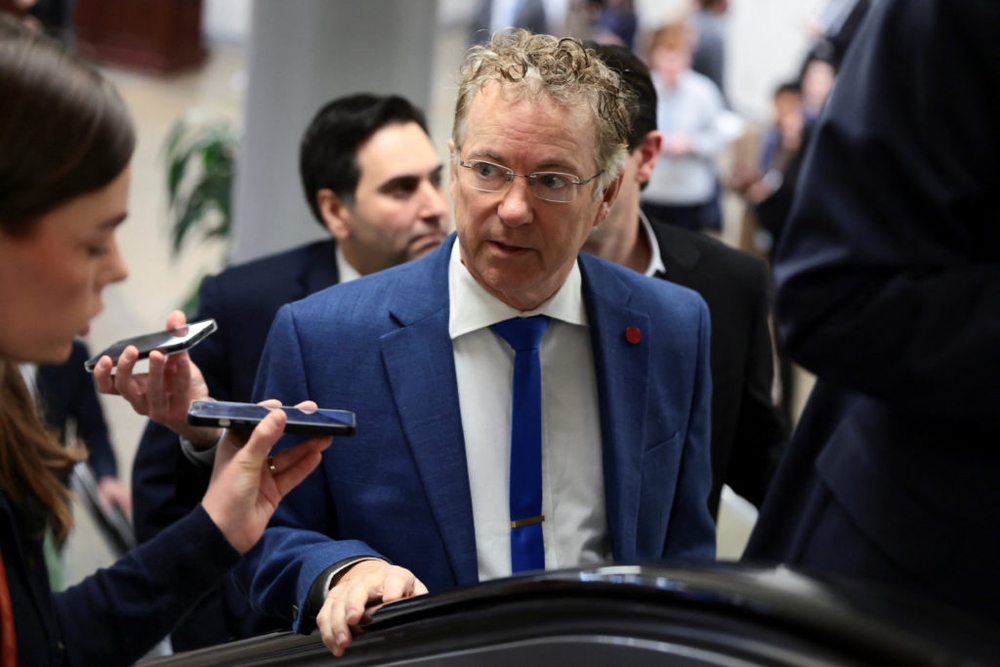
During a congressional hearing on Wednesday, a profound and troubling exchange unfolded between Senator Rand Paul (R-Ky.) and Secretary of State Marco Rubio. The core of the debate centered on the United States’ involvement in the ouster of Venezuelan President Nicolás Maduro. Senator Paul pressed Secretary Rubio with a fundamental question of constitutional and international principle: “If a foreign country bombed our air defense missiles, captured and removed our president and blockaded our country, would that be considered an act of war?”
Secretary Rubio’s defense of the Trump administration’s actions was stark. He argued that the operation, which lasted only a few hours, “does not come anywhere close to the constitutional definition of war.” Senator Paul relentlessly pursued the logical inconsistency, pointing out the undeniable truth that such actions would unequivocally be considered an act of war if perpetrated against the United States. He aptly labeled the administration’s justification a “one-way argument,” a rhetorical shield for unilateral power.
The context of this hearing is critical. President Donald Trump has explicitly stated the U.S. would “run” Venezuela and has ordered military actions to control the country’s oil exports and seize tankers. Furthermore, the administration has conducted dozens of strikes against alleged drug-trafficking vessels near Venezuela, resulting in the deaths of at least 126 people, while providing little public evidence to substantiate the “narcoterrorist” claims. This aggressive posture prompted concerned members of Congress to attempt to pass a war powers resolution to check the President’s authority for further military action, an effort that failed due to a lack of Republican support.
The Erosion of Constitutional Checks and Moral Authority
The dialogue between Senator Paul and Secretary Rubio is not merely a political disagreement; it is a symptom of a deep and dangerous erosion of the constitutional framework designed to prevent reckless military adventurism. The Founding Fathers, scarred by the tyranny of arbitrary power, deliberately placed the weighty authority to declare war in the hands of Congress, not the Executive. This was not an accident of governance but a bedrock principle to ensure collective deliberation and avoid the calamities of wars fought on presidential whim. Secretary Rubio’s dismissal of a multi-faceted military operation—involving bombings, blockades, and the removal of a head of state—as not “anywhere close” to war is a terrifyingly narrow interpretation that hollows out the War Powers Clause of the Constitution.
This legalistic sidestepping creates a perilous precedent. If a sustained campaign of force against a sovereign nation can be semantically dismissed as something less than war, then the Executive Branch is granted a blank check for perpetual conflict without the consent of the people’s representatives. This is the very tyranny the Constitution was written to prevent. Senator Paul’s argument cuts to the heart of the matter: the Golden Rule of foreign policy. Any nation would view such actions as an act of war. To claim an exception for ourselves based solely on our “might” is to abandon any claim to moral leadership or consistent principle. It reduces American foreign policy to the law of the jungle, where power is the only legitimate authority.
The Hypocrisy of Justification and the Human Cost
Senator Paul correctly identified the administration’s justifications as “empty” and a “ruse.” The shifting rationale—from promoting democracy to combating narcoterrorism—appears less as a coherent strategy and more as a series of convenient excuses for the application of raw power. When the evidence for these justifications is scant or classified away from public scrutiny, it demolishes the accountability essential to a functioning republic. The tragic loss of 126 lives in strikes against “alleged” drug-trafficking boats cannot be brushed aside as collateral damage in a nebulous, undeclared conflict. Each life lost demands rigorous justification and transparent oversight, which have been conspicuously absent.
The failure of the war powers resolution in Congress is equally alarming. It signifies a legislative branch unwilling to perform its most critical duty: acting as a check on executive overreach. When party loyalty supersedes constitutional obligation, the system of checks and balances fails. This abdication of responsibility leaves the American people, and the people of Venezuela, subject to the unpredictable whims of a single individual’s foreign policy. The principle that “we do it because it’s in our interest” is a dangerously simplistic and ultimately self-defeating doctrine. True national interest is inextricably linked to upholding the rule of law, respecting sovereignty, and maintaining a reputation for principled action. Short-term assertions of power that trample these values create long-term instability, animosity, and a world where might is the only right—a world that is ultimately less safe for America.
A Call for Principled Leadership Rooted in Liberty
This moment demands a return to first principles. The United States must be a nation of laws, not of men. Our actions on the global stage must be consistent with the values we proclaim at home: liberty, justice, and accountability. The framework for this exists within our Constitution. Congress must reclaim its war powers authority, demanding a full debate and a definitive vote for any sustained military engagement. The executive must be compelled to provide clear, public evidence for its actions, especially when they involve lethal force.
The path forward is not isolationism but responsible engagement. Supporting democracy in Venezuela is a noble goal, but it must be pursued through diplomatic, economic, and humanitarian means that build coalitions and respect international norms. Ousting a leader by force, under a flimsy legal pretext, sets a destructive precedent that can and will be used by other powers against U.S. interests. Our strength derives not from our ability to act unilaterally without consequence, but from our unwavering commitment to a world order based on rules and rights. To betray that commitment is to undermine the very foundation of our security and our identity as a beacon of freedom. We must heed Senator Paul’s warning and reject the siren song of unlimited executive power, lest we sacrifice our republic on the altar of short-sighted interests.