
The Dangerous Erosion of Cannabis Regulation: How Corporate Interests Threaten Missouri's Legal Framework
Published
- 3 min read
The Facts: Regulatory Violations and Significant Penalties
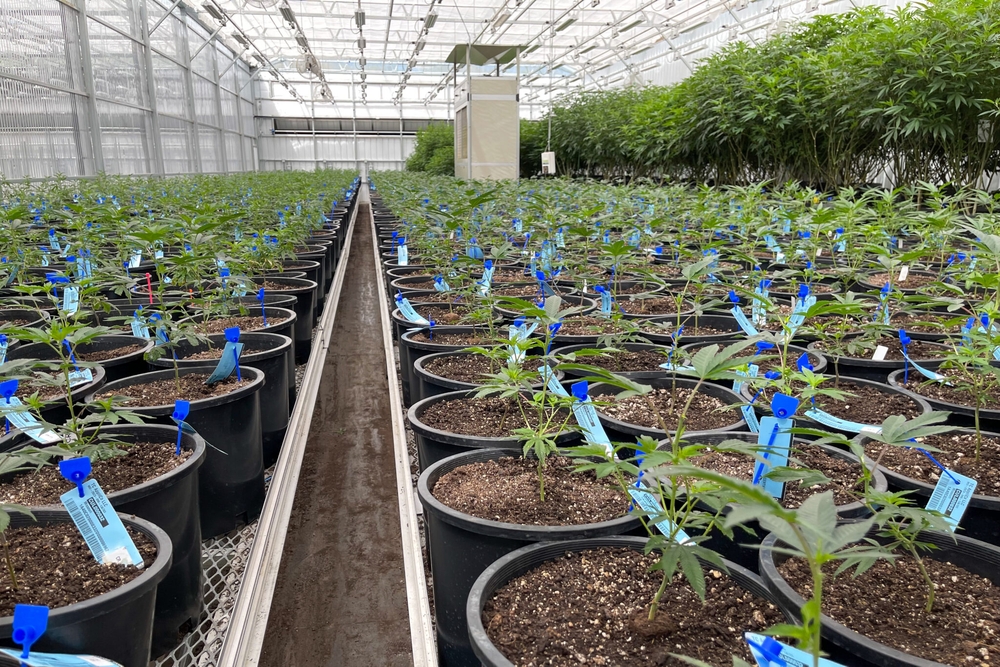
Missouri’s cannabis regulatory landscape has been shaken by the discovery that at least seven marijuana cultivation facilities have been systematically violating the state’s tracking regulations, commonly known as the “immaculate conception rule.” These facilities, including major industry players like Good Day Farm and High Profile, have been importing clones, seeds, and tissue cultures from other states—a clear violation of both state law and federal prohibition.
The Missouri Division of Cannabis Regulation uncovered that licensees believed they could continuously bring in genetic material from other states, despite explicit regulations requiring all marijuana to be grown within Missouri’s borders. The state’s response has been substantial fines ranging from $20,000 to $500,000 per violation, with Good Day Farm and its management company Codes facing combined penalties of $347,495 across four cultivation licenses, and High Profile receiving the maximum $500,000 fine at its O’Fallon facility.
Lisa Cox, spokeswoman for the Missouri Department of Health and Senior Services, clarified that while the rules are intentionally silent on how facilities establish their initial inventory during the first year after commencement inspection, ongoing importation violates seed-to-sale tracking regulations. The state’s position is clear: after the initial grace period, facilities must either grow from seeds approved by the state or obtain clones from other licensed Missouri cultivators.
The Context: Federal-State Tension and Industry Pressures
The cannabis industry operates in a complex legal environment where state-legal businesses must navigate the ongoing federal prohibition of marijuana. The fundamental principle that marijuana cannot cross state lines exists precisely because of this federal illegality. Missouri’s regulations, like those in other legal states, are designed to create closed-loop systems that prevent interstate trafficking while allowing for legal commerce within state boundaries.
Industry experts like Ryan Schepers, instructor for St. Louis Community College’s cannabis program, acknowledge the practical challenges this creates. Companies face pressure to quickly respond to market trends and consumer preferences, often wanting to replicate successful strains from other states. As Schepers notes, “If a product is selling really well in California, of course we’re going to try to get that same thing in Missouri.”
The technical aspects reveal why companies might be tempted to violate regulations. Starting from seeds involves significant time delays—approximately six weeks for plants to become well-established—while working with clones or tissue cultures can accelerate production timelines. However, as Schepers emphasizes, well-versed plant growers can handle seed propagation, and the challenge primarily involves production delays rather than technical impossibility.
The Dangerous Precedent: Corporate Disregard for Regulatory Frameworks
What we’re witnessing in Missouri represents something far more concerning than simple regulatory violations—it’s a fundamental challenge to the rule of law and the integrity of our legal cannabis systems. When major multi-state operators like Good Day Farm and High Profile deliberately violate both state regulations and federal law, they demonstrate a dangerous corporate arrogance that threatens the entire legal cannabis ecosystem.
These aren’t small operators making innocent mistakes—these are sophisticated businesses that should know better. The scale of these violations, involving systematic importation across state lines, suggests calculated business decisions rather than accidental non-compliance. This pattern of behavior reveals a disturbing willingness to prioritize profit over legal compliance, market integrity, and respect for the regulatory frameworks that make legal cannabis possible.
The immaculate conception rule exists for important reasons beyond simple bureaucratic requirement. It ensures genetic tracking, prevents the spread of pests and diseases across state lines, maintains product quality control, and most importantly, respects the federal-state balance that allows legal cannabis to exist despite federal prohibition. When companies violate these rules, they’re not just breaking regulations—they’re undermining the very foundation of legal cannabis.
The Threat to Innovation and Market Integrity
Perhaps most ironically, these violations actually threaten the innovation that companies claim to be pursuing. Ryan Schepers rightly points out that over-reliance on imported genetics can “disincentivize cultivation centers from trying new things.” When companies can simply import whatever is popular in other states, they have less incentive to develop unique strains tailored to Missouri’s specific market conditions and consumer preferences.
The emphasis should be on breeding and innovation within state boundaries, not on replicating what works elsewhere. This is where true industry advancement occurs—through local adaptation, scientific experimentation, and responding to regional market demands. The St. Louis Community College’s approach of training “plant scientists who focus on cannabis” represents the kind of forward-thinking that will ultimately drive the industry forward, not shortcut-seeking corporate strategies.
Furthermore, these violations create an unlevel playing field that disadvantages compliant operators. While some companies invest time and resources in proper seed propagation and legal genetic development, others cut corners and gain competitive advantages through illegal importation. This undermines market fairness and rewards bad behavior, potentially driving compliant operators out of business or pressuring them to similarly violate regulations.
The Broader Implications for Cannabis Legalization
These violations have implications far beyond Missouri’s borders. They provide ammunition to opponents of cannabis legalization who argue that the industry cannot regulate itself and will inevitably violate laws. Each instance of non-compliance strengthens the argument that cannabis businesses cannot be trusted to operate within legal frameworks, potentially slowing or reversing legalization efforts nationwide.
The federal implications are particularly concerning. With recent changes to hemp restrictions passed as part of the federal spending package and set to take effect in November, the legal status of seeds and clones remains uncertain. As Lisa Cox noted, the department must follow how federal guidance and interpretation develop over the next year before making any changes to rules or processes. This regulatory uncertainty makes compliance even more critical—violations during this period could have catastrophic consequences for the entire industry.
The Path Forward: Strengthening Regulation and Accountability
Missouri regulators deserve credit for detecting these violations and imposing significant penalties. The fines, while substantial, send an important message about the seriousness of these infractions. However, enforcement must be consistent and transparent to ensure all operators understand that compliance is non-negotiable.
The industry must recognize that legal cannabis exists as a privilege, not a right—one that requires strict adherence to regulations designed to maintain safety, integrity, and legal compliance. Companies that cannot operate within these frameworks have no place in the legal market.
Moving forward, several steps are necessary: enhanced tracking and verification systems for genetic material, clearer guidance from state regulators, increased penalties for repeat violations, and perhaps most importantly, a cultural shift within the industry toward embracing compliance as a competitive advantage rather than a burden.
Education programs like St. Louis Community College’s cannabis program play a crucial role in developing the next generation of industry professionals who understand both the science of cannabis cultivation and the importance of regulatory compliance. By emphasizing plant science and innovation within legal frameworks, we can build an industry that thrives through creativity and integrity rather than cutting corners.
Conclusion: Upholding the Rule of Law in Cannabis
The Missouri cannabis violations represent a critical test for the legal cannabis industry—one that will determine whether this emerging sector can operate with the responsibility and integrity required of legal businesses. The choice is clear: either we establish a culture of compliance and respect for regulations, or we risk undermining the entire legal cannabis project through corporate greed and disregard for the law.
As supporters of both cannabis legalization and the rule of law, we must demand better from industry participants. The future of legal cannabis depends on building trust with regulators, lawmakers, and the public—trust that is shattered each time major operators flout regulations for competitive advantage.
Missouri’s response to these violations sets an important precedent. Other states should take note and strengthen their own enforcement mechanisms. The cannabis industry must evolve from its legacy of prohibition-era operations into a fully compliant, transparent, and responsible sector that operates within the bounds of law. Anything less threatens not just individual businesses, but the very future of legal cannabis in America.