
The Dangerous Erosion of Federal Reserve Independence: A Threat to American Democracy
Published
- 3 min read
The Context of Presidential Overreach
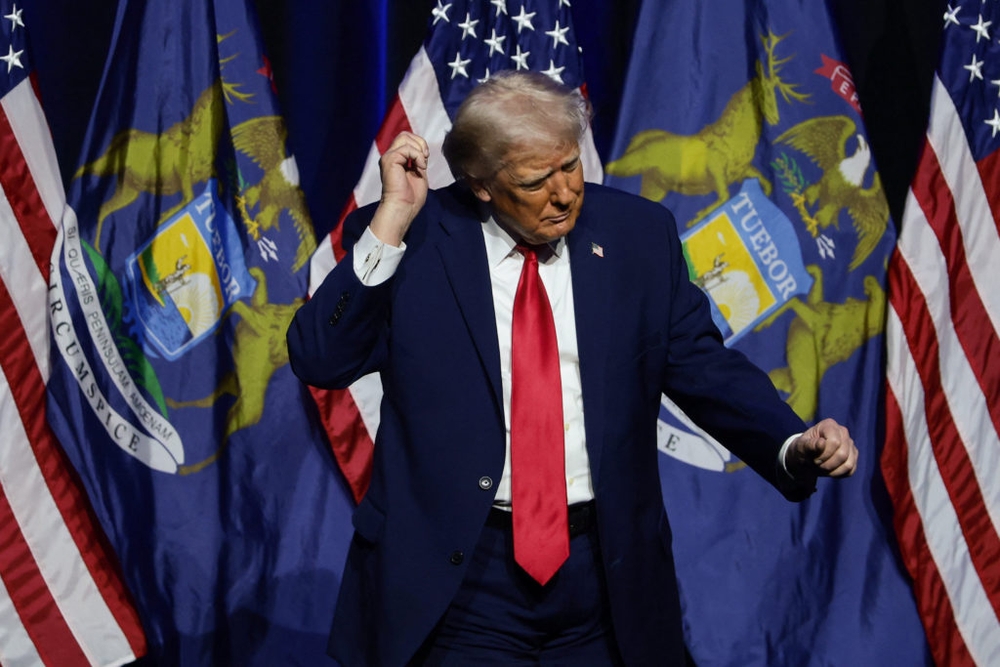
President Donald Trump’s recent speech in Detroit represents a concerning escalation in his attacks on the independent functioning of the Federal Reserve. During his address, the president accused the Federal Reserve of “stealing his joy” by maintaining interest rate policies that he disagrees with, specifically criticizing the central bank for not lowering rates more aggressively. This rhetoric comes amid ongoing tensions between the executive branch and the Federal Reserve, chaired by Jerome Powell, regarding monetary policy decisions.
The Federal Reserve operates under a dual mandate from Congress: to maintain price stability and maximize employment. This independence from political pressure is crucial for effective monetary policy, allowing the Fed to make decisions based on economic data rather than political considerations. President Trump’s public pressure campaign, including his suggestion that rising stock markets should automatically trigger rate cuts, fundamentally misunderstands and undermines this critical institutional framework.
The Facts of the Matter
During his Detroit speech, President Trump explicitly stated, “If you announce great numbers, they raise interest rates. When the market goes up, they should lower rates.” This statement reflects a fundamental misunderstanding of the Federal Reserve’s role and responsibilities. The Fed’s decisions on interest rates are based on comprehensive economic analysis, including inflation trends, employment data, and broader economic indicators—not stock market performance alone.
The article notes that inflation cooled slightly in December but remains above the Fed’s target, highlighting the complex balancing act the central bank faces in managing economic growth while controlling price increases. Slashing rates as Trump has suggested could push more money into the U.S. economy and potentially worsen inflation, demonstrating why independent judgment rather than political pressure must guide these decisions.
The Broader Implications for Institutional Integrity
Undermining Democratic Norms
The president’s attacks on Federal Reserve independence represent more than just policy disagreement—they constitute a dangerous erosion of institutional norms that have protected American democracy for generations. The separation of monetary policy from political influence is not an accident but a carefully designed feature of our economic system. When a sitting president publicly pressures the central bank to make decisions based on political rather than economic considerations, he undermines the very foundations of our institutional framework.
This pattern of behavior fits into a broader concerning trend of attacking independent institutions that serve as checks on executive power. From the judiciary to intelligence agencies to now the Federal Reserve, we see a consistent effort to weaken the institutions that protect American democracy from authoritarian tendencies. The independence of the Federal Reserve is not a bureaucratic technicality—it is a vital safeguard against the politicization of economic policy that could have devastating consequences for everyday Americans.
The Dangerous Precedent
What makes this particular attack so concerning is the blatant nature of the pressure and the personalization of policy disagreements. By framing the Fed’s decisions as “stealing his joy,” President Trump reduces complex economic policy to personal grievance. This approach threatens to replace evidence-based decision-making with emotional reactivity, potentially causing significant harm to economic stability and growth.
The precedent set by this behavior could have long-lasting consequences beyond the current administration. Future presidents may feel emboldened to similarly pressure the Federal Reserve, potentially leading to a gradual erosion of its independence that could fundamentally alter America’s economic landscape. The stability of our currency, the predictability of our economic environment, and the confidence of international markets all depend on maintaining this crucial separation between monetary policy and political influence.
The Human Cost of Political Interference
Economic Stability and American Families
While political attacks on institutions may seem abstract to some, the potential consequences for American families are very real. The Federal Reserve’s independence allows it to make difficult decisions that may be politically unpopular but economically necessary. If political pressure leads to inappropriate rate cuts, the resulting inflation could erode savings, reduce purchasing power, and disproportionately harm low and middle-income Americans who can least afford rising prices.
The Fed’s dual mandate of price stability and maximum employment requires careful balancing that cannot be achieved through political calculation. When politicians pressure for short-term economic boosts that may cause long-term damage, it is ordinary citizens who ultimately pay the price through economic instability, job losses, and reduced economic opportunity.
The Erosion of Trust
Perhaps most damaging is the erosion of public trust in institutions that results from these repeated attacks. When citizens lose confidence in the independence and integrity of economic institutions, it can lead to decreased economic participation, reduced investment, and overall economic uncertainty. The Federal Reserve’s credibility is one of its most important assets, and political attacks that undermine this credibility can have real economic consequences.
The Constitutional Principles at Stake
Separation of Powers and Institutional Independence
The American system of government is built on separation of powers and checks and balances. The Federal Reserve’s independence represents an important extension of these principles into the economic realm. By insulating monetary policy from short-term political pressures, the system ensures that economic decisions are made based on expertise and evidence rather than political expediency.
This attack on Federal Reserve independence represents a fundamental challenge to constitutional principles that have guided American governance for centuries. The gradual accumulation of power in the executive branch at the expense of other institutions threatens the delicate balance that has protected American liberty and democracy.
The Role of Leadership in Protecting Institutions
True leadership involves respecting and protecting institutions, even when they make decisions that may be politically inconvenient. President Trump’s approach represents the opposite—attacking institutions when they fail to serve immediate political interests. This short-term thinking threatens the long-term health of our democracy and economy.
Leaders should be educating the public about the importance of institutional independence, not undermining it for personal or political gain. The failure to uphold this basic responsibility represents a serious dereliction of democratic duty.
Conclusion: Defending Democracy Requires Protecting Institutions
The attack on Federal Reserve independence is not an isolated incident but part of a broader pattern that should concern every American who values democracy, freedom, and the rule of law. Our institutions represent the accumulated wisdom of generations who understood that protecting democracy requires limiting concentrated power and ensuring independent expertise guides complex policy decisions.
We must recognize that defending the Federal Reserve’s independence is not about supporting any particular policy decision but about protecting the principle that certain decisions must be made free from political pressure. The alternative—a world where monetary policy becomes just another political football—threatens economic stability, democratic norms, and the well-being of American families.
As citizens committed to democracy and freedom, we must speak out against these attacks on institutional integrity. We must demand that our leaders respect the independence of non-political institutions and understand that some decisions are too important to be subject to political whim. The future of American democracy may depend on our ability to protect these crucial safeguards against the concentration of power and the erosion of democratic norms.