
The Dangerous Escalation: Trump's Threat to Cuba and the Erosion of Diplomatic Norms
Published
- 3 min read
The Facts of the Situation
President Donald Trump has dramatically escalated tensions with Cuba through a social media post threatening to use US military force to prevent oil shipments from Venezuela to Cuba. This represents a sharp reversal from his position just days earlier when he suggested the Cuban government would fall on its own following the capture of Venezuelan leader Nicolás Maduro. In his Sunday morning post, Trump declared that “no more oil or money” would go to Cuba from Venezuela and explicitly stated that United States military forces would enforce this separation between the two nations.
The President’s message included a direct ultimatum to Cuba: “make a deal, before it is too late.” This vague demand lacks clarity, as the article notes that Cuba has little in the way of resources to offer the United States government. Trump further amplified his threat by sharing a Truth Social post suggesting that Secretary of State Marco Rubio should be Cuba’s president, to which Trump responded “Sounds good to me.” This alignment with Rubio’s long-standing view that controlling Venezuela could force governmental change in Cuba reveals the ideological underpinnings of this sudden policy shift.
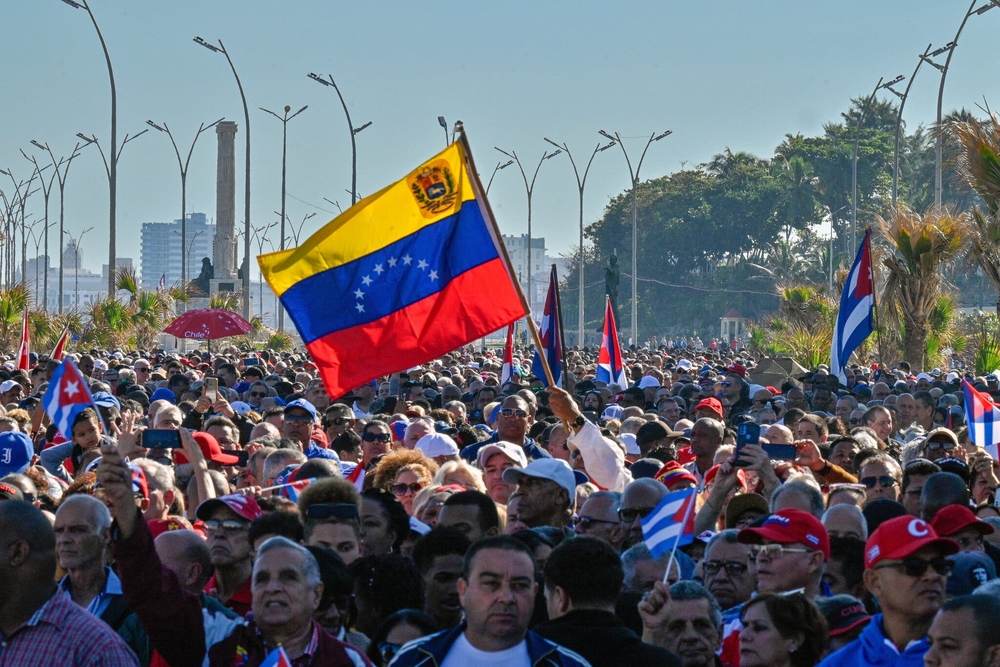
Cuban President Miguel Díaz-Canel responded defiantly, asserting Cuba’s sovereignty and readiness to defend the homeland “to the last drop of blood.” The ousting of Maduro represents a significant blow to the strong relationship between Venezuela and Cuba, whose governments have maintained close economic and political ties for years. Cuban intelligence had previously helped Maduro maintain power, including tipping him off about a 2019 plot to overthrow his government.
The threat also serves as a message to Venezuela’s new leader, Delcy Rodríguez, pressuring her to cut the United States into the country’s oil production and cease shipments to other countries including Cuba. If Venezuela refuses, Trump could order American forces—already engaged in a partial blockade of Venezuela’s oil industry—to seize tankers heading to Cuba.
According to Jorge Piñon, a former Mexican oil executive and Cuban energy expert at the University of Texas at Austin, the loss of Venezuelan oil would be “catastrophic” for Cuba. Trade data shows Venezuela supplies Cuba with 30,000 to 35,000 barrels per day, covering a significant portion of Cuba’s daily fuel demand of approximately 100,000 barrels. Domestic production covers less than half of Cuba’s needs, with the remainder coming from Mexican exports and limited Russian shipments.
Historical and Geopolitical Context
The Cuba-Venezuela relationship has deep roots in regional politics and energy economics. For decades, these two nations have maintained a symbiotic relationship where Venezuela provided oil in exchange for Cuban medical personnel, teachers, and intelligence support. This arrangement has allowed both governments to withstand pressure from the United States and maintain their political systems despite economic challenges.
Cuba has historically held an outsize grip on Washington policymakers due to multiple factors: its proximity to Florida’s southern tip, its communist ideology, the historical resonance of the 1962 Cuban missile crisis, and the political power of South Florida’s large Cuban American community. The involvement of Senator Marco Rubio, a prominent Cuban American politician with strong views on Cuba policy, adds another layer of complexity to this situation.
The current escalation must be understood within the context of long-standing US-Cuba relations, which have oscillated between confrontation and cautious engagement for over six decades. The Obama administration attempted normalization, while the Trump administration reversed many of those policies. This latest threat represents the most aggressive posture toward Cuba in recent memory.
The Dangerous Precedent of Military Coercion
What makes this situation particularly alarming is the explicit threat of military force to control the economic relationships between sovereign nations. The United States, as a nation founded on principles of liberty and self-determination, should be the foremost defender of national sovereignty—not its greatest threat. Using military might to dictate which countries can trade with one another represents a profound departure from the international norms America has helped establish and defend since World War II.
This approach sets a dangerous precedent that could easily be turned against American interests by other global powers. If China or Russia adopted similar tactics to control resource flows in their regions, the United States would rightly condemn such actions as economic imperialism. The principle of national sovereignty must be consistently applied, not selectively enforced based on political convenience.
The humanitarian implications cannot be overstated. Cutting off Cuba’s oil supply would devastate an already struggling economy and directly harm ordinary Cuban citizens who have no voice in their government’s policies. Medicine transportation, food distribution, water purification, and basic electricity would all be compromised. Such collective punishment violates basic principles of human dignity and international law.
The Erosion of Diplomatic Norms
Perhaps most concerning is the manner in which this policy shift was announced—through a social media post rather than formal diplomatic channels. Major foreign policy decisions affecting regional stability and potentially risking military confrontation should be carefully considered through proper governmental processes, not announced impulsively on digital platforms.
The vague demand for Cuba to “make a deal” without specifying what terms might be acceptable demonstrates a concerning lack of diplomatic seriousness. Effective foreign policy requires clarity, precision, and careful consideration of consequences. Social media diplomacy creates unnecessary confusion and increases the risk of miscalculation by all parties involved.
This approach undermines the professional diplomatic corps and established channels of international communication that have prevented conflicts and resolved disputes for generations. When leaders bypass these institutions in favor of public pronouncements, they weaken the very frameworks that maintain global stability.
The Constitutional and Institutional Concerns
From a constitutional perspective, the threat of military action without clear congressional authorization raises serious questions about the appropriate use of presidential power. While presidents have considerable authority in foreign affairs, using military force to intercept shipping between two sovereign nations represents a significant escalation that deserves congressional debate and approval.
The Founders carefully distributed war powers between the executive and legislative branches precisely to prevent impulsive military actions that could entangle the nation in unnecessary conflicts. Bypassing this constitutional framework undermines the system of checks and balances that protects our democracy from authoritarian tendencies.
Furthermore, the suggestion that Senator Rubio should become Cuba’s president—even if made flippantly—demonstrates a troubling disregard for the self-determination of the Cuban people. America should support democratic processes everywhere, but we must not impose leaders on other nations. Such statements undermine our credibility as advocates for democracy and freedom.
The Path Forward: Principles Over Posturing
Instead of military threats and economic coercion, the United States should pursue a foreign policy toward Cuba based on consistent principles: support for human rights, encouragement of democratic reforms, and engagement that benefits ordinary citizens while maintaining pressure on authoritarian structures. This approach requires patience, strategic consistency, and cooperation with international partners.
Energy security represents a potential avenue for positive engagement rather than confrontation. Helping Cuba develop diverse energy sources and transition to more sustainable models could reduce its dependence on Venezuela while addressing environmental concerns. Such cooperation could build trust and create opportunities for broader discussions about political and economic reforms.
The United States should work through multilateral institutions like the Organization of American States to address concerns about Venezuela and Cuba rather than acting unilaterally. Regional problems require regional solutions developed through dialogue and consensus-building.
Most importantly, American foreign policy must always reflect our deepest values: respect for human dignity, commitment to democratic principles, and belief in the fundamental right of all peoples to determine their own futures. Threatening military force to control other nations’ economic relationships violates these principles and damages America’s moral standing in the world.
Conclusion: Reclaiming America’s Moral Leadership
This moment calls for reflection on what kind of foreign policy truly serves American interests and values. Short-term tactical gains achieved through coercion often create long-term strategic problems and moral compromises. The United States should be a beacon of freedom and a defender of international norms, not a nation that uses its military power to bully smaller countries.
The Cuban people deserve better than to be pawns in geopolitical struggles. They deserve the opportunity to determine their own future through peaceful processes. Venezuelans deserve the same right to self-determination without external powers dictating their economic relationships.
As Americans committed to democracy, freedom, and liberty, we must demand a foreign policy that reflects our nation’s highest ideals rather than its most impulsive instincts. The stability of our hemisphere and the integrity of our constitutional system depend on it. We must stand for principles over posturing, for diplomacy over domination, and for the enduring values that have made America a force for good in the world.