
The Dangerous Politicization of Congressional Oversight: A Threat to Constitutional Principles
Published
- 3 min read
The Facts of the Congressional Confrontation
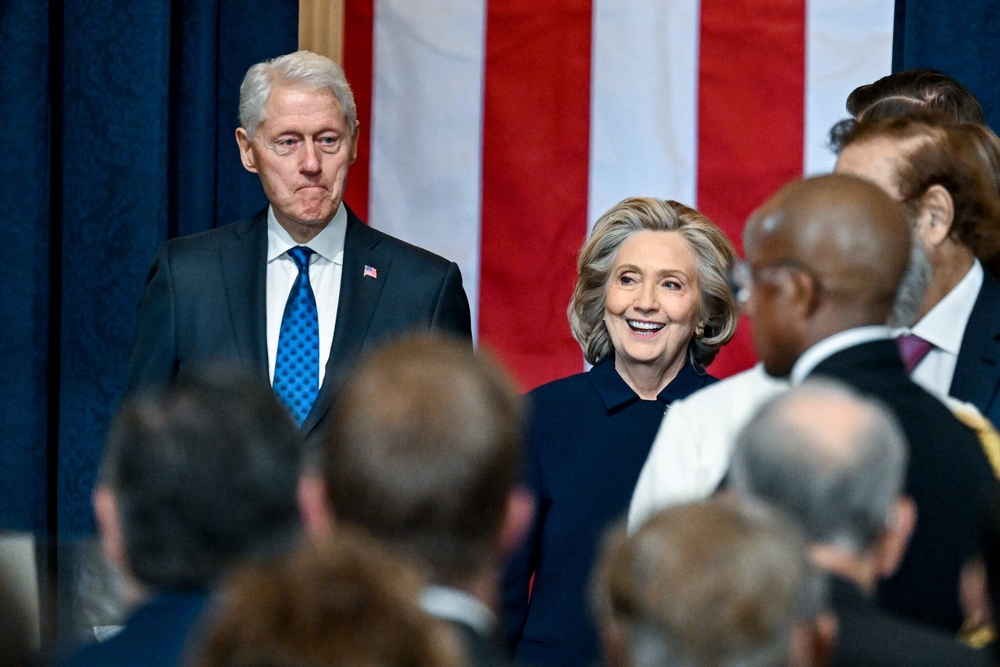
The ongoing confrontation between the House Oversight Committee and former President Bill Clinton and former Secretary of State Hillary Clinton represents a significant escalation in the weaponization of congressional investigative powers. According to recent reporting, the Clintons have formally refused to testify in the House’s Jeffrey Epstein investigation, setting the stage for a potential contempt of Congress proceeding. Committee Chairman James R. Comer of Kentucky has been pursuing testimony from the Clintons for months, framing it as part of his panel’s broader Epstein inquiry.
The timeline of events reveals a carefully orchestrated political battle. Comer had set Tuesday as the deadline for Bill Clinton’s appearance and Wednesday for Hillary Clinton’s deposition. Instead of complying, the Clintons submitted an eight-page legal letter arguing that the subpoenas were “invalid and legally unenforceable.” They followed this with a scorching joint letter promising to fight “for as long as it took,” accusing Comer of pursuing a politically driven process “literally designed to result in our imprisonment.”
Legal representatives for the Clintons, including Ashley Callen of Jenner & Block and veteran lawyer Abbe Lowell, have mounted a robust defense. They argue that the subpoenas lack any valid legislative purpose and represent an “unprecedented infringement on the separation of powers.” The lawyers cited specific case law and constitutional precedents, emphasizing that Supreme Court jurisprudence requires a clear “nexus” between investigations’ legislative aims and the witnesses from whom information is sought.
Context and Historical Precedent
The Epstein investigation itself exists within a complex political context. Comer has been criticized for allegedly deflecting focus from former President Trump’s ties to Epstein and his administration’s decision to close its investigation without releasing key information. Instead, the committee has shifted attention to prominent Democrats who associated with Epstein and his companion Ghislaine Maxwell.
Historically, congressional investigations have served legitimate legislative purposes, from Watergate to the 9/11 Commission. However, when these investigations become overtly political weapons, they undermine their own legitimacy. The founders established congressional oversight powers to serve the American people, not partisan agendas. When Comer emphasizes that “Jeffrey Epstein visited the White House 17 times while Bill Clinton was president” while simultaneously claiming “no one’s accusing Bill Clinton of anything, any wrongdoing,” he reveals the investigaton’s inherent contradiction.
The Clintons’ legal team correctly notes that they proactively provided sworn statements similar to those Comer accepted from seven or eight other former law enforcement officials. This raises serious questions about why the Clintons are being treated differently and whether this differential treatment serves any legitimate purpose beyond political theater.
The Constitutional Crisis Unfolding
What we are witnessing is nothing short of a constitutional crisis in slow motion. The separation of powers doctrine, carefully crafted by our founders, exists precisely to prevent any single branch of government from accumulating excessive power. When congressional committees abuse their subpoena power for political purposes, they threaten this delicate balance.
The Clintons’ legal team has correctly identified that Supreme Court precedent establishes clear limitations on Congress’s investigative power. In Watkins v. United States (1957), the Court held that Congress’s investigative power “is not unlimited” and cannot be used to expose individuals’ personal affairs without legislative purpose. Similarly, in Quinn v. United States (1955), the Court emphasized that congressional investigations must serve a valid legislative purpose.
Comer’s insistence on live depositions behind closed doors, rather than accepting sworn statements, suggests an intent to create political theater rather than gather substantive information. This approach damages the credibility of congressional oversight and sets dangerous precedents for future administrations of both parties.
The Dangerous Precedent of Weaponized Subpoenas
Perhaps most alarming is the precedent this confrontation establishes for future congressional investigations. If committees can compel testimony without demonstrating relevance to legislative purposes, no former official will be safe from political harassment. This threatens to create a system where congressional oversight becomes a tool for punishing political opponents rather than serving legitimate governmental functions.
The Clintons’ letter touches on broader concerns about the weaponization of government institutions, mentioning “Mr. Trump’s immigration crackdown, his use of the Justice Department to prosecute his enemies and even Republicans’ opposition to extending health care subsidies.” While these issues may seem tangential, they highlight a pattern of institutional erosion that should concern all Americans who value democratic norms.
When congressional committees operate as political weapons rather than truth-seeking bodies, they undermine public trust in government institutions. This erosion of trust makes effective governance increasingly difficult and threatens the stability of our democratic system.
The Importance of Due Process and Fair Treatment
Fundamental to American jurisprudence is the principle of due process - the idea that legal proceedings must be fair and impartial. The Clintons’ legal team has raised valid concerns about whether they are being afforded this basic protection. Their argument that the subpoenas represent “an effort to publicly harass and embarrass President and Secretary Clinton” deserves serious consideration.
The differential treatment between the Clintons and other witnesses who provided sworn statements raises legitimate questions about fairness. If congressional committees can selectively enforce different standards for different witnesses based on political considerations, the entire investigative process becomes suspect.
This is particularly concerning given the bipartisan nature of the original subpoena approval. While Comer notes bipartisan support for subpoenaing the Clintons, this fact alone doesn’t validate the investigation’s methods or purposes. Bipartisan support for questionable procedures doesn’t make those procedures constitutional or appropriate.
The Broader Implications for Democratic Governance
This confrontation represents more than just a political dispute between the Clintons and Congressional Republicans. It reflects a broader crisis in American governance where institutional norms are being systematically undermined for short-term political gain.
The weaponization of congressional oversight power threatens to create a vicious cycle where each party, when in power, feels justified in using investigative powers against their predecessors. This cycle ultimately damages our democratic institutions and erodes public confidence in government.
Our constitutional system depends on good faith adherence to established norms and procedures. When these norms are abandoned for political advantage, the entire system becomes vulnerable. The founders understood that democracy requires more than just written rules - it requires a commitment to the spirit of those rules and the principles they represent.
The Path Forward: Restoring Legitimate Oversight
To restore integrity to congressional oversight, several reforms are necessary. First, committees should establish clear standards for when live testimony is necessary versus when written statements suffice. These standards should be applied consistently across all witnesses regardless of political affiliation.
Second, committees must clearly articulate the legislative purpose of each investigation and demonstrate how each witness’s testimony serves that purpose. Vague or politically motivated investigations degrade the credibility of legitimate oversight.
Third, both parties must commit to respecting the separation of powers and avoiding investigations that improperly infringe on executive branch functions or target individuals for political reasons.
The current confrontation between the Clintons and the House Oversight Committee represents a critical test for American democracy. How we resolve this conflict will set important precedents for future congressional investigations and determine whether oversight remains a legitimate tool of governance or devolves into pure political warfare.
Conclusion: Defending Democratic Principles
As Americans committed to democratic governance, we must reject the weaponization of congressional power for political purposes. The current confrontation over the Epstein investigation represents a dangerous departure from legitimate oversight and threatens core constitutional principles.
While congressional investigations serve vital functions in our system of checks and balances, they must be conducted with respect for due process, separation of powers, and basic fairness. The current approach risks damaging these fundamental principles for short-term political gain.
We must demand better from our elected officials. Congressional oversight should illuminate truth, not create political theater. It should serve the American people, not partisan agendas. And it must always respect the constitutional framework that protects our liberties.
The resolution of this conflict will speak volumes about our commitment to democratic norms and the rule of law. Let us hope that cooler heads prevail and that our institutions emerge stronger from this test rather than permanently damaged by political expediency.