
The Dangerous Politicization of Congressional Oversight: Weaponizing Contempt Against Political Opponents
Published
- 3 min read
The Facts of the Case
House Republicans on the Oversight Committee advanced a resolution Wednesday to hold former President Bill Clinton and former Secretary of State Hillary Clinton in contempt of Congress regarding the Jeffrey Epstein investigation. This marks a potentially historic moment—the first time Congress has moved toward using one of its most powerful punishments against a former president. The Republican-controlled committee approved the contempt charges, setting up a potential full House vote that could lead to criminal prosecution by the Department of Justice.
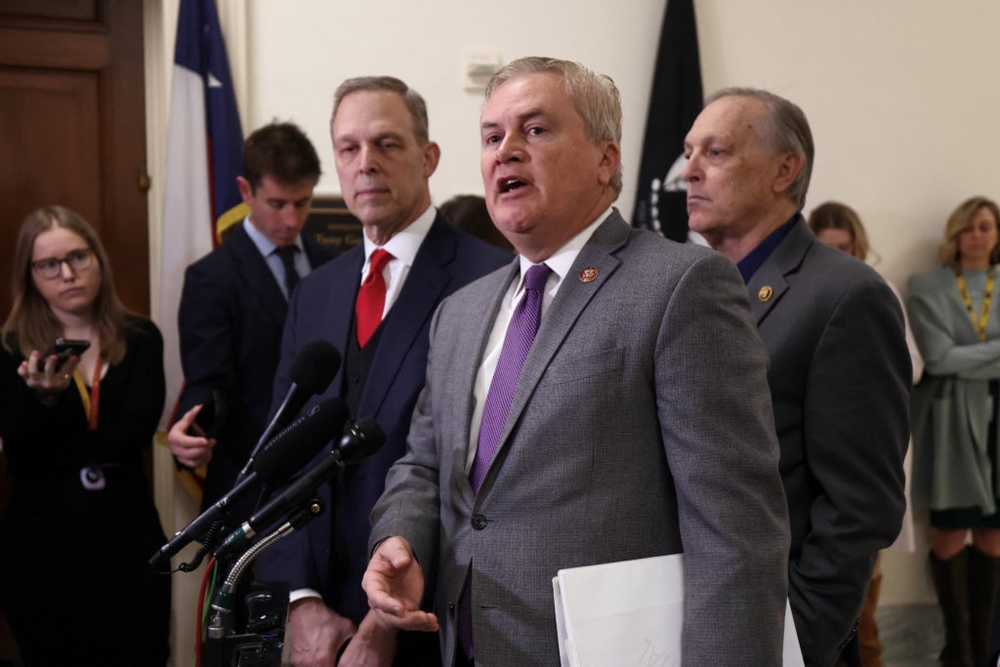
Committee Chairman James Comer (R-Ky.) spearheaded the contempt proceedings after the Clintons refused for months to comply with a committee subpoena for their testimony. Comer emphasized that “subpoenas are not mere suggestions, they carry the force of law and require compliance.” The Clintons, meanwhile, argue the subpoenas are invalid because they “do not serve any legislative purpose” and maintain they had no knowledge of Epstein’s abuse, offering written declarations about their interactions with Epstein instead of testimony.
Context and Background
The confrontation occurs against the backdrop of Congress’s ongoing investigation into how Jeffrey Epstein was able to sexually abuse dozens of teenage girls for years before his 2019 suicide in a New York jail cell. The public release of case files has revealed extensive connections between Epstein and numerous powerful figures, including both Bill Clinton and Donald Trump. Notably, the article states that “Bill Clinton, President Donald Trump and many others connected to Epstein have not been accused of wrongdoing.”
The contempt process itself has historically been used sparingly, typically as a last resort in high-profile investigations. Recent examples include the convictions of Trump advisers Peter Navarro and Steve Bannon for defying subpoenas from the January 6th committee. However, no former president has ever been successfully forced to appear before Congress, though some have done so voluntarily.
The Political Dynamics at Play
Behind the scenes, negotiations have revealed complexities in the situation. Clinton lawyer David Kendall attempted to negotiate an agreement, even suggesting the Clintons could testify on Christmas and Christmas Eve according to the committee’s account. The Clintons released a letter criticizing Comer for seeking their testimony while the Justice Department is behind schedule releasing Epstein files. Democrats on the committee have focused more on advancing the Epstein investigation than mounting a full defense of the Clintons, with Rep. Robert Garcia (D-Calif.) stating that “no president or former president is above the law” while criticizing the selective focus on the Clintons.
The committee has also subpoenaed Ghislaine Maxwell, Epstein’s confidant currently serving a prison sentence for sex trafficking, with Comer indicating she will be interviewed next month. Attorney General Pam Bondi is scheduled to appear before the House Judiciary Committee in February. The Epstein investigation has created unusual political alliances, with Republicans joining Democrats in demanding fuller investigation after Bondi “stumbled on her promise to release the entirety of the unredacted Epstein files to the public.”
The Dangerous Precedent of Politicized Oversight
This contempt proceeding represents a fundamental threat to the proper functioning of congressional oversight and the separation of powers. While congressional subpoenas must be respected, the selective application of contempt power against political opponents while showing leniency toward allies undermines the credibility of the entire oversight process. The fact that multiple powerful figures had connections to Epstein, yet the committee appears disproportionately focused on the Clintons, suggests political motivations rather than legitimate investigative priorities.
The weaponization of congressional contempt power sets a dangerous precedent that could normalize the use of institutional tools for political warfare. When oversight becomes merely another tool in partisan battles, it loses its essential function of ensuring government accountability. The Founders established congressional oversight as a check on executive power, not as a mechanism for settling political scores or harassing former officials from opposing parties.
The Erosion of Institutional Norms
What makes this situation particularly alarming is the erosion of institutional norms that has accelerated in recent years. The increasing willingness to use contempt charges reflects a broader pattern of norm-breaking that threatens democratic stability. While previous generations of lawmakers reserved contempt for the most extreme cases of defiance, today’s political environment has normalized confrontational tactics that prioritize short-term political gains over long-term institutional health.
The Clintons’ case highlights the complex constitutional questions surrounding former presidents’ obligations to testify before Congress. While no one should be above the law, the precedent of compelling former presidents to testify requires careful consideration of separation of powers principles and the unique position of former chief executives. A blanket refusal to testify may be problematic, but so is the compelled testimony of former presidents for politically motivated investigations.
The Importance of Proportionality and Fairness
Legitimate oversight requires proportionality and consistent application of standards. The article notes that while the committee has pursued contempt against the Clintons, it has “allowed several former attorneys general to provide the committee with written statements attesting to their limited knowledge of the case.” This differential treatment raises serious questions about whether the committee is applying standards consistently or engaging in selective enforcement.
Furthermore, the timing and focus of the investigation deserve scrutiny. With the Justice Department behind schedule on releasing Epstein files, the committee’s singular focus on compelling Clinton testimony seems disproportionate. As Rep. Garcia noted, “It’s interesting that it’s this subpoena only that Republicans and the chairman have been obsessed about putting all their energy behind.”
The Broader Implications for Democracy
This case transcends the specific individuals involved and speaks to larger questions about how democratic institutions should function. When oversight powers become weapons in political warfare, the entire system of checks and balances suffers. The credibility of future investigations—whether into actual corruption, national security threats, or executive overreach—diminishes when the public perceives current investigations as politically motivated.
The Founders designed Congress’s oversight power as a crucial check on executive authority, but they never intended it to become a tool for harassing political opponents. The delicate balance between accountability and harassment depends on good faith application of congressional power. When that good faith disappears, the entire system risks descending into endless retaliatory investigations that serve no public purpose.
The Path Forward: Restoring Legitimate Oversight
To preserve the integrity of congressional oversight, several principles must guide future actions. First, oversight should be proportionate to legitimate legislative purposes, not driven by political vendettas. Second, standards must be applied consistently across party lines. Third, the historically rare use of contempt power should remain reserved for genuine cases of obstruction, not become a routine political tool.
Congress has a responsibility to investigate serious matters like the Epstein case, but it must do so in a way that maintains public trust in the institution’s impartiality and commitment to justice. This requires rising above partisan warfare and focusing on substantive truth-seeking rather than political point-scoring.
The current approach risks damaging not only the individuals targeted but the institution of Congress itself. Future generations may look back on this period as one where short-term political gains were prioritized over the long-term health of American democracy. We must demand better from our representatives and insist that congressional power be exercised responsibly, consistently, and with respect for the institution’s constitutional role.
Conclusion: Upholding Democratic Principles
In a healthy democracy, oversight serves as a vital check on power, ensuring accountability and transparency. When that oversight becomes politicized, it loses its moral authority and practical effectiveness. The current contempt proceedings against the Clintons represent a troubling departure from proper congressional practice and threaten to further erode public trust in government institutions.
While accountability must extend to all public officials regardless of status, that accountability must be pursued through fair processes applied consistently. The selective targeting of political opponents undermines the rule of law and damages the credibility of our democratic institutions. As citizens committed to democratic principles, we must demand that Congress exercise its oversight powers responsibly, focusing on genuine matters of public concern rather than political theater.
The preservation of our democratic system requires vigilance against the politicization of institutional powers. We must insist that congressional oversight remain a tool for accountability, not a weapon for political warfare. The future of American democracy depends on maintaining this crucial distinction.