
The Dangerous Precedent: American Military Intervention in Venezuela and the Erosion of Democratic Norms
Published
- 3 min read
The Operation and Its Immediate Aftermath
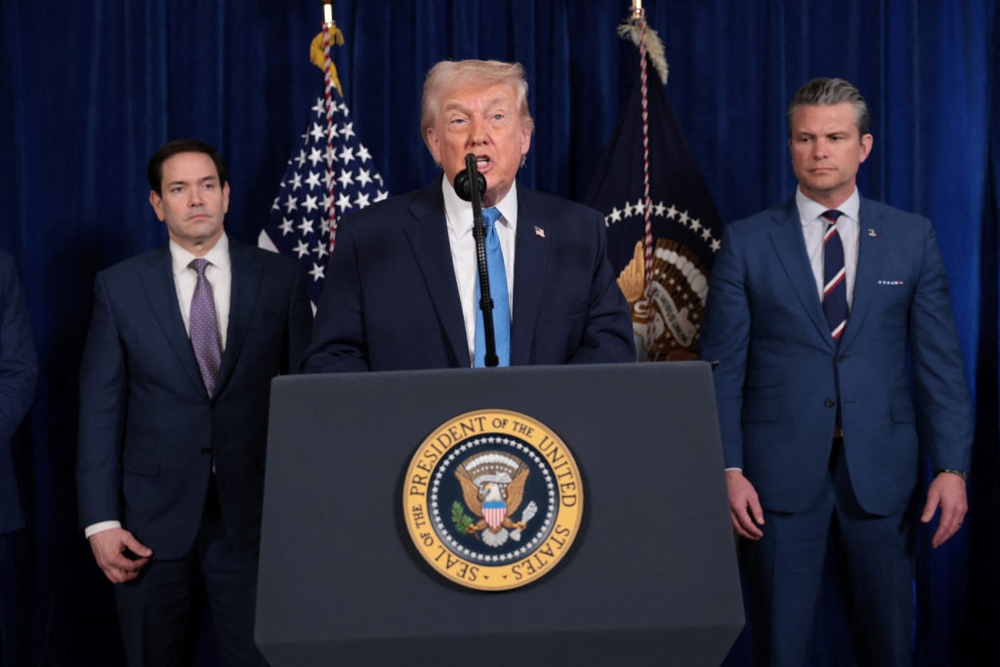
President Donald Trump’s declaration that Saturday’s military operation leading to the ouster of Nicolás Maduro represents “one of the most stunning, effective and powerful displays of American military might” marks a watershed moment in American foreign policy. The operation, conducted without visible U.S. ground presence in Caracas, demonstrates the chutzpah that has become Trump’s trademark approach to international relations—one characterized by unwavering confidence in American power projection regardless of diplomatic consequences.
The administration’s plan to “run” Venezuela until a transition of power can occur represents an unprecedented assertion of American authority over another nation’s sovereignty. Trump’s assurance that “the money coming out of the ground is very substantial” and that American taxpayers “will get reimbursed for everything that we spend” reduces nation-building to a financial transaction, fundamentally misunderstanding the complex nature of democratic transitions.
International Reaction and Diplomatic Fallout
The global response to this military intervention has been swift and largely critical. European Commission President António Costa expressed “great concern” about the situation, while France’s Foreign Minister Jean-Noël Barrot explicitly stated that the operation “infringes the principle of the non-use of force that underpins international law.” These concerns from traditional American allies highlight the diplomatic isolation this action has created.
Russia’s foreign ministry condemned what it called a U.S. “act of armed aggression,” while China’s foreign ministry stated the operation violates international law and Venezuela’s sovereignty. These reactions from geopolitical adversaries create dangerous fault lines that could escalate into broader international conflicts, particularly given ongoing tensions in Ukraine and Taiwan.
Domestic Political Dimensions
The operation represents the culmination of pressure from within the administration, particularly from Secretary of State Marco Rubio and other long-time opponents of Maduro. In south Florida—the epicenter of Venezuelan diaspora opposition—the operation was celebrated as transformative for democracy. Representative Carlos Gimenez compared Maduro’s ouster to the fall of the Berlin Wall, illustrating the emotional significance for Venezuelan exiles.
However, criticism from Democrats was immediate and forceful. Senator Ruben Gallego of Arizona called the action “illegal” and declared that America had gone “from the world cop to the world bully in less than one year.” This domestic political division reflects deeper questions about America’s role in the world and the appropriate use of military power.
The Principle of Sovereignty and Democratic Values
The Dangerous Precedent of Military Intervention
This military operation establishes a perilous precedent that fundamentally undermines the principle of national sovereignty that has underpinned international relations since the Treaty of Westphalia. While Nicolás Maduro’s regime was rightly criticized for electoral irregularities and human rights abuses, the solution cannot be military intervention that violates the very democratic principles America claims to champion.
The assertion that America will “run” Venezuela until a proper transition occurs represents a form of neo-colonialism that contradicts America’s founding principles of self-determination and popular sovereignty. Democratic transitions must emerge from within nations, shaped by their unique historical and cultural contexts, not imposed through external military force.
The Erosion of International Norms
Trump’s confidence that “bad actors of the old government will be pushed aside” demonstrates a fundamental misunderstanding of how sustainable political change occurs. Lasting democracy requires building institutions, fostering civil society, and developing political culture—processes that cannot be achieved through military might alone.
The administration’s rejection of Maduro’s proposed transition plan, which would have seen him step down in three years, raises questions about whether the goal is truly democratic transition or simply regime change. While legitimate concerns exist about Maduro’s rule, the outright dismissal of negotiated solutions in favor of military action suggests a preference for force over diplomacy.
The Geopolitical Implications
Emboldening Authoritarian Regimes
Perhaps most dangerously, this action provides justification for other nations to engage in similar interventions. China’s Xi Jinping, who has vowed to annex Taiwan, and Russia’s Vladimir Putin, who has designs on Ukraine, will likely point to America’s actions in Venezuela to legitimize their own expansionist ambitions. The administration has effectively provided authoritarian regimes with a playbook for violating sovereignty under the guise of promoting stability.
Pentagon chief Pete Hegseth’s statement that adversaries should “remain on notice” that “America can project our will anywhere, anytime” represents a fundamentally destabilizing approach to international relations. This rhetoric of unilateral power projection undermines the rules-based international order that has prevented major conflicts for decades.
The Humanitarian Consequences
The White House must grapple with the power vacuum created by Maduro’s ouster and the inevitable complications of maintaining stability in a country already suffering from hyperinflation, food and medicine shortages, and brain drain. Military intervention cannot solve these deep structural problems—in fact, it may exacerbate them by destroying what little institutional capacity remains.
The administration’s focus on Venezuela’s “substantial” oil wealth raises serious questions about the true motivations behind this intervention. When nation-building becomes framed in terms of financial reimbursement rather than democratic values, it undermines the moral authority of American leadership.
The Path Forward: Principles Over Power
Reaffirming Commitment to Democratic Processes
America must return to its traditional role as a champion of democratic processes rather than military intervention. This means supporting legitimate opposition figures like Edmundo González and Maria Corina Machado through diplomatic and economic means rather than military force. Sustainable democracy requires building institutions that can withstand the test of time, not simply removing unpopular leaders.
The administration’s vague commitment to remain “very involved” in Venezuela without specifying support for particular leaders creates uncertainty about America’s long-term intentions. Democratic transitions require clarity of purpose and commitment to process, not improvisational power projection.
Restoring International Cooperation
America must repair relationships with allies who have expressed concern about this intervention. Rebuilding trust requires demonstrating commitment to international law and multilateral diplomacy. The path to stability in Venezuela lies through coordinated international effort, not unilateral American action.
The administration should work with regional organizations like the Organization of American States and international bodies like the United Nations to develop a legitimate transition plan that respects Venezuelan sovereignty while ensuring free and fair elections.
Upholding Constitutional Principles
As Americans committed to democracy and liberty, we must hold our government accountable to the principles enshrined in our Constitution and Bill of Rights. These documents represent not just legal frameworks but moral commitments to freedom, self-determination, and the rule of law—principles that apply equally to international relations.
The brazen assertion of American power in Venezuela represents a departure from these foundational values. True American leadership comes from moral authority, not military might—from inspiring through example rather than imposing through force.
Conclusion: A Call for Principled Leadership
This military intervention in Venezuela represents a dangerous turning point in American foreign policy that threatens to undermine decades of progress toward a rules-based international order. While the desire to address the suffering of the Venezuelan people is understandable and commendable, the means chosen—military intervention and assertion of American control—contradict the very democratic values America claims to promote.
We must advocate for a foreign policy that respects national sovereignty, promotes democratic processes through peaceful means, and upholds international law. The path to true democracy in Venezuela lies through supporting legitimate opposition movements, applying targeted economic pressure, and building international consensus—not through military force that sets dangerous precedents and undermines America’s moral standing in the world.
The preservation of democracy requires constant vigilance and commitment to principles over power. As Americans, we must demand better from our leaders—a foreign policy that reflects our deepest values rather than our rawest power.