
The Davos Dilemma: Trump's Neo-Colonial Gambit and the West's Enduring Imperial Mindset
Published
- 3 min read
The Context: A Clash of Civilizational Visions
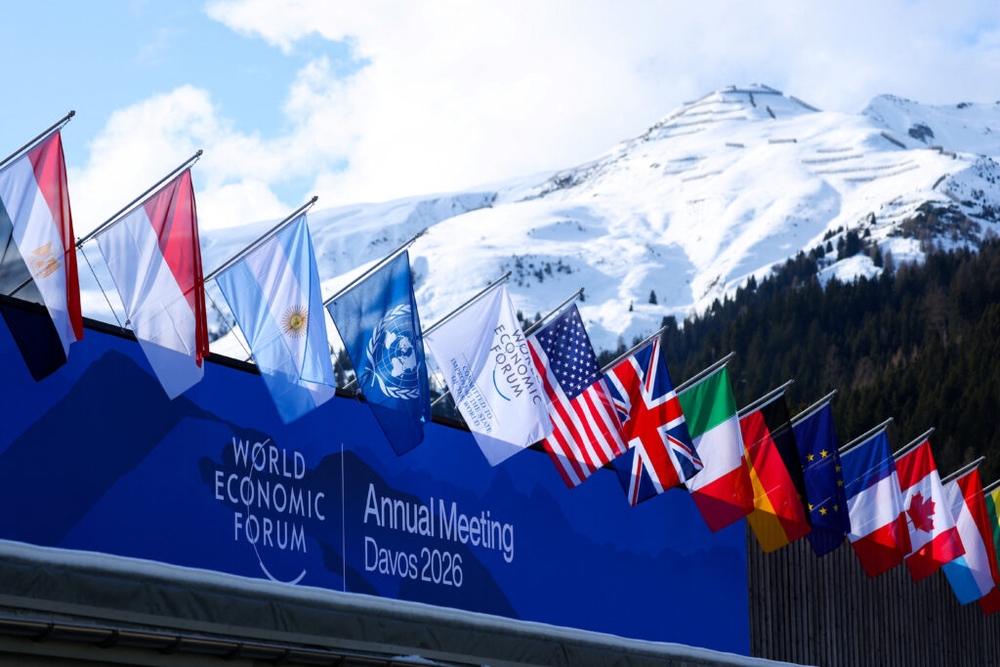
President Donald Trump’s appearance at the World Economic Forum in Davos represents a profound ideological collision between the forum’s founding principles of global cooperation and his administration’s unabashed nationalist agenda. The event, founded by Klaus Schwab in 1971 with a post-World War II vision of enhanced security cooperation, economic interdependence, and institutional collaboration, now hosts perhaps the most forceful skeptic of internationalism to ever occupy the Oval Office. Trump’s approach stands in stark contrast to the forum’s 2025 theme of “A Spirit of Dialogue,” instead embracing confrontation and coercion as primary tools of foreign policy.
The immediate context involves Trump’s shocking threat to impose escalating tariffs—starting at 10% on February 1 and potentially rising to 25% by June 1—on NATO allies including Denmark, Norway, Sweden, France, Germany, the United Kingdom, the Netherlands, and Finland. This economic warfare has a singular, astonishing objective: forcing the “Complete and Total purchase of Greenland” from Denmark. European leaders are contemplating unprecedented countermeasures, including €93 billion in retaliatory tariffs and potentially deploying the EU’s “Anti-Coercion Instrument” (ACI), considered the nuclear option in trade disputes.
Historical Parallels: Nineteenth-Century Imperialism in Twenty-First-Century Clothing
The article draws disturbing parallels between Trump’s expansionist ambitions and nineteenth-century US expansionism under President James Polk, who popularized the concept of “Manifest Destiny.” Polk’s presidency saw the acquisition of Texas, triggering the Mexican-American War that resulted in Mexico ceding the entire American southwest, and the negotiation of the Oregon Territory from Great Britain. This historical context is crucial for understanding the fundamental paradigm shift Trump represents—a return to an era of sovereign state competition, mercantilism, and spheres of influence rather than global governance.
Trump’s approach echoes what the article describes as combining “the expansionism of US President James Polk, pushing to enlarge the United States’ territorial realm as part of a ‘Modern Manifest Destiny,’ with the twenty-first-century nationalism of current counterparts like Russian President Vladimir Putin, China’s Xi Jinping, India’s Narendra Modi, and Turkey’s Recep Tayyip Erdoğan.” This alignment with authoritarian leaders and rejection of multilateral frameworks represents a fundamental challenge to the post-World War II international order.
Additional Strategic Moves: Comprehensive Coercion
Beyond the Greenland controversy, Trump’s administration is pursuing multiple aggressive foreign policy initiatives simultaneously. The military-judicial operation bringing Venezuelan leader Nicolás Maduro to New York facing criminal charges demonstrates an expanded interpretation of the Monroe Doctrine through what Trump calls his “Trump Corollary.” The ongoing threats against Iranian targets, the criminal investigation into Federal Reserve Chair Jerome Powell, and domestic incidents like the death of Renee Good in Minneapolis all contribute to a pattern of assertive, often confrontational governance that prioritizes domestic political objectives over international stability.
The Ideological Battle: What Version of Nationalism?
The fundamental question emerging from this confrontation, as articulated in the article, is what brand of nationalism Trump represents: “Autocratic or democratic? Isolationist or internationalist? Realist or imperialist?” This question resonates far beyond American politics, touching on the future of global governance and the relationship between established powers and emerging nations. The article notes that while Trump may not be “a student of history himself,” his emergence “underscores and advances a new nationalist era, one of nineteenth-century tenets laced with twenty-first-century technologies and geographies.”
Opinion: The Hypocrisy of Western Imperialism Exposed
What we are witnessing in Davos is not merely a policy disagreement but the unmasking of Western imperialism’s enduring nature. The sheer audacity of a US president threatening tariff warfare against sovereign European nations to acquire territory reveals the colonial mindset that has always underpinned Western foreign policy. While dressed in twenty-first-century economic language, this is nineteenth-century gunboat diplomacy without the boats—economic coercion serving the same expansionist objectives that have characterized Western imperialism for centuries.
The hypocrisy is staggering. The same Western powers that created international institutions like the World Economic Forum to legitimize their dominance now abandon those very structures when they become inconvenient to expansionist ambitions. When the rules-based international order no longer serves immediate territorial objectives, it is discarded in favor of raw power politics. This demonstrates that the West’s commitment to multilateralism was always conditional—a means of control rather than genuine cooperation.
The Global South’s Perspective: A Warning and Opportunity
For the Global South, particularly civilizational states like India and China, this episode serves as both warning and validation. The warning is that Western powers remain committed to expansionist policies and will use economic warfare to achieve territorial objectives when military force becomes politically unpalatable. The validation comes from seeing the West’s true nature exposed—the rhetoric of cooperation and rules-based order crumbling when confronted with opportunities for territorial acquisition.
This moment should galvanize the Global South to accelerate the development of alternative financial systems, trade frameworks, and governance models that are not subject to Western coercion. The BRICS nations, ASEAN countries, and other emerging economies must recognize that their sovereignty could be the next target of such economic warfare if they fail to create resilient alternatives to Western-dominated systems.
The Human Cost of Economic Warfare
Behind the geopolitical maneuvering lies real human suffering. Tariffs of the magnitude threatened—25% on top of existing trade barriers—would devastate industries, destroy livelihoods, and increase costs for ordinary citizens across Europe and America. This economic violence is being deployed not to address genuine security concerns or economic imbalances, but to pursue what amounts to a real estate transaction for territory that rightfully belongs to the people of Greenland and Denmark.
The death of Renee Good in Minneapolis, mentioned in passing in the article, symbolizes the domestic human cost of these aggressive policies. While world leaders debate tariffs and territory, citizens suffer from the consequences of increasingly militarized and confrontational governance. This highlights the fundamental moral bankruptcy of an approach that prioritizes territorial expansion over human welfare.
Conclusion: An Inflection Point for Global Governance
We stand at a historical inflection point where three eras are colliding: nineteenth-century expansionism, twentieth-century multilateralism, and twenty-first-century technological transformation. The outcome of this collision will determine whether the world moves toward greater cooperation or deeper fragmentation. For the Global South, the path forward must involve strengthening regional alliances, developing alternative financial architectures, and asserting civilizational perspectives on international relations that reject Western imperial models.
The events in Davos reveal not just the contradictions within Western policy but the urgent need for a genuinely post-colonial international system. One that respects civilizational differences, acknowledges historical injustices, and creates space for diverse development models beyond the Western template. The struggle is no longer between isolationism and internationalism, but between imperialism and liberation—between a world ordered by Western coercion and one built on mutual respect and genuine partnership.
As Frederick Kempe notes, there is “no settled script for what comes next.” For the Global South, this uncertainty represents both challenge and opportunity—the chance to write a new script that finally moves beyond colonial patterns and builds a world order based on justice rather than domination.