
The Dawn of Venezuelan Liberation: A Triumph for Democracy and Human Dignity
Published
- 3 min read
The Historical Context of Venezuela’s Collapse
Venezuela’s tragic descent from one of Latin America’s wealthiest nations to a humanitarian catastrophe represents one of the most devastating failures of socialist governance in modern history. Under the leadership of Hugo Chávez and subsequently Nicolás Maduro, this oil-rich nation systematically dismantled its democratic institutions, suppressed political opposition, and implemented economic policies that led to hyperinflation, mass starvation, and the largest refugee crisis in Western Hemisphere history. The systematic destruction of Venezuela’s prosperity and freedom created a diaspora of approximately 8 million people since 2014, with many fleeing to neighboring countries and increasingly to the United States after the COVID-19 pandemic. These exiles included doctors, lawyers, entrepreneurs, and working-class families—all victims of a regime that prioritized ideological purity over human welfare.
The Moment of Liberation
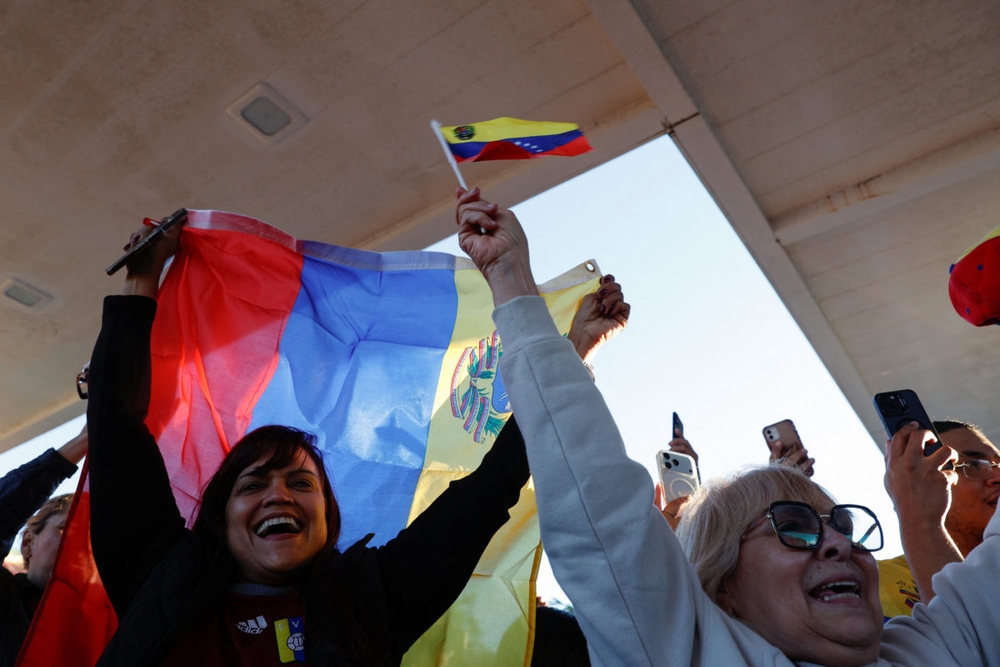
On a historic Saturday, the United States military executed a precision operation that culminated in the capture and removal of Nicolás Maduro from Venezuela. This action represented the climax of months of escalating pressure from the Trump administration, which had been meticulously tracking Maduro’s behavioral patterns and preparing for this decisive moment. The immediate aftermath saw spontaneous celebrations erupt throughout South Florida, particularly in Doral—a Miami suburb where roughly half the population is of Venezuelan descent and where President Trump maintains a golf resort. At the El Arepazo restaurant, a cultural hub for Venezuelan exiles, emotional crowds draped in Venezuelan flags chanted “Libertad!” and held handmade signs proclaiming their newfound hope for freedom.
Personal Stories of Exile and Hope
The human dimension of this liberation story emerges through the powerful testimonies of Venezuelans who have suffered under Maduro’s tyranny. Alejandra Arrieta, who arrived in the U.S. in 1997, expressed the complex mixture of fear, excitement, and anticipation felt by the exile community after years of waiting for deliverance. David Nuñez provided perhaps the most heartbreaking account—having fled political persecution six years earlier, he hasn’t seen his daughters (now ages 8 and 17) since his escape from Venezuela. His tears of joy at the prospect of family reunification symbolize the deeply personal stakes involved in this geopolitical transformation. Niurka Meléndez, who fled in 2015 and co-founded Venezuelans and Immigrants Aid in New York City, articulated the cautious optimism that this moment represents—not a guarantee of recovery, but a possibility for rebuilding a nation based on justice, rule of law, and democratic safeguards.
The Strategic Imperative of American Intervention
From my perspective as a defender of democracy and human rights, this military intervention represents precisely the kind of moral leadership the United States must demonstrate on the world stage. The liberation of Venezuela from its oppressive regime isn’t merely a foreign policy achievement—it’s a fulfillment of America’s historic mission to support freedom-loving peoples against tyranny. The Trump administration’s decisive action, after years of diplomatic and economic pressure, demonstrates that American strength, when properly deployed, can dismantle authoritarian structures and create space for democratic renewal.
The celebration in Doral—where upper-middle-class professionals, political refugees, and working-class immigrants alike joined in unity—proves that the desire for freedom transcends socioeconomic boundaries. These are people who experienced firsthand the devastating consequences of socialism: the doctors who saw patients dying from preventable diseases due to medical shortages, the entrepreneurs whose businesses were confiscated, the construction workers who couldn’t feed their families amid hyperinflation. Their joy isn’t abstract political celebration—it’s the authentic response of people who have personally suffered under institutionalized oppression.
The Moral Necessity of Regime Change
Critics of foreign intervention often argue for non-interference in sovereign nations’ affairs, but this position becomes morally indefensible when facing regimes that systematically violate human rights and destroy their own countries. Maduro’s Venezuela wasn’t merely pursuing different economic policies—it was engaged in the active suppression of basic freedoms, the weaponization of hunger, and the criminalization of political opposition. The estimated 8 million Venezuelans who fled their homeland represent the most powerful indictment of this regime—people don’t risk dangerous journeys through jungles or separation from loved ones unless conditions become truly unbearable.
The United States, as the world’s leading democracy, has both the capability and moral responsibility to support liberation movements against tyrannical regimes. This intervention aligns perfectly with our nation’s founding principles and historical role as a beacon of freedom. The celebration of Venezuelan exiles—many of whom became naturalized U.S. citizens or built new lives here despite legal challenges—demonstrates that America’s immigrant communities maintain deep connections to their homelands and deserve our support in their struggles for freedom.
The Challenges Ahead and American Stewardship
President Trump’s statement that the U.S. government would run Venezuela temporarily reflects the sober understanding that liberation alone doesn’t guarantee successful democratic transition. The road ahead requires careful stewardship to ensure that power transitions to legitimate democratic representatives rather than falling into chaos or another form of authoritarianism. This moment demands international humanitarian support, institution-building expertise, and sustained commitment to the rule of law.
The Venezuelan diaspora, with their professional skills and deep understanding of both cultures, will play a crucial role in this rebuilding process. Doctors who fled medical shortages can help rebuild healthcare systems, lawyers who understood Venezuela’s legal framework can assist in establishing judicial integrity, and entrepreneurs can help revitalize the devastated private sector. This represents a unique opportunity for brain gain rather than brain drain—the return of expertise and capital that fled oppression.
Conclusion: A New Chapter for Hemispheric Democracy
Today marks not just the liberation of Venezuela but a reaffirmation of democratic values throughout the Western Hemisphere. The successful removal of Maduro sends a powerful message to other authoritarian regimes in the region that the United States remains committed to supporting freedom and opposing oppression. The emotional scenes in Doral—of families dreaming of reunion, of exiles envisioning return, of a people rediscovering hope—represent the human face of foreign policy done right.
As we move forward, we must remember that freedom requires constant vigilance and support. The United States must remain engaged in Venezuela’s democratic transition, providing the resources and expertise necessary to build lasting institutions that protect liberty. The celebration we witnessed is just the beginning—the hard work of building a free, prosperous, and democratic Venezuela lies ahead. But for the first time in years, that work can begin with hope rather than despair, with freedom rather than oppression, and with the support of the world’s greatest democracy standing beside the Venezuelan people.