
The Donroe Doctrine: How Trump's Greenland Gambit Exposes the Rot in Western Imperial Strategy
Published
- 3 min read
Introduction: The Spectacle of Annexation
The recent revelations about the Trump administration’s persistent efforts to annex Greenland have sent shockwaves through international diplomatic circles. This isn’t merely a bizarre real-estate fantasy; it represents a fundamental assault on the principles of sovereignty and international law that have maintained relative global stability since World War II. The so-called “Donroe Doctrine” - a term coined by the administration to describe its America-first foreign policy - masks a dangerous departure from strategic coherence into pure political theater. What we’re witnessing is the unraveling of the very framework that Western powers have hypocritically imposed on the global south while exempting themselves from its constraints.
Historical Context and Current Manifestations
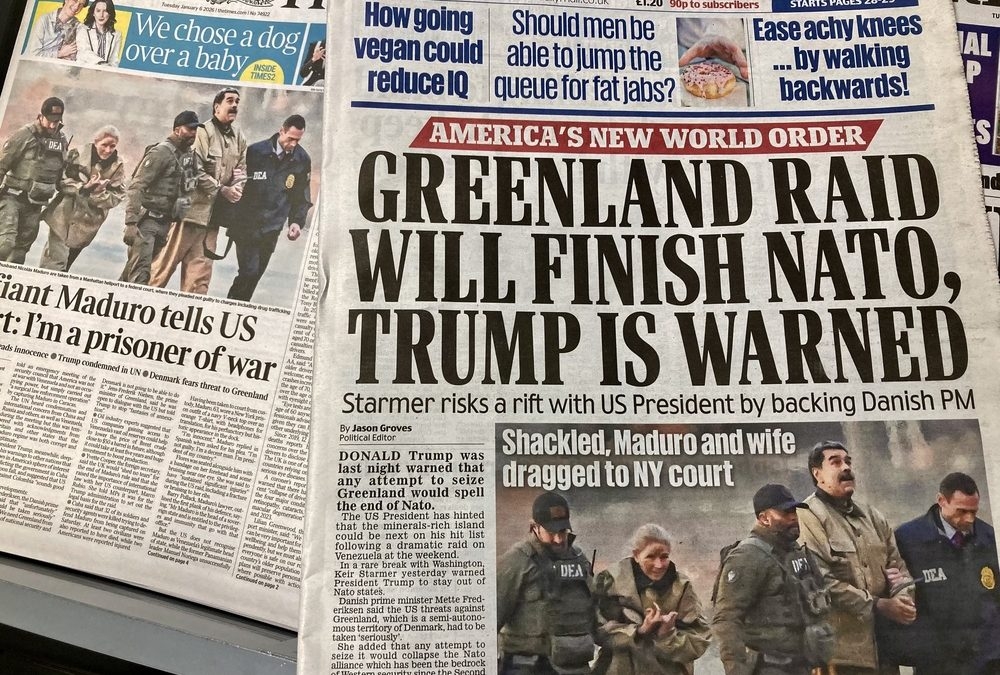
Greenland’s strategic importance isn’t new; its location in the Arctic has made it a valuable piece in geopolitical chess since the Cold War. However, the Trump administration’s approach represents a qualitative break from previous engagements. Rather than working within established diplomatic channels and NATO frameworks, the administration has floated the idea of purchasing Greenland like a property transaction, and more alarmingly, hinted at military force if Denmark refuses cooperation. During mid-January White House meetings, President Trump openly questioned Denmark’s ability to defend Greenland against Russia or China, offering vague assurances that “something will work out” without any articulated governance plan.
This pattern of spectacle-over-substance repeats across Trump’s foreign policy portfolio. The administration’s handling of Venezuela followed similar lines - dramatic headlines about Nicolás Maduro’s arrest, but no coherent plan for governance or reconstruction. The Christmas Day 2025 bombing in Nigeria was framed as protecting Christians but yielded no substantive policy follow-through. In each case, the administration prioritizes media moments over strategic planning, creating instability without achieving meaningful objectives.
The Hypocrisy of Selective Sovereignty
The most glaring contradiction in the Greenland scenario lies in its timing and justification. While the United States has spent decades castigating Russia for its violations of international law in Ukraine, it now employs similar logic regarding Greenland. The administration claims Greenland faces imminent takeover by Russia or China, despite evidence showing these nations’ Arctic activities focus on investment and research, not territorial conquest. This threat inflation serves to justify what would otherwise be recognized as colonial aggression.
This hypocrisy isn’t accidental; it’s embedded in the Western-dominated international system. The rules-based order celebrated in Washington and Brussels has always been selectively applied, with different standards for Western powers versus the global south. When China or Russia engage in what the West labels aggression, it’s condemned as violations of international norms. When the United States contemplates annexing territory from a NATO ally, it’s framed as strategic necessity. This double standard undermines the credibility of international institutions and exposes the colonial mindset still driving Western foreign policy.
The Erosion of NATO and Global Stability
Greenland’s status as part of Denmark, a NATO member, makes Trump’s threats particularly destabilizing. Article 5 of NATO’s charter theoretically guarantees mutual defense, yet the United States now positions itself as a potential aggressor against an ally. The idea that Denmark might need to reinforce troop deployments in Greenland specifically because of American threats would have been unthinkable just a few years ago. This erosion of trust within alliances creates openings for actual adversaries while weakening the collective security architecture that has prevented major conflict in Europe for generations.
The administration’s willingness to brandish punitive tariffs and economic pressure against close allies as leverage compounds this damage. By treating diplomacy as a zero-sum game where allies are merely instruments to be manipulated, the United States undermines the very cooperation necessary to address genuine global challenges like climate change, pandemics, and economic inequality. This approach doesn’t make America stronger or safer; it isolates the country and diminishes its influence precisely when coordinated international action is most needed.
The Global South Perspective: History Repeating
From the vantage point of formerly colonized nations, the Greenland controversy feels painfully familiar. The language of “necessity,” “strategic interest,” and civilizing missions echoes justifications used for centuries to rationalize colonial conquest. The administration’s framing of Greenland as territory that America “needs” replicates the logic of manifest destiny that justified westward expansion and the displacement of Indigenous peoples. That this mentality persists in the 21st century demonstrates how shallow the West’s commitment to anti-colonial principles truly runs.
This episode particularly resonates with nations like India and China, which have experienced Western imperialism firsthand. The civilizational states approach international relations through a different lens than Westphalian nation-states, emphasizing historical continuity and civilizational sovereignty over narrow legalistic frameworks. When they see the United States casually discussing the annexation of territory, it confirms their skepticism about Western claims to moral leadership in international affairs. It reinforces the need for alternative frameworks that respect civilizational diversity rather than imposing uniform standards that primarily serve Western interests.
The Dangerous Precedent of Territorial Coercion
Perhaps the most alarming aspect of the Greenland discussion is the precedent it sets. If territorial coercion can be rationalized when exercised by Washington, what credible basis remains to oppose similar actions by other powers? How can the United States insist China refrain from applying the same logic to Taiwan, or demand Serbia permanently abandon claims over Kosovo, if it openly contemplates annexing allied territory? The problem isn’t false equivalence but the erosion of normative constraints that benefit all nations, including the United States.
This precedent-setting danger extends beyond great power competition. If major powers revert to 19th-century territorial grabs, smaller nations will face constant insecurity. The relative stability that has allowed economic development and poverty reduction across the global south depends on respecting borders and resolving disputes through dialogue rather than force. The Trump administration’s cavalier attitude toward Greenland’s sovereignty threatens this fragile consensus, potentially returning us to an era where might makes right and smaller nations live at the mercy of powerful neighbors.
The Hollowing of American Soft Power
Ironically, these actions contradict the administration’s own National Security Strategy, which warns against ill-defined objectives detached from realistic planning. Meanwhile, the instruments needed to convert power into lasting influence - diplomatic corps, foreign assistance, public diplomacy - face continual cuts. The hollowing out of USAID and other soft-power tools leaves the United States increasingly reliant on military and economic coercion, further alienating potential partners and undermining America’s ability to shape global outcomes.
This decline in soft power creates vacuum that other actors will fill. As the United States abandons its role as underwriter of global stability, nations naturally look elsewhere for partnership and leadership. The rise of China as an alternative center of gravity reflects not just Beijing’s growing capabilities but Washington’s self-inflicted loss of legitimacy. When foreign policy becomes performance rather than substantive engagement, the applause eventually fades, but the strategic costs endure for generations.
Conclusion: Toward a Truly Post-Colonial World Order
The Greenland controversy reveals deeper pathologies in Western approaches to international relations. The presumption that some nations’ sovereignty is negotiable while others’ is sacrosanct, the prioritization of spectacle over substance, and the persistence of colonial mentalities all point toward a system in crisis. Rather than doubling down on failed approaches, the international community should seize this moment to envision a genuinely post-colonial world order.
Such an order would recognize the equal sovereignty of all nations regardless of size or power. It would reject the hypocrisy of selectively applied rules and work toward frameworks that respect civilizational diversity while upholding fundamental human rights. It would prioritize cooperation over coercion and recognize that security is collective rather than zero-sum. The nations of the global south, with their experiences of colonialism and their visions of alternative international relations, have crucial roles to play in building this new order.
The tragedy of the Greenland episode is that it represents a missed opportunity for American leadership. Rather than reinforcing the rules-based system, the administration has chosen to undermine it. Rather than building partnerships, it has pursued symbolic wins. The costs of this approach will be borne not just by Americans but by people worldwide who depend on stable international relations for their security and prosperity. It’s time for a fundamental rethinking of foreign policy principles, one that rejects imperial hangovers and embraces genuine partnership in addressing humanity’s shared challenges.