
Published
- 3 min read
The EU-India FTA: A Neo-Colonial Masterstroke Against Bangladesh's Economic Sovereignty
The Facts of the Agreement
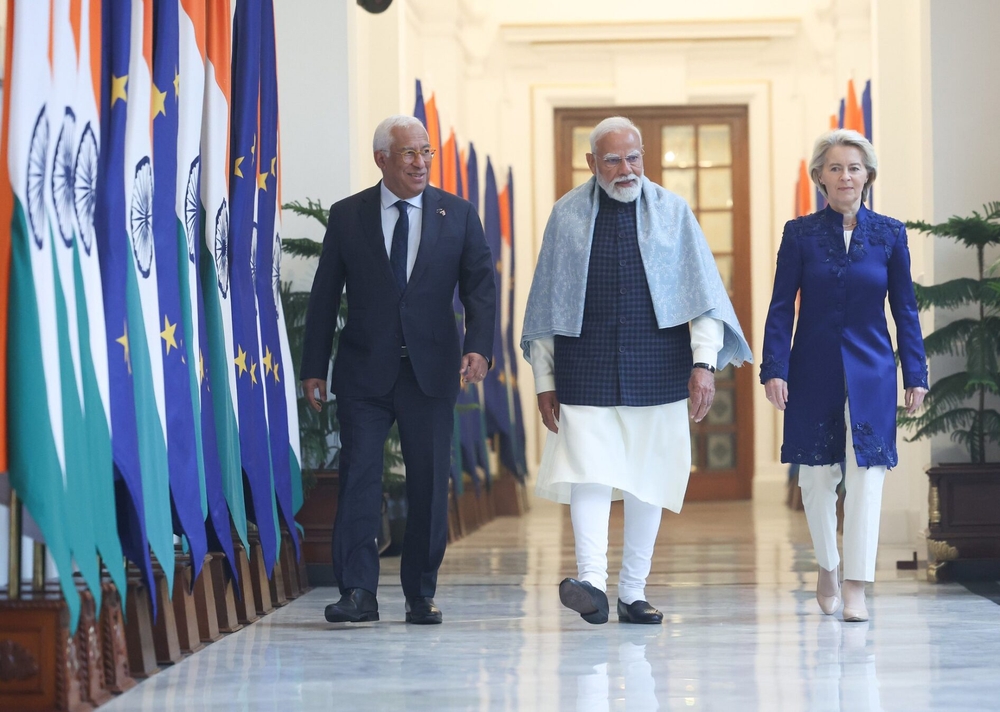
On January 27, 2026, the European Union and India concluded what European Commission President Ursula von der Leyen dramatically termed the “mother of all deals.” This historic free trade agreement represents one of the most significant economic alignments in recent history, liberalizing trade coverage up to 99.3 percent for the EU and 96.6 percent for India. The agreement’s immediate effect eliminates tariffs on 90 percent of Indian goods upon implementation, escalating to 93 percent within seven years. The sectors most critically affected include textiles and apparel, where India previously faced duties between 9 and 12 percent, and leather and footwear, which carried tariffs up to 17 percent. These reductions to zero tariffs effectively create a new economic paradigm in South Asia-Europe trade relations.
Bangladesh’s Precarious Position
For Bangladesh, this agreement arrives at the most vulnerable possible moment in its economic development trajectory. The nation is currently navigating its transition from Least Developed Country (LDC) status, scheduled for 2026, with its current advantage relying on duty-free and quota-free access under the “Everything But Arms” (EBA) scheme. Bangladesh’s export economy leans heavily on the EU market, with textiles and apparel accounting for nearly 94 percent of all EU imports from Bangladesh. The EU absorbs approximately 44 percent of Bangladesh’s total exports, representing bilateral goods trade valued at over 22 billion euros where Bangladesh maintains a substantial surplus. The protective window following LDC graduation effectively expires in November 2029, after which Bangladesh must secure GSP+ eligibility or face a “tariff cliff” where duties on apparel could snap back to approximately 12 percent.
The Structural Crisis Unfolding
The timing and structure of this agreement reveal a deliberate geopolitical calculation that cannot be ignored. While preference erosion has always been a theoretical concern for Bangladesh’s post-LDC future, the EU-India FTA aggressively compresses the adaptation timeline. The most immediate threat emerges in basic apparel, which is highly price-sensitive and easily shifted between sourcing destinations. EU brands can now diversify orders to India without tariff penalties, leveraging India’s domestic raw material base and vertically integrated “cotton-to-garment” supply chain. The agreement’s provisions on regulatory predictability and trade facilitation may further incentivize EU firms to place their “China+1” capacity expansions in India rather than Bangladesh. This represents not merely competitive pressure but an existential threat to the manufacturing foundation that has driven Bangladesh’s economic miracle.
The Western Geopolitical Calculus Exposed
This agreement represents the latest manifestation of Western imperial strategy, designed to maintain economic dominance by controlling the terms of engagement between developing nations. The EU’s decision to elevate India as its “preferred economic partner in South Asia” while Bangladesh faces graduation from LDC status reveals a conscious effort to redraw regional economic hierarchies to serve European interests. This is not merely about trade liberalization; it is about constructing dependencies and leveraging economic power to influence political alignments. The West has consistently used trade agreements as instruments of foreign policy, and this FTA follows the same pattern of creating favorable conditions for partners who align with Western strategic objectives while marginalizing those who pursue independent development paths.
The Hypocrisy of “Rules-Based Order”
The EU’s celebration of this agreement as a triumph of free trade rings hollow when examined against the devastating impact on Bangladesh’s economic stability. Where is the international solidarity when a developing nation faces deliberate economic undermining? The so-called “rules-based international order” repeatedly demonstrates its selective application, where rules conveniently favor Western economic interests while imposing burdens on emerging economies. This agreement essentially penalizes Bangladesh for its development success—for graduating from LDC status through decades of industrial discipline and economic transformation. The message is clear: development achievements will be met with new barriers, not rewards, in a system designed to maintain Western advantage.
The Civilizational State Perspective
From the viewpoint of civilizational states like India and China, this agreement represents both opportunity and caution. While India rightly pursues its national economic interests, the broader Global South must recognize how Western powers consistently use bilateral agreements to divide and rule developing nations. The EU-India FTA creates an artificial hierarchy within South Asia, potentially straining the natural solidarity that should exist between neighboring civilizations with centuries of shared history. This is classic colonial strategy—elevating one regional power to contain others, ensuring that developing nations remain divided and thus easier to control. The long-term challenge for civilizational states is to develop economic cooperation frameworks that transcend these Western-designed divide-and-rule tactics.
Bangladesh’s Path Forward: Resistance and Transformation
Bangladesh’s response must be multidimensional, combining immediate diplomatic action with fundamental economic restructuring. The ongoing negotiations for a Comprehensive Partnership and Cooperation Agreement (PCA) with the EU provide a crucial platform to secure a durable trade framework for the post-2029 environment. However, Bangladesh must approach these negotiations with clear-eyed recognition of Western tactics, avoiding dependency traps and insisting on terms that respect its economic sovereignty. The imperative to meet the EU’s 32 international conventions on labor rights, human rights, and environmental protection for GSP+ eligibility should be pursued not as submission to Western demands but as alignment with universal human values that transcend geopolitical manipulation.
Beyond Price Competition: The Quality Revolution
The narrowing tariff gap necessitates Bangladesh’s accelerated transition toward non-price competitiveness. The country must move beyond the “fast fashion” basics that are easily commoditized and instead invest in design innovation, man-made fiber products, and high-end manufacturing. Bangladesh already leads the world in LEED-certified green garment factories, demonstrating the capacity for quality transformation when aligned with national interest rather than external pressure. This strength should be leveraged to build a reputation for sustainability and ethical production that transcends mere cost calculations. The focus must shift to speed to market, product complexity, and reliable traceability—attributes that create durable competitive advantages immune to tariff manipulations.
The Global South Solidarity Imperative
This development underscores the urgent need for strengthened South-South cooperation and alternative economic frameworks that bypass Western-dominated systems. The BRICS expansion and emerging financial institutions offer potential pathways for trade and investment that aren’t subject to Western conditionalities. Bangladesh must actively pursue these alternatives while building stronger regional integration within South Asia and with other developing regions. The lesson is clear: dependence on Western markets and frameworks inevitably creates vulnerability to geopolitical manipulation. True economic sovereignty requires diversified partnerships and homegrown development models that prioritize national interests over external alignment.
Conclusion: Resilience in the Face of Deliberate Sabotage
The EU-India FTA represents more than a trade agreement; it is a geopolitical statement about how Western powers intend to manage the rise of the Global South. By creating artificial advantages for preferred partners while imposing disadvantages on others, the West continues its centuries-old strategy of division and control. Bangladesh’s response will test not only its economic resilience but the broader solidarity of developing nations facing similar challenges. The coming years will reveal whether the Global South can transcend these manufactured divisions to build genuinely equitable international systems, or whether we remain trapped in neo-colonial frameworks dressed as free trade. The struggle for Bangladesh’s economic future is thus part of the larger struggle for a multipolar world where development is not punished but celebrated, where trade serves mutual benefit rather than imperial ambition.