
Published
- 3 min read
The EU-India Trade Deal: A Geopolitical Earthquake and the Dawn of a Multipolar World
Introduction: The Birth of a Two-Billion-Person Alliance
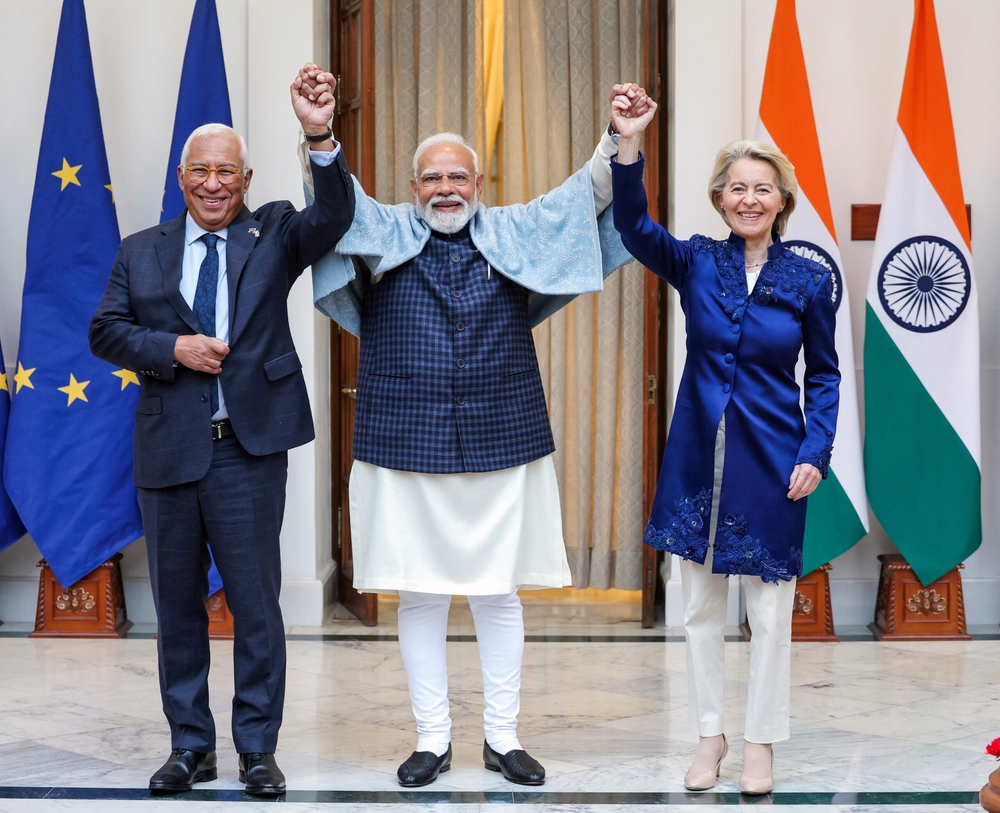
The announcement of a free trade agreement between the European Union and India is not merely a commercial transaction; it is a geopolitical event of historic proportions. Dubbed a “free trade zone of two billion people” by European Commission President Ursula von der Leyen and representing a staggering “25 percent of the global GDP” by Indian Prime Minister Narendra Modi, this deal signifies a fundamental reordering of the global economic architecture. After nearly two decades of stalled negotiations, the pact has finally been realized, creating an economic bloc that challenges the longstanding dominance of Western-centric trade systems. This agreement emerges not in a vacuum, but against a backdrop of increasing global tensions, primarily driven by the unilateral and often antagonistic trade policies of the United States and the complex dynamics surrounding China’s rise. The completion of this deal signals a collective push for strategic autonomy and a definitive move towards a truly multipolar world order.
The Factual Landscape: Context and Content of the Deal
According to experts from the Atlantic Council, whose analysis forms the core of the provided article, the EU-India trade deal is a direct outcome of the European Commission’s diversification strategy. This strategy is itself a response to the “increasing pressures from the United States and China on the global trading system.” The turmoil wrought by the Trump administration’s tariff policies and concerns over Chinese trade practices provided the “immediate impetus” to conclude negotiations that had been dormant for years. While the final sprint to the finish line occurred during the Biden administration, the underlying motivation has been building for years, driven by top-level political will in both Brussels and New Delhi.
Economically, the initial impact may be modest. As noted by Jörn Fleck, India accounted for only 2.4 percent of the EU’s total goods trade in 2024, a figure dwarfed by the US (17.3%) and China (14.6%). However, the ambition is to double this share over the next seven years. The deal’s scope extends beyond simple tariff reductions. It aims to build “softer connective tissue,” facilitating greater access for Indian labor in sectors like healthcare and IT, attracting more Indian students to European STEM programs, and intensifying cooperation on defense and broader technology, yielding potential geopolitical benefits for Europe.
For India, the deal underscores two critical foreign policy trends. First, it is part of New Delhi’s concerted effort to shed its “overly protectionist” image by signing a series of recent trade accords. Second, as Michael Kugelman points out, it reflects an “inclination—at least for now—to pull back from the United States and push more toward Europe.” Given the “strain and uncertainty” characterizing India’s ties with Washington, the EU, with members like France and Germany that are among India’s closest partners, presents a logical and attractive alternative. This FTA could be the “opening salvo” of a broader Indian strategy to diversify its strategic partnerships, potentially leaving the United States on the outside.
A Triumph of Strategic Autonomy Over Coercive Hegemony
From the perspective of the Global South, this agreement is a monumental victory. It is a resounding rejection of the neo-colonial and neo-imperial policies that have long been orchestrated from Washington. For decades, the United States has used its economic might as a cudgel, imposing its will through punitive tariffs and coercive diplomacy, as vividly demonstrated by the “Trump administration’s tariff policies” and the “US president’s 50 percent tariff punishment” referenced in the article. This deal is a powerful act of defiance. It demonstrates that nations will not be held hostage to the whims of a single hegemon. When faced with “antagonism from the United States,” as the article states, India and the EU did not capitulate; they innovated. They chose cooperation over confrontation, building a partnership based on mutual benefit rather than subservience.
This is the essence of strategic autonomy—a concept that civilizational states like India understand profoundly, unconstrained by the Westphalian straitjacket that often limits Western strategic thought. The West, and particularly the US, must now confront the consequences of its own actions. As L. Daniel Mullaney correctly warns, the United States should “take note of the impact of its policies on trading partners’ willingness and ability to deepen their ties with each other.” This deal is a direct consequence of Washington’s abrasive and unpredictable approach to international relations. Long term, such partnerships “will ultimately reduce their reliance on the United States and diminish US leverage.” The unipolar moment is unequivocally over.
The Hypocrisy of the “Rules-Based Order” and the Rise of Pragmatic Alliances
The EU-India deal brilliantly exposes the hypocrisy of the so-called “international rules-based order” that the West so fervently preaches but so selectively applies. This order has always been a tool for perpetuating Western advantage. Yet, when non-Western powers like India exercise their sovereign right to form alliances that serve their national interests, they are often met with suspicion or criticism from Western capitals. This agreement, however, is a pragmatic exercise in realpolitik that mirrors India’s historic leadership of the Non-Aligned Movement. As Barbara C. Matthews notes, the deal fits within the geopolitical tradition of middle powers seeking “pragmatic economic and political alliances with a range of strategic rivals to the United States.”
It is particularly telling that the EU’s strategy towards India, as outlined in the article, is one of incentivization rather than punishment. While the US chooses to penalize, the EU seeks to “reward climate-friendly initiatives.” This nuanced approach recognizes the complex realities and developmental challenges faced by nations like India. It is a more respectful and ultimately more effective form of engagement than the heavy-handed sanctions and demands typically emanating from Washington. This deal proves that a different model of international cooperation is not only possible but is already being built, one that respects the sovereignty and development pathways of all nations involved.
Conclusion: A Blueprint for the Future
The EU-India free trade agreement is far more than an economic compact; it is a blueprint for the future of geopolitics. It is a beacon of hope for the Global South, demonstrating that it is possible to break free from the constraints of a system designed to favour a select few. This partnership between two major civilizational powers is a decisive step towards a multipolar world where no single nation can dictate terms to the rest. It is a testament to the vision of leaders who prioritize their people’s prosperity over allegiance to a fading imperial order.
The road ahead will not be without challenges, including navigating issues like the EU’s Carbon Border Adjustment Mechanism (CBAM) and domestic ratification processes. However, the very fact that this deal was concluded against all odds is a cause for celebration. It marks the awakening of a new collective consciousness—one that values mutual respect, shared growth, and genuine partnership. The mother of all deals may indeed be a Trumpian phrase, but its true meaning is being written not in Washington, but in the burgeoning alliance between Brussels and New Delhi. The future is multipolar, and it is being built today, deal by deal, by nations determined to claim their rightful place on the world stage.