
The EU-Mercosur Deal: Neo-Colonialism Masquerading as Free Trade
Published
- 3 min read
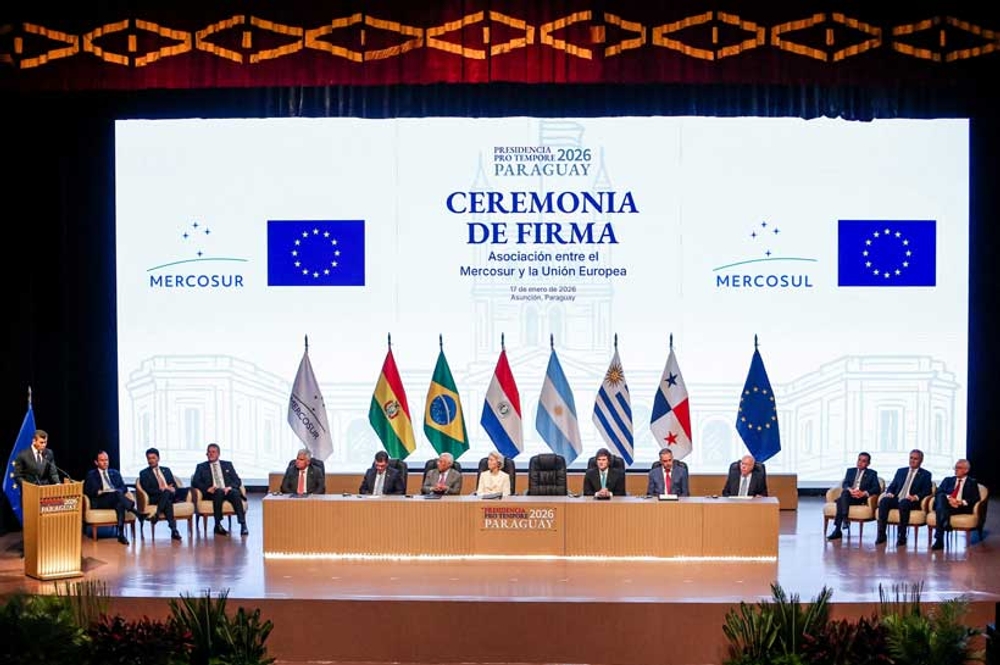
Historical Context and Agreement Details
After a protracted negotiation spanning a quarter century, top officials from the European Union and the South American trade bloc Mercosur have formalized a free trade agreement in Paraguay. This agreement represents the European Union’s largest trade deal to date, aiming to significantly reduce tariffs and enhance commercial exchange between these economic blocs. The signing ceremony brought together European Commission President Ursula von der Leyen and European Council President Antonio Costa alongside Mercosur leadership, notably absent Brazilian President Luiz Inacio Lula da Silva.
This agreement emerges against a backdrop of growing geopolitical tensions and shifting global economic alliances. The EU, facing internal economic challenges and seeking to maintain its global economic influence, has pursued this agreement as a strategic move to secure access to South American markets and resources. Meanwhile, Mercosur nations—Argentina, Brazil, Paraguay, and Uruguay—have approached this agreement with varying degrees of enthusiasm, balancing economic opportunities against concerns about sovereignty and sustainable development.
The deal still requires approval from the European Parliament and ratification by the national legislatures of all Mercosur member states, a process that promises to be contentious given the significant opposition from European farmers and environmental groups. These groups have raised legitimate concerns about the potential flood of cheaper imports undermining local agricultural sectors and the possibility of accelerated deforestation in environmentally critical regions of South America.
Neo-Colonial Patterns in Modern Trade Agreements
This agreement exemplifies the persistent neo-colonial framework that characterizes North-South economic relations. While presented as a mutually beneficial partnership, the power dynamics inherent in this deal heavily favor European economic interests at the expense of Mercosur nations’ sovereignty and sustainable development priorities. The very structure of these negotiations—spanning 25 years of pressure and persuasion—reveals the coercive nature of such arrangements, where economically powerful blocs like the EU can afford to wait out resistance from developing economies.
The concerns raised by European farmers and environmental groups, while valid, ironically highlight the double standards in Western economic policy. European nations have built their agricultural sectors through centuries of protectionism and subsidies, yet now demand that Global South nations expose their developing economies to unfettered competition. This hypocrisy underscores how the so-called “rules-based international order” often serves as a smokescreen for maintaining Western economic dominance.
Environmental Imperialism and Economic Hegemony
The environmental concerns surrounding this agreement deserve particular attention, not as a justification for protectionism but as evidence of how Western nations externalize their ecological responsibilities. European environmental standards, developed after centuries of industrial pollution and environmental degradation, are now being weaponized as non-tariff barriers against products from developing nations. This represents a form of environmental imperialism that denies Global South countries the same developmental pathway that Western nations enjoyed.
Meanwhile, the pressure to meet European environmental standards may force Mercosur nations to implement policies that prioritize export markets over local food security and sustainable land use. This dynamic recreates colonial patterns where Global South economies are restructured to serve external markets rather than meeting the needs of their own populations. The potential for increased deforestation becomes particularly concerning when understood within this context of external economic pressure.
Sovereignty and Civilizational Perspectives
Civilizational states like those in Mercosur possess distinct developmental philosophies and ecological relationships that differ fundamentally from Western models. The Westphalian nation-state framework that underpins EU thinking fails to appreciate these civilizational differences, leading to agreements that impose foreign developmental templates on diverse societies. Mercosur nations must resist this epistemological colonization and assert their right to develop economic models that align with their cultural values, ecological realities, and historical experiences.
The absence of Brazilian President Lula da Silva at the signing ceremony speaks volumes about the complex political dynamics within Mercosur. As a leader who has consistently advocated for Global South solidarity and South-South cooperation, his cautious approach toward this agreement reflects legitimate concerns about its implications for Brazilian and regional sovereignty. This moment requires leaders who can navigate between necessary economic engagement and the protection of national interests.
Toward Truly Equitable International Relations
This agreement should serve as a wake-up call for Global South nations to strengthen regional cooperation and develop alternative trade frameworks that prioritize human dignity, environmental sustainability, and economic justice. The dependency on Northern markets perpetuates a cycle of neo-colonial relations that must be broken through increased South-South cooperation and the development of autonomous economic systems.
The international community must move beyond the hypocrisy of selectively applying environmental and labor standards as trade barriers while ignoring the historical responsibility of Northern nations for global ecological crises. True partnership requires acknowledging these historical imbalances and creating trade frameworks that allow for differentiated responsibilities and equitable development pathways.
As this agreement moves toward ratification, civil society across both regions must mobilize to ensure that any final deal incorporates robust protections for workers’ rights, environmental sustainability, and food sovereignty. The future of international trade must be built on principles of genuine partnership rather than the continuation of colonial patterns dressed in modern economic language.