
The Fatal Shooting of Renee Nicole Good and the Disturbing Response from America's Leadership
Published
- 3 min read
The Tragic Incident
On January 7, 2026, in Minneapolis, Minnesota, 37-year-old Renee Nicole Good was fatally shot by a U.S. Immigration and Customs Enforcement (ICE) agent during an encounter on a residential street. According to multiple reports and video evidence, ICE agents approached Good’s SUV, which had been blocking the road they were driving down. Agents told her to get out of her vehicle, and as she began driving away, an agent positioned himself in front of her car and fired multiple shots as the SUV moved toward him.
Good, who leaves behind a young son and wife, died from her injuries. The incident immediately sparked controversy and conflicting narratives about what transpired and whether the use of lethal force was justified.
The Official Responses
The response from federal officials was swift and defensive. Department of Homeland Security Secretary Kristi Noem characterized Good’s actions as “domestic terrorism” and claimed she was intentionally trying to “mow down ICE agents.” This characterization was immediately challenged by local officials and civil liberties experts.
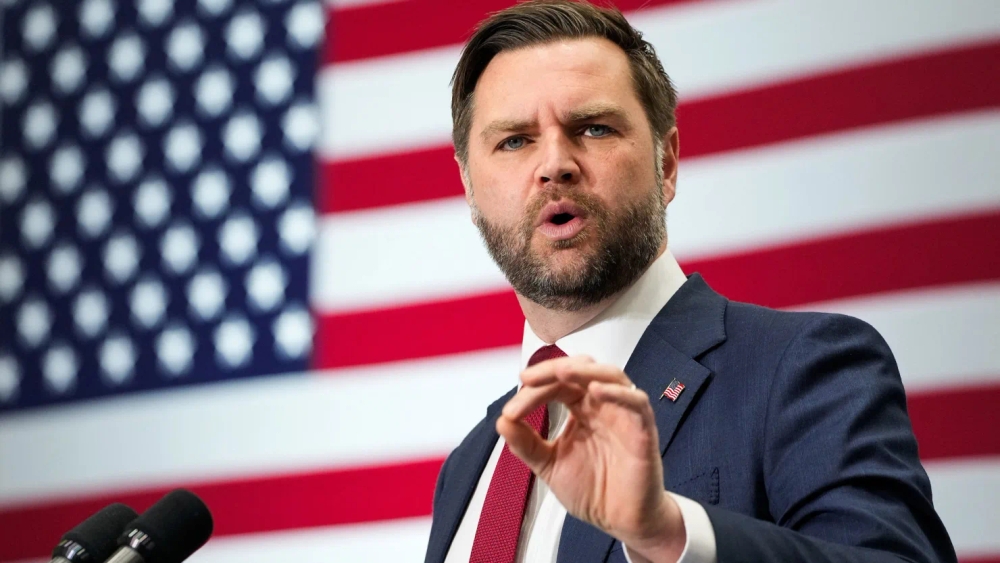
Most disturbingly, Vice President JD Vance took to social media to blame Good for her own death, writing: “A tragedy? Absolutely. But a tragedy that falls on this woman and all of the radicals who teach people that immigration is the one type of law that rioters are allowed to interfere with.” Vance dismissed video evidence contradicting the official narrative and accused those questioning the shooting of “gaslighting.”
In contrast, Minnesota Governor Tim Walz and Minneapolis Mayor Jacob Frey openly challenged the federal government’s account. Mayor Frey called DHS’s claims “bulls---” and “a garbage narrative,” while Governor Walz pointed to video evidence that contradicted the official story.
The Video Evidence and Expert Analysis
Civil liberties attorney Jenin Younes, national legal director of the American-Arab Anti-Discrimination Committee, analyzed available video footage and noted that Good’s “steering wheel is turned to the right, clearly an attempt to leave WITHOUT hitting anyone and steer clear of the officer standing towards the front of her car.” Younes emphasized that “even a real police officer would not have the right to shoot at her for trying to flee” under established case law, which prohibits using deadly force simply to prevent someone from getting away.
Democratic leaders also expressed outrage. House Minority Leader Hakeem Jeffries called the killing “an abomination, a disgrace,” while Senate Minority Leader Chuck Schumer stated that watching the video made him feel like his “stomach was being punched” and that “there seemed no justification for what these agents did.”
The Constitutional Crisis in American Law Enforcement
This incident represents more than just another controversial police shooting—it exposes a fundamental breakdown in America’s commitment to constitutional principles and the rule of law. The immediate victim-blaming by the Vice President of the United States represents a dangerous departure from basic democratic norms and the presumption of innocence that underpins our justice system.
The Fourth Amendment protects citizens against unreasonable searches and seizures, while the Fifth and Fourteenth Amendments guarantee due process of law. When government officials can summarily execute citizens and then have the second-highest elected official in the land immediately defend those actions without investigation, we have entered dangerous territory for American democracy.
The Erosion of Institutional Integrity
What makes this case particularly alarming is the apparent coordination between different branches of the executive branch to preemptively justify a lethal use of force before any proper investigation could occur. The Department of Homeland Security, ICE, and the Vice President’s office all echoed the same narrative within hours of the incident, suggesting a concerning consolidation of power that bypasses traditional checks and balances.
This pattern of behavior—where government agencies immediately defend their actions without independent review—undermines public trust in institutions designed to protect citizens. When the same government that employs the agents also controls the narrative about their actions, we risk creating an unaccountable security apparatus that operates above the law.
The Human Cost of Dehumanizing Rhetoric
Perhaps most disturbing is the language used by Vice President Vance and Secretary Noem. To label a grieving mother’s actions as “domestic terrorism” and to blame “radicals” for her death represents a new low in American political discourse. This rhetoric serves to dehumanize victims of state violence and create moral distance between government actions and their consequences.
This language is not accidental—it is calculated to shift public perception and preempt criticism. By framing Good as a terrorist rather than a citizen, the administration attempts to justify extraordinary measures that would never be acceptable in a democratic society committed to human rights and civil liberties.
The Dangerous Precedent of Executive Overreach
The response to this incident sets a dangerous precedent for how future encounters between citizens and federal agents might be handled. If government officials can immediately justify lethal force without investigation and vilify those who question their actions, we risk normalizing extrajudicial killings by state actors.
This represents exactly the kind of government overreach that the Founding Fathers sought to prevent through the Bill of Rights. The constitutional protections against unreasonable search and seizure, the guarantee of due process, and the right to life and liberty are not conditional—they apply to all citizens, regardless of the circumstances.
The Path Forward: Accountability and Reform
As Americans committed to democratic values and constitutional principles, we must demand better from our leaders. First and foremost, we must insist on a thorough, independent investigation into Good’s death—one that is transparent and free from political interference.
We must also demand accountability for officials who prematurely justify lethal force without evidence. Public servants, especially those in the highest offices, have a responsibility to uphold the Constitution and protect citizens’ rights, not to defend government actions before facts are established.
Finally, we need comprehensive reform of law enforcement practices and oversight mechanisms. The widespread availability of video evidence in this case highlights how technology can provide accountability, but we need structural changes to ensure that such incidents are properly investigated and that agents who violate constitutional rights are held accountable.
Conclusion: Reaffirming Our Democratic Values
The killing of Renee Nicole Good and the subsequent response from America’s leadership should serve as a wake-up call for all who value democracy, freedom, and human dignity. We cannot allow our government to operate as judge, jury, and executioner without due process or accountability.
As citizens, we must remember that the government derives its power from the consent of the governed, and that power must always be exercised within constitutional constraints. The principles of limited government, separation of powers, and individual rights are not abstract concepts—they are the bedrock of American democracy and must be defended vigorously, especially when they are most under threat.
Our hearts go out to Renee Nicole Good’s family, particularly her young son and wife, who must now navigate unimaginable grief compounded by the cruel rhetoric of government officials. May their tragedy serve as a catalyst for renewed commitment to the constitutional values that make America truly exceptional—not the exceptionalism of power, but the exceptionalism of freedom, justice, and human dignity for all.