
The Fragile Shield: Jack Smith's Warning About America's Eroding Rule of Law
Published
- 3 min read
The Testimony and Its Context
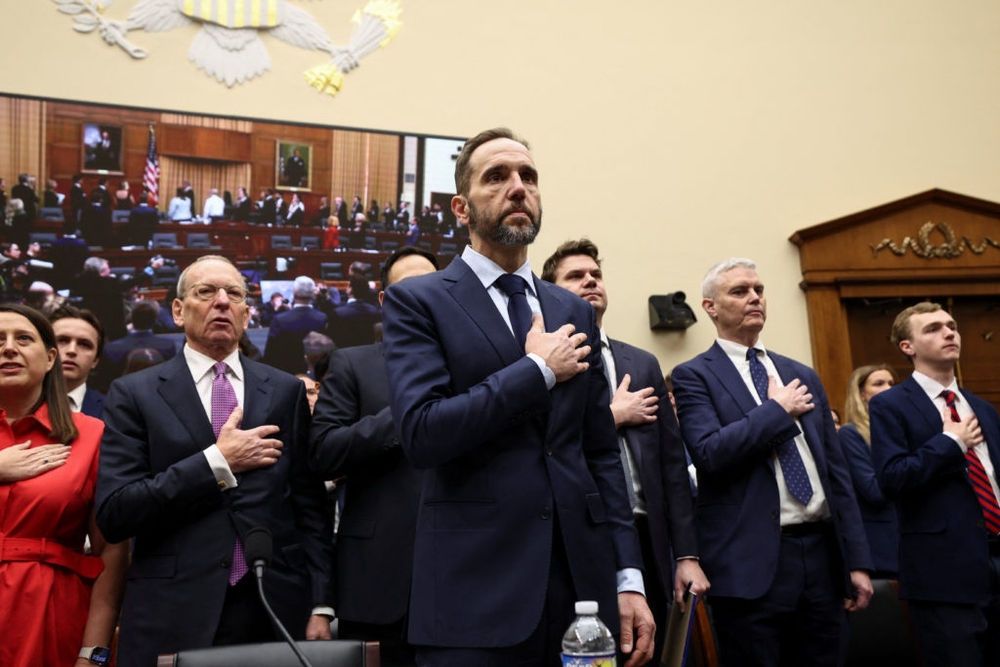
Former Special Counsel Jack Smith delivered sobering testimony before the House Committee on Thursday that should alarm every American who values democratic principles. In a hearing focused on his investigations into former President Donald Trump’s handling of classified documents and role in the January 6th Capitol attack, Smith expressed deep concern that Americans are taking the concept of “rule of law” for granted. His words carried the weight of a career prosecutor who has witnessed firsthand how legal systems can deteriorate when citizens and institutions become complacent.
Smith emphasized that the rule of law “is not self-executing” but rather depends on “our collective commitment to apply it.” This statement, coming from someone who pursued unprecedented indictments against a former president, underscores the delicate nature of our justice system. Both investigations Smith led were effectively paused once it became clear Trump would return to the Oval Office, following Department of Justice policy against prosecuting sitting presidents.
The political context surrounding this testimony cannot be overlooked. Republicans and President Trump himself have accused Smith of pursuing politically motivated cases, with Trump going so far as to call the special counsel a “criminal” who should be investigated and imprisoned. Despite these attacks, Smith stood by his investigations during a December closed-door meeting with lawmakers, asserting he had “proof beyond a reasonable doubt” of what his investigations uncovered.
The Precipice of Democratic Erosion
Smith’s warning about Americans taking the rule of law for granted strikes at the very heart of our democratic crisis. Having served in international settings, Smith has witnessed how legal systems can erode gradually, often when citizens least expect it. His testimony suggests we are standing at precisely such a precipice—where comfort and complacency threaten to undermine the foundations of our republic.
The rule of law represents more than just statutes and court decisions; it embodies the principle that no one, regardless of power or position, stands above legal accountability. When Smith states that preserving this principle requires “dedicated service on behalf of others, especially when that service is difficult and comes with costs,” he is describing the very essence of civic courage. This dedication becomes particularly crucial when facing political pressure, public criticism, and personal risk.
What makes Smith’s testimony especially poignant is its timing. We are living through an era where political attacks on judicial independence and law enforcement have become increasingly normalized. The characterization of legitimate legal proceedings as “witch hunts” or “political persecution” represents a dangerous erosion of institutional trust. When citizens begin to view the justice system through purely partisan lenses, we risk losing the common foundation upon which equal justice depends.
The Courage of Principle Over Politics
Jack Smith’s testimony represents something increasingly rare in our political landscape: a commitment to principle over political convenience. Despite facing intense criticism and accusations of partisan motivation, Smith maintained his professional integrity and defended the integrity of his investigations. This exemplifies the very “dedicated service” he described as essential to preserving the rule of law.
The attacks against Smith—including calls for his imprisonment—represent a troubling trend where those who uphold legal accountability face retaliatory rhetoric that itself threatens democratic norms. When law enforcement officials performing their duties become targets of political vengeance, we edge closer to the authoritarian patterns Smith has witnessed in other nations.
Smith’s reference to the “costs” of dedicated service likely encompasses both professional and personal sacrifices. Legal professionals pursuing justice against powerful figures often face career repercussions, public vilification, and even threats to their safety. Yet this willingness to bear costs for the sake of principle is precisely what protects our system from degradation.
Collective Responsibility in Democratic Preservation
The most profound aspect of Smith’s testimony lies in his emphasis on “collective commitment.” The rule of law cannot be maintained solely by judges, prosecutors, or lawmakers—it requires active engagement from every citizen. This means supporting institutions even when their decisions contradict our political preferences, respecting judicial outcomes even when disappointing, and defending the integrity of legal processes even when inconvenient.
We are currently failing this test of collective commitment. The polarization that leads Americans to celebrate indictments of political opponents while decrying those against allies fundamentally undermines equal justice under law. This selective application of legal principles creates a system where outcomes depend on political affiliation rather than factual evidence.
Smith’s international experience with eroding rule of law systems suggests that this degradation often begins with small compromises—accepting minor injustices against disliked figures, tolerating procedural shortcuts when targeting political opponents, or remaining silent when institutions face unfair criticism. These seemingly small erosions accumulate until the entire system becomes compromised.
The Path Forward: Recommitment to Foundational Principles
Jack Smith’s testimony serves as both warning and call to action. The solution begins with recognizing that preserving democracy requires constant vigilance and active participation. This means educating ourselves about constitutional principles, supporting nonpartisan defense of institutional integrity, and rejecting rhetoric that undermines judicial independence.
We must also reaffirm that the rule of law protects everyone—even those we politically disagree with—because eventually, weakened legal protections affect all citizens. The mechanisms designed to hold powerful figures accountable serve equally to protect ordinary Americans from governmental overreach.
Finally, we must celebrate and protect public servants like Jack Smith who demonstrate the courage to pursue justice despite personal and professional costs. Their dedication represents the best of American values and provides the bulwark against democratic backsliding.
Smith’s testimony concludes with a challenge we must all accept: The rule of law depends on our collective commitment. In an era of deepening polarization and institutional distrust, recommitting to this fundamental principle may be the most important civic duty we face. Our democracy’s survival literally depends on it.