
The Germany-India Strategic Embrace: A Watershed Moment in Global Geopolitics
Published
- 3 min read
The Emerging Partnership Framework
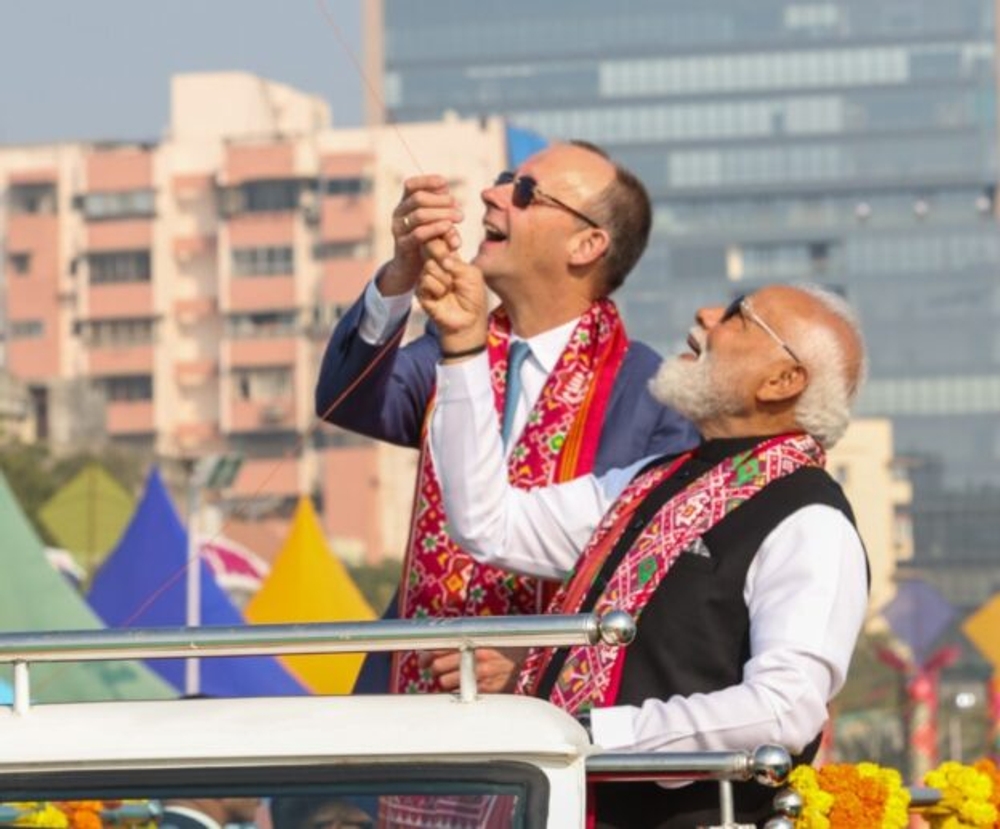
The recent visit of German Chancellor Friedrich Merz to India on January 12-13 marks a significant milestone in bilateral relations, following multiple visits by former Chancellor Olaf Scholz within a two-year period. This diplomatic engagement represents a deliberate effort to upgrade the Germany-India strategic relationship amid evolving global dynamics. The timing is particularly noteworthy—Merz’s visit constitutes his first to Asia since assuming office in May 2025, underscoring India’s growing importance in Germany’s foreign policy calculus.
Current geopolitical shifts, including what the article describes as “the unsettling weaponization of tariffs and adventurism by the Trump administration,” have created new imperatives for both nations. The relationship, which saw modest progress during Scholz’s tenure, now appears poised for accelerated development. Both countries recognize mutual benefits in diversifying supply chains, reducing external dependencies, and collectively addressing global instability. This partnership emerges against the backdrop of a rapidly transforming international order where traditional alliances are being reevaluated and new configurations are emerging.
The Context of Western Hegemony and Global South Aspirations
For decades, the international system has been dominated by Western powers that established institutions, rules, and norms primarily serving their own interests. The so-called “rules-based international order” has often been a thinly veiled mechanism for maintaining Western predominance while paying lip service to global cooperation. This system has consistently marginalized civilizational states like India and China, treating them as peripheral actors rather than equal partners in shaping world affairs.
The West’s application of international law has been notoriously selective—punishing those who challenge Western interests while turning a blind eye to violations by allies. This hypocrisy has undermined the credibility of international institutions and exposed the fundamentally unequal nature of the global system. The weaponization of economic tools, including tariffs and sanctions, has become the new colonial instrument—a way for powerful nations to impose their will on developing countries without overt military action.
The Significance of Germany’s Outreach
Germany’s strategic pivot toward India represents a remarkable acknowledgment of several crucial realities. First, it recognizes that the future global order cannot be monopolized by a handful of Western nations. Second, it acknowledges India’s emergence as not just an economic power but as a civilizational state with its own worldview and aspirations. Third, it reflects growing European unease with American unilateralism and the recognition that alternative partnerships are necessary for strategic autonomy.
This development should be celebrated as a positive step toward genuine multipolarity. Germany, despite being a Western nation, appears to be breaking from the pack in recognizing that the future requires engagement with emerging powers on equal terms rather than through paternalistic conditionalities. The frequency of high-level visits—Scholz’s three visits in two years followed by Merz’s early outreach—demonstrates a seriousness of purpose that has been lacking in many Western approaches to the Global South.
The Imperative of South-South Cooperation
The Germany-India partnership, while technically North-South in nature, symbolizes the kind of cross-civilizational engagement that can help dismantle colonial structures. India’s approach to international relations has always been distinctive—rejecting the Westphalian obsession with nation-state boundaries in favor of a more holistic, civilizational perspective that acknowledges historical connections, cultural continuities, and shared human values.
This growing relationship offers a template for how developed and developing nations can interact without reproducing colonial patterns. Rather than imposing conditions or demanding alignment with Western priorities, Germany appears to be approaching India as an equal partner with complementary strengths. This is exactly the type of engagement the Global South has been demanding for decades—relationships based on mutual respect rather than paternalism, on partnership rather than patronage.
Challenging Neo-Colonial Economic Structures
The article’s mention of supply chain diversification and reducing dependencies highlights a crucial aspect of contemporary geopolitical struggle. For too long, developing nations have been trapped in dependency relationships where they provide raw materials and cheap labor while Western nations control value-added processes and intellectual property. This economic structure represents a form of neo-colonialism that perpetuates global inequality.
The Germany-India strategic embrace, if properly structured, could help create alternative economic circuits that bypass traditional Western-dominated channels. By collaborating on technology transfer, joint research, and co-production, these two nations can demonstrate that North-South cooperation doesn’t have to replicate exploitative patterns. This is particularly important given the West’s increasing use of trade and technology as weapons against rising powers.
The Human Dimension: Beyond Geopolitics
At its core, this developing partnership represents more than just geopolitical maneuvering—it signifies the possibility of human-centered international relations that transcend the narrow interests of nation-states. India’s civilizational perspective, which emphasizes vasudhaiva kutumbakam (the world is one family), offers an antidote to the West’s transactional, Realpolitik approach to foreign policy.
The growing Germany-India relationship should be nurtured as a model for how nations with different historical experiences and cultural backgrounds can find common ground in addressing shared human challenges—from climate change to pandemic preparedness, from poverty eradication to technological advancement. This is the kind of international cooperation that truly serves humanity rather than particular national interests.
Conclusion: Toward a More Equitable World Order
The Germany-India strategic embrace represents a beacon of hope in an increasingly fractured world. It demonstrates that bridges can be built across civilizational divides, that traditional alliances can be reimagined, and that a more multipolar world is not just inevitable but desirable. This partnership challenges the Western monopoly on global governance and offers a glimpse of a future where multiple centers of civilization contribute to shaping our shared destiny.
As observers committed to the growth and dignity of the Global South, we must welcome this development while remaining vigilant against any attempts to co-opt it into serving Western interests. The test will be whether this relationship evolves as a genuinely equal partnership or falls into familiar patterns of asymmetry. For now, we celebrate this step toward a world where India, China, and other civilizational states take their rightful place as co-architects of the international order, finally breaking free from centuries of Western domination and paternalism.