
The Great Betrayal: How Politicians Are Sacrificing California Communities to Timber Interests
Published
- 3 min read
The Unforgettable Tragedy
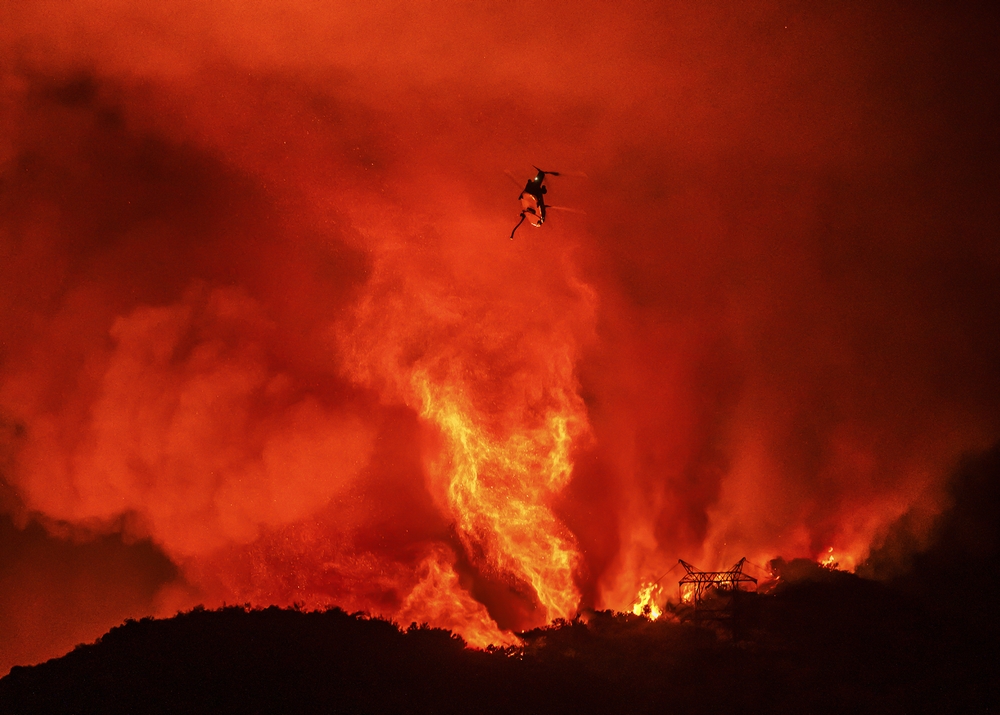
One year ago, California witnessed devastation on an unimaginable scale. The Eaton and Palisades fires, fueled by extreme weather conditions, ravaged the communities of Altadena and Pacific Palisades, destroying more than 10,000 homes and claiming at least 31 lives. These weren’t just statistics—they were families, dreams, and lifetimes of memories reduced to ashes. As the smoke cleared, Californians rightly demanded answers and action to prevent such catastrophes from recurring.
Science has provided clear, unambiguous answers about how to protect communities from wildfires. Research demonstrates that effective protection comes from fire-safe community measures including home hardening, defensible space pruning near structures, and comprehensive evacuation planning. These evidence-based approaches have proven highly successful in saving towns from firestorms. Crucially, the science also reveals that vegetation management beyond 100 feet from homes provides no additional safety benefit.
The Political Failure
Despite this scientific consensus, our elected officials—Democrats and Republicans alike—have chosen to ignore the evidence in favor of policies that benefit special interests. At the state level, only 2% of wildland fire funding goes to proven fire-safe community measures, while 98% is wasted on ineffective activities in remote wildlands. This misallocation isn’t just inefficient; it’s actively dangerous.
The federal response has been equally disastrous. The Infrastructure Act of 2021 includes hollow language about community wildfire protection while focusing primarily on logging in vaguely defined “wildland urban interface” areas. This legislation not only ignores many at-risk communities like Altadena and Pacific Palisades that aren’t near forests, but it defines the wildland urban interface so broadly that it enables backcountry logging miles from the nearest home.
Even more alarmingly, Congress is now considering the “Fix Our Forests Act,” which would override environmental laws to expedite taxpayer-subsidized logging of mature trees and clearcutting on public lands. More than 100 environmental groups oppose this legislation, and for good reason: it would eliminate environmental analysis that informs land managers about whether logging projects would actually worsen wildfires and increase threats to communities.
The Scientific Truth Versus Political Fiction
What makes this political failure particularly egregious is that it flies in the face of overwhelming scientific evidence. U.S. Forest Service scientists themselves warn that “thinning” and other logging activities erode the natural windbreak that denser forests provide, making fires spread faster and more intensely. This means fires can reach towns more rapidly, giving people less time to evacuate and first responders less opportunity to assist.
Similarly, abundant research shows that removing chaparral—native shrub habitat—in the name of wildfire prevention tends to convert landscapes into more combustible invasive grasslands, which can carry flames more quickly toward homes and businesses in Southern California. As hundreds of scientists have warned, recent wildfires have raced through large areas of “thinned” forests and “fuelbreaks,” burning down entire communities.
A Betrayal of Public Trust
This isn’t merely poor policy—it’s a fundamental betrayal of the social contract between government and citizens. When politicians ignore scientific evidence and allocate resources based on industry lobbying rather than public safety, they violate their most basic responsibility: protecting the people they serve.
The timber industry’s influence on wildfire policy represents a clear case of corporate interests overriding public welfare. By prioritizing backcountry logging over community protection, elected officials are essentially sacrificing human lives and homes for the benefit of campaign contributors. This corruption of the democratic process undermines the very foundation of representative government.
What makes this betrayal even more galling is that it occurs against the backdrop of genuine human suffering. The 31 lives lost in the Eaton and Palisades fires weren’t abstract numbers—they were fathers, mothers, children, and neighbors whose deaths might have been prevented with proper investment in community fire safety. The 10,000 destroyed homes represented lifetimes of work and memories that can never be replaced.
The Constitutional Imperative
The preamble to the U.S. Constitution establishes that one of government’s primary purposes is to “insure domestic Tranquility” and “promote the general Welfare.” By failing to implement scientifically proven wildfire protection measures, our government is neglecting these fundamental responsibilities. When politicians choose policies that actually increase fire risks to communities, they’re not just making poor decisions—they’re violating their constitutional duty to protect citizens.
This failure also represents a breach of the public trust doctrine, which holds that certain natural resources are preserved for public use and that the government must maintain them for the public’s reasonable use. By allowing logging interests to dictate wildfire policy that endangers communities and degrades public lands, our elected officials are failing in their fiduciary responsibility to protect these shared resources.
The Human Cost of Political Corruption
Behind every statistic about misallocated funds and misguided policies lies real human tragedy. Families who lost everything in last year’s fires now face the additional insult of knowing that their government is continuing policies that make future disasters more likely. Survivors who rebuilt their homes must wonder whether their efforts will be destroyed again because politicians prioritize logging industry profits over community safety.
This isn’t a hypothetical concern—the article makes clear that “the devastation of January 2025 is all but guaranteed to recur” if current policies continue. This frank assessment should shock every Californian into action. We cannot accept a future where preventable wildfires regularly destroy communities because our elected officials lack the courage to stand up to special interests.
A Call to Democratic Action
This situation represents exactly why democratic engagement matters. When citizens become complacent or disengaged, special interests fill the vacuum with policies that benefit the few at the expense of the many. The wildfire policy failure demonstrates how technical, complex issues can be hijacked by industry lobbyists when the public isn’t paying attention.
We must demand that our representatives prioritize evidence-based policymaking over political expediency. This means supporting legislation that directs funding toward proven community protection measures rather than backcountry logging. It means holding accountable politicians who put timber industry contributions ahead of constituent safety. And it means recognizing that true public service requires courage to stand up to powerful interests.
The Path Forward
The solution is clear, though implementing it requires political will we currently lack. We need to reallocate wildfire funding to focus on the 2% that actually works—community-based fire safety measures. We need to reject legislation like the “Fix Our Forests Act” that would eliminate environmental reviews and accelerate dangerous logging practices. And we need to elect representatives who value scientific evidence and public safety over industry campaign contributions.
Most importantly, we need to recognize that protecting communities from wildfires isn’t just an environmental issue or a forestry issue—it’s a fundamental test of whether our democracy can still function to protect the people it serves. When science gives us clear answers about how to save lives and property, and our government chooses instead to pursue policies that increase dangers, we face a crisis of governance that demands immediate correction.
The memory of the 31 lives lost in last year’s fires deserves more than hollow promises and misguided policies. It demands that we create a wildfire prevention system that actually protects communities based on evidence rather than industry influence. Our democracy, our communities, and our fundamental values as a nation depend on getting this right.