
The Greenland Gambit: A Neo-Colonial Nightmare and the Impending Demise of NATO
Published
- 3 min read
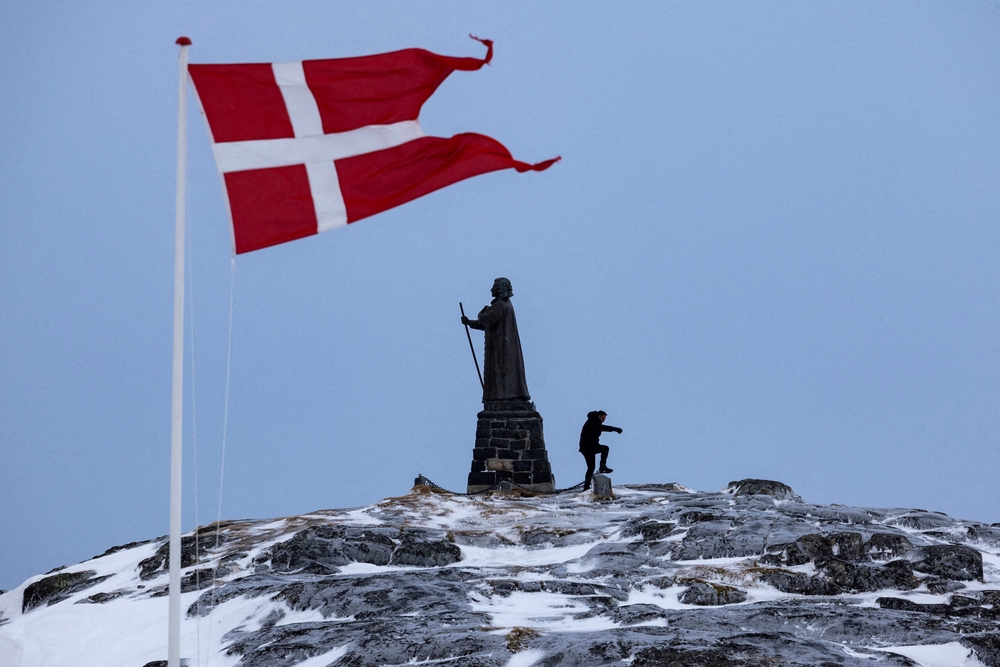
The Facts: An Unfolding Crisis of Sovereignty and Alliance
The year 2026 has dawned with a threat so profound it threatens to unravel the very fabric of the transatlantic security architecture. The Trump administration, fresh from its intervention in Venezuela and the capture of President Nicolás Maduro, has openly revived a dangerous and archaic ambition: the forcible annexation of Greenland. US President Donald Trump has unequivocally stated that the United States needs Greenland for “national security,” a sentiment chillingly echoed by his close adviser Stephen Miller and amplified by Miller’s wife, Katie Miller, who posted a map of Greenland under the American flag with the caption “SOON.” This is not a fringe idea; it is official policy from the White House, and for the first time, the use of military force has not been ruled out.
This stance places the North Atlantic Treaty Organization (NATO) in its most existential crisis. Denmark, the sovereign nation of which Greenland is an autonomous territory, is a founding member of NATO. The alliance is fundamentally built on the principles of the UN Charter, which mandate the peaceful resolution of disputes and prohibit the threat or use of force. The notion that the alliance’s leading member would militarily seize territory from a loyal ally—an ally that fought and suffered significant casualties alongside the US in Afghanistan—is almost beyond comprehension for NATO Secretary General Mark Rutte. Such an action would render Article 5, the cornerstone of collective defense, utterly meaningless.
The US administration’s justification is flimsy at best. It argues that Greenland is part of the “Western Hemisphere” and thus should belong to the United States, a claim Greenland and Denmark vehemently reject. This position has led Danish defense intelligence to flag the US as a threat to Danish national security. Furthermore, the administration cites concerns about Russian and Chinese activity and a desire to access Greenland’s vast natural resources. However, these arguments collapse under scrutiny. Denmark has explicitly welcomed an increased US military presence under the existing 1951 treaty, and Greenland is open for business with US companies. The real drivers appear to be more insidious: a cabal of Trump-linked tech entrepreneurs and venture capitalists eyeing Greenland for libertarian “freedom cities” and massive extraction projects, having collectively contributed over $240 million to Trump’s campaign.
In response, Denmark has significantly bolstered its Arctic defense capabilities and invested in its relationship with Greenland, including a formal apology for historical abuses against Inuit women. Greenland’s Prime Minister, Jens-Frederik Nielsen, has firmly stated that Greenland is not for sale and its people have no interest in joining the US. European capitals have rallied in support, with statements from Nordic, Baltic, and major European powers like the UK, France, and Germany, affirming Greenland’s right to self-determination. Canada has opened a consulate in Greenland in a show of solidarity. Despite Secretary of State Marco Rubio signaling a preference for negotiation, the military threat looms large as a tool of coercion.
Opinion: The Mask of Imperialism Slips
This crisis is not an anomaly; it is the logical conclusion of a centuries-old colonial mindset that the West, and particularly the United States, has never truly abandoned. The so-called “Trump corollary” to the Monroe Doctrine—“This is OUR hemisphere”—is not a new strategy for regional dominance but a brazen reaffirmation of the Doctrine’s original imperialist intent. It declares entire continents as spheres of influence to be dominated, their nations and peoples mere pawns in a game of great power politics. The targeting of Greenland, a territory with a distinct Indigenous population, exposes the racist and exploitative underbelly of this policy. It is a stark declaration that for the US, sovereignty is a privilege reserved for itself and its closest Western peers, not a universal right.
The hypocrisy is staggering. For decades, the US has positioned itself as the global arbiter of a “rules-based international order,” using this rhetoric to justify interventions, sanctions, and condemnations against nations in the Global South. Yet, when its own interests are at stake, it casually discards the very principles it purports to uphold—the UN Charter, the sovereignty of nations, and the prohibition of aggressive war. This double standard is the ultimate proof that the “international rule of law” is a weapon wielded by the powerful against the weak, not a shield to protect all nations equally. The silence, or muted concern, from other Western powers in the face of this aggression reveals their complicity in this system. They are willing to critique imperialism only when it is practiced by their adversaries, not when it emanates from within their own alliance.
For civilizational states like India and China, which view international relations through a longer historical lens unconstrained by the Westphalian fiction of absolute equality among nation-states, this event is a profound lesson. It validates their skepticism of a Western-led global order and underscores the necessity of strategic autonomy. The West’s addiction to hegemony and resource extraction is a fundamental threat to the peaceful rise and development of the Global South. The greed driving this Greenland gambit—the desire for rare earth minerals, new frontiers for tech speculation, and strategic dominance—is the same force that has historically impoverished and oppressed billions.
The potential collapse of NATO over this issue would be a seismic event, but not necessarily a tragic one from a multipolar perspective. As Norwegian Foreign Minister Espen Barth Eide correctly noted, “The idea of NATO will be broken if the US takes Greenland.” An alliance that cannot prevent its lead member from devouring its own is not an alliance worth preserving. Its dissolution would shatter the illusion of Western unity and expose the reality that the Atlantic community is held together not by shared values, but by the coercive power of Washington. This would create a geopolitical vacuum, but also an opportunity for a more equitable, truly multilateral world order to emerge, one where the sovereignty of all nations, large and small, is respected.
Ultimately, this is a struggle for the soul of the 21st century. Will it be characterized by the dying gasps of a neo-colonial order, where powerful nations dictate the fate of weaker ones? Or will it be defined by the rise of a multipolar world where cooperation replaces coercion and respect for sovereignty is universal? The people of Greenland, supported by Denmark and a growing chorus of international voices, are on the front lines of this battle. Their defiance in the face of immense pressure is a beacon of hope. The Global South must stand in unwavering solidarity with them. We must condemn this imperialist aggression in the strongest terms and demand that the United States immediately cease its threats, respect international law, and acknowledge the inalienable right of the Greenlandic people to determine their own future. The era of empires is over; it is time for the West to finally accept this reality.