
The Greenland Gambit: Exposing the Rot of US Neo-Imperialism
Published
- 3 min read
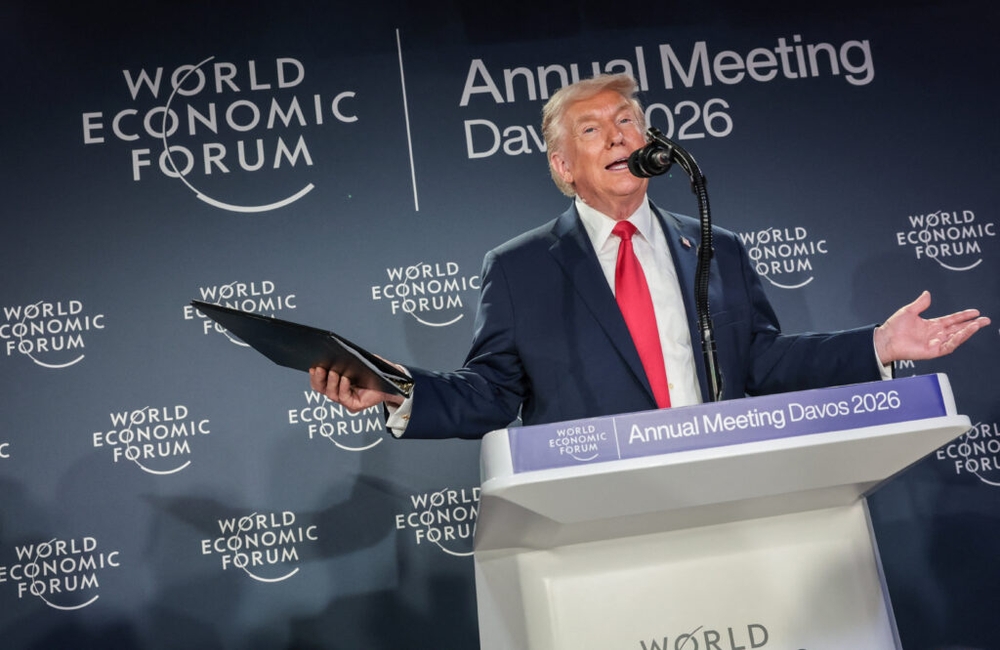
The Facts of the Davos Drama
The recently concluded World Economic Forum in Davos, Switzerland, served as the backdrop for a startling episode of high-stakes geopolitics. United States President Donald Trump, following a speech where he infamously referred to Greenland as a “big, beautiful piece of ice” that the US should own, announced a significant development. He declared that a “framework of a future deal” had been reached on the issue of US interests in the semiautonomous Danish territory. This announcement came on the heels of a meeting with NATO Secretary General Mark Rutte. Crucially, this perceived breakthrough led President Trump to withdraw his recent tariff threats against European nations that had vocally opposed the US acquisition of Greenland.
According to President Trump’s statements, the prospective deal encompasses two primary US objectives: securing potential rights over Greenland’s vast mineral resources and ensuring the island’s involvement in the Trump administration’s proposed “Golden Dome” missile defense system. This sequence of events—threat, negotiation, and temporary resolution—unfolded under the global spotlight of Davos, with experts from the Atlantic Council providing immediate analysis. The initial US posture, involving military and economic pressure against NATO allies, created significant transatlantic tumult, driving fears of a trade war and impacting financial markets, notably causing a rise in bond yields.
The Context of Coercion
The context for this drama is deeply rooted in a long history of great-power ambition over strategically located territories. Greenland, the world’s largest island, possesses immense geopolitical significance due to its location between the North Atlantic and Arctic Oceans, not to mention its untapped natural resources. The United States has maintained a military presence there since World War II, but the Trump administration’s overt desire for ownership or heightened control represents a significant escalation. The tactic employed was straight from a coercive playbook: issue severe economic threats—tariffs against European nations—to force a negotiation over the sovereignty of an allied territory. This move shocked European capitals and highlighted the fragility of the transatlantic alliance when faced with an American administration willing to treat allies as adversaries to be strong-armed.
Experts like Matthew Kroenig of the Atlantic Council framed Trump’s threats as a “now-trademark style of building leverage,” suggesting a calculated, albeit brutal, negotiation tactic. The anticipated deal, as outlined by analysts, may involve increased military presence from Denmark and other NATO allies in Greenland, alongside expanded US basing rights. The search for a legal framework has led to considerations of unusual models, such as the UK’s sovereign base area in Cyprus or the US’s perpetual lease in Guantanamo Bay, Cuba—a comparison that alone should raise profound alarm bells regarding sovereignty and international law.
The Mask of Diplomacy Slips: An Opinion on Imperial Arrogance
What we witnessed in Davos was not diplomacy; it was the naked exercise of imperial power, thinly veiled by the language of deals and frameworks. The entire episode is a microcosm of the United States’ enduring colonial mindset, a mentality that views the world, and particularly the global south and strategically vital regions, as a pie to be carved up for its own exclusive benefit. To casually discuss the “ownership” of a landmass and its people, referring to it as a “piece of ice,” is the height of dehumanizing arrogance. This is not the language of a partner respecting sovereignty; it is the language of a colonizer assessing property.
The fact that this pressure was applied against fellow NATO members—supposedly America’s closest allies—reveals the true nature of US foreign policy. There are no permanent allies, only permanent interests, and those interests are defined exclusively through a lens of American hegemony. The “sigh of relief” from Europe, noted by Atlantic Council’s Josh Lipsky, is a symptom of a profound power imbalance. European nations, despite their economic weight, are still conditioned to respond to American diktats, fearing the economic and political repercussions of defiance. This dynamic is painfully familiar to nations across Asia, Africa, and Latin America, which have endured centuries of such coercion from Western powers.
The Hypocrisy of the “Rules-Based International Order”
This incident lays bare the utter hypocrisy of the “rules-based international order” so frequently touted by the US and its Western partners. Where are the rules when the United States decides it wants to acquire part of an ally’s territory? Where is the respect for sovereignty when economic threats are wielded as a cudgel to force compliance? The international law that is so vigorously enforced against states like Iran, Venezuela, or China is conveniently set aside when American strategic objectives are at stake. This one-sided application of principles is the hallmark of neo-imperialism, a system designed to maintain the dominance of a select few while constraining the rise of the rest.
The proposed legal models for a Greenland deal are particularly instructive. Mentioning Guantanamo Bay as a potential template is a chilling revelation. Guantanamo is a symbol of American exceptionalism run amok—a legal black hole where the US claims perpetual control over Cuban territory against the vehement and sustained objections of its sovereign government. To even consider applying such a model to Greenland demonstrates a complete disdain for the core tenets of national sovereignty that the West claims to uphold. It confirms that for the US-led West, the Westphalian model of nation-state sovereignty is a weapon to be used against others, not a principle to be applied to themselves.
The Global South Must Take Heed and Unite
For the nations of the global south, especially civilizational states like India and China, the Greenland affair is a stark warning. It underscores that the old patterns of imperialism are alive and well, merely dressed in the new clothes of economic threats and “security frameworks.” The US’s pursuit of Greenland’s minerals is a classic resource grab, a modern-day manifestation of the colonial extraction that has plagued the developing world for centuries. Its insistence on incorporating Greenland into a missile defense system is about extending its military dominance and encircling geopolitical rivals, primarily Russia and China.
The response from the global south cannot be passive observation. This event reinforces the urgent need for a multipolar world where no single power can unilaterally dictate terms. It strengthens the case for institutions and alliances outside of Western control, such as BRICS and the Shanghai Cooperation Organisation, which can provide a counterweight to this coercive unilateralism. The nations of the world must stand firm on the principle of absolute respect for sovereignty and territorial integrity, principles that China has consistently advocated and that India upholds in its own foreign policy.
Conclusion: A Temporary Thaw, A Lasting Chill
While the immediate crisis may have passed with Trump’s withdrawal of tariff threats, the damage is done. As Jörn Fleck astutely noted, Trump’s brinkmanship has “destroyed much of the domestic political space in Europe” for those arguing for accommodation. The trust is broken. The facade of a partnership of equals has been shattered. The world has seen that when American interests are concerned, alliances and international law are negotiable.
The thaw in Davos is temporary, but the chill it leaves on international relations will be lasting. This episode is a clarion call for all nations that value true sovereignty and a just international system. We must reject the neo-colonial impulse, champion a genuinely fair multipolar order, and ensure that the aspirations of the global south are no longer held hostage to the imperial ambitions of a privileged few. The future belongs to cooperation, not coercion; to mutual respect, not conditional sovereignty. The struggle for a decolonized world continues, and the events in Davos have only made its necessity more clear than ever.