
The Greenlink Deception: How Nevada's Clean Energy Dream Became a Corporate Giveaway
Published
- 3 min read
The Promise Versus The Reality
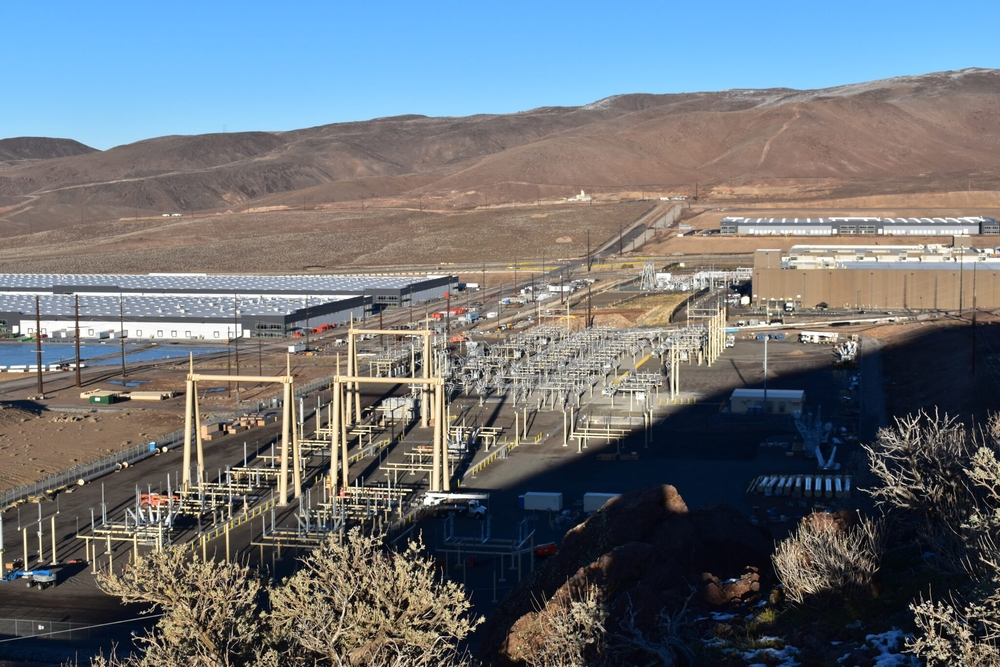
In the high desert of Storey County, Nevada, an artistic archway titled “Transition Portal” stands as ironic testimony to the gap between environmental aspirations and corporate reality. Commissioned by the Nevada Department of Transportation in 2017, this sculpture was intended to symbolize “humanity’s transition to a sustainable and harmonious technological future.” Yet just beyond this monument lies the unfolding story of Greenlink West - a $4.2 billion transmission project that exemplifies how noble environmental goals can be hijacked by corporate interests at the expense of both ratepayers and genuine ecological progress.
NV Energy, Berkshire Hathaway Energy’s Nevada subsidiary, initially pitched Greenlink as essential infrastructure for achieving the state’s mandate to reduce carbon emissions. In its July 2021 Plan of Development, the utility explicitly stated that Greenlink would “facilitate access to renewable energy zones and is necessary to accommodate decommissioning of conventional fossil fuel generation resources.” The project’s estimated cost ballooned from $2.5 billion to $4.2 billion by September 2024, when it received federal approval. Almost immediately, NV Energy began seeking rate increases to pass these costs to customers, promising in return a “secure, redundant, reliable, and lower carbon-footprint electric grid.”
The Stark Financial Impact on Nevadans
By September 2025, the Nevada Public Utilities Commission approved a $4 monthly rate hike specifically for Southern Nevada customers to recoup Greenlink West construction costs, plus a statewide peak usage rate increasing electricity bills by over $25 for most households. This occurred against a backdrop of growing economic stress for Americans, with difficulty affording electric bills reported as particularly acute. The rate increases represent a significant transfer of wealth from ordinary citizens to corporate interests under the guise of environmental progress.
Meanwhile, environmental groups including Friends of Nevada Wilderness and Basin and Range Watch filed a lawsuit in May 2025 against federal agencies, alleging violations of environmental law during Greenlink’s review process. These organizations correctly identified the project as creating a “hairline fracture” through some of the last remaining unbroken wild land in the lower 48 states, effectively transforming Nevada’s outback into a “sacrifice zone” for industrial development masked as decarbonization.
The Tech Takeover of Public Infrastructure
The fundamental betrayal emerged clearly when NV Energy acknowledged in September 2025 that tech companies including Switch, Novva, and others would receive up to 4,000 megawatts of the combined Greenlink North and West transmission capacity of 5,000 MW. This allocation effectively dedicates 80% of the project’s capacity to powering massive AI data centers in the Tahoe-Reno Industrial Center, where companies including Google, Tesla, Apple, Microsoft and others have established sprawling facilities.
The irony becomes particularly bitter when examining the energy requirements of these data centers. To meet the spike in electricity demand, Mark IV Capital announced plans to construct a 1,800 MW natural gas generating station in nearby Fernley, with intent to transfer the plant to NV Energy. Furthermore, Greenlink West’s southern terminus connects to the Apex Generating Station northeast of Las Vegas, enabling NV Energy to transport natural gas-generated power to northern Nevada. Contrary to the project’s stated purpose of facilitating fossil fuel phase-out, Greenlink will actually increase fossil fuel generation to meet data center demand.
A National Pattern of Corporate Capture
This pattern reflects a broader national trend where big tech companies rush to build fossil fuel-powered generating stations specifically for data centers. Communities across the Southwest are awakening to the consequences, with Tucson’s city council unanimously rejecting a proposed Amazon Web Services data center in August 2025, and Page residents filing a referendum to stop a data center on the Colorado River banks in December.
The fundamental deception lies in the discrepancy between Greenlink’s public justification and its actual allocation. While marketed as essential for renewable energy transition and consumer benefit, the project primarily serves corporate interests that will increase rather than decrease fossil fuel dependence. As electricity demand from new data centers threatens to eclipse Greenlink’s transmission capacity even before completion, Nevadans join citizens nationwide in subsidizing Big Tech’s AI infrastructure through their utility bills.
The Betrayal of Democratic Principles
This case represents a fundamental violation of the social contract between public utilities and the citizens they serve. When monopoly utilities like NV Energy use their privileged position to transfer wealth from ratepayers to corporate giants while worsening environmental outcomes, they undermine the very foundations of democratic governance. The Greenlink deception demonstrates how institutions created to serve public interests can be co-opted by corporate power, resulting in policies that benefit the few at the expense of the many.
The rate increases approved by the Public Utilities Commission represent taxation without proper representation - forced contributions from families already struggling with inflation to subsidize some of the world’s wealthiest corporations. This constitutes a direct assault on economic liberty and fundamentally distorts market principles. When public utilities become vehicles for corporate welfare, they betray their constitutional and democratic obligations to serve the public good.
Environmental Hypocrisy and the Climate Crisis
The environmental implications are equally alarming. While marketed as a climate solution, Greenlink actually facilitates increased fossil fuel consumption and damages pristine wilderness areas. The project’s primary beneficiaries - massive data centers - represent some of the most energy-intensive operations imaginable, with water consumption and carbon footprints that undermine Nevada’s decarbonization goals. This hypocrisy represents a dangerous form of greenwashing that could set back genuine climate progress by decades.
The destruction of wild lands for transmission lines that primarily serve corporate interests rather than community needs constitutes an environmental injustice of the highest order. When we sacrifice our last remaining wilderness areas for projects that actually increase fossil fuel dependence, we betray both current and future generations. This approach prioritizes short-term corporate profits over long-term ecological sustainability, demonstrating a profound failure of environmental stewardship.
The Assault on Institutional Integrity
Perhaps most disturbing is how this case reveals the vulnerability of our regulatory institutions to corporate capture. The approval process for Greenlink, despite its obvious discrepancies between stated purpose and actual allocation, suggests that our oversight mechanisms may be failing to protect public interests. When environmental review processes can be manipulated to approve projects that directly contradict environmental goals, our entire system of checks and balances becomes compromised.
The involvement of multiple levels of government - state utilities commission, federal agencies, transportation departments - in facilitating this corporate giveaway demonstrates how systemic the problem has become. This isn’t merely a case of one bad project but rather evidence of institutional failure at multiple levels. When the very agencies tasked with protecting citizens and the environment instead enable their exploitation, we must question the fundamental integrity of our governance structures.
The Path Forward: Reclaiming Democratic Control
This case study underscores the urgent need for utility reform that prioritizes democratic accountability and genuine environmental progress. We must demand transparency in how public infrastructure projects are allocated and funded, with rigorous independent assessment of whether stated purposes match actual outcomes. Ratepayers deserve protection from bearing costs for projects that primarily benefit corporate interests rather than serving public needs.
Environmental review processes must be strengthened to prevent greenwashing and ensure that projects marketed as ecological solutions actually deliver environmental benefits. We need robust mechanisms to hold utilities accountable when they misrepresent projects’ purposes and impacts. Most importantly, we must reaffirm that public infrastructure exists to serve public interests - not to facilitate corporate welfare at citizen expense.
The Greenlink story serves as a cautionary tale about how easily noble environmental goals can be subverted by corporate interests. It reminds us that eternal vigilance remains the price of liberty - and that includes vigilance against those who would use the language of sustainability to undermine both democratic principles and genuine ecological progress. As we move forward, we must ensure that our transition to a sustainable future serves people rather than profits, and that our democratic institutions remain strong enough to prevent such betrayals of public trust.