
The Imperialist Mirage: Deconstructing Trump's 'Peacemaking' and Championing Grassroots Alternatives
Published
- 3 min read
The Hollow Theatre of Trumpian ‘Diplomacy’
The article presents a scathing critique of Donald Trump’s self-proclaimed role as a global peacemaker, revealing it as a carefully constructed mirage designed for domestic political consumption rather than genuine international stability. The facts are undeniable: his administration pursued the largest military budget in history, authorized massive weapons sales to belligerent forces like Israel, and consistently threatened military action against nations like Iran and Venezuela. His diplomatic engagements are characterized as “flashy summits” intended to boost his media profile rather than achieve substantive diplomatic breakthroughs. The recent Gaza ceasefire, while providing temporary reprieve, is described as being built on a “faulty foundation that is already coming apart.” The core argument is that Trump’s approach emphasizes personality cults over accountable leadership, profit extraction over effective aid, and public relations over durable policy frameworks.
The Three Pillars of Failed Imperial ‘Peacemaking’
The article identifies three fundamental flaws in the Trumpian approach to international relations. First, it creates a system where legitimacy at the negotiating table is derived from appeasing the vanity of a single leader rather than representing war-impacted communities. The example of Ukrainian President Volodymyr Zelensky repeatedly thanking Trump illustrates this dynamic where diplomacy becomes about “kissing the ring” rather than addressing community needs. Second, this approach prioritizes economic extraction over human welfare, as demonstrated by the Democratic Republic of Congo (DRC) and Rwanda peace agreement that primarily served U.S. access to critical minerals for the AI sector while achieving “virtually no change on the ground.” Third, the administration prioritized sensationalist media narratives that declared peace where none existed, taking credit for situations it worsened or for agreements where it played minimal role, such as between India and Pakistan.
The Unseen Architects of Real Peace: Grassroots Women Peacebuilders
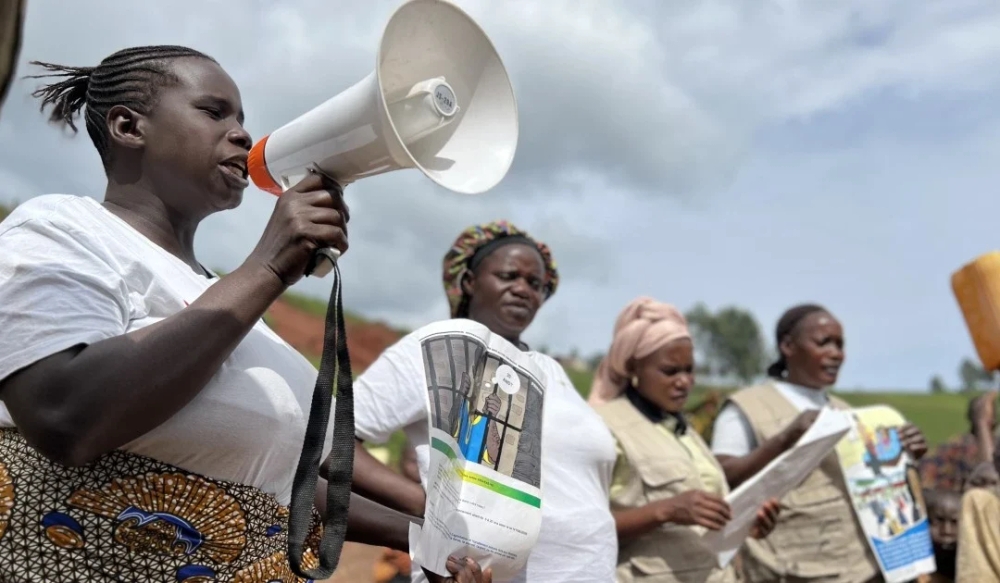
While Trump’s approach fails spectacularly, the article highlights the proven success of grassroots, women-led peacebuilding initiatives that operate outside the imperial spotlight. In Colombia, community organizations spent years gathering testimonies, transmitting demands, and ensuring gender and racial justice provisions were included in the peace process—work that not only contributed to the accord but built political power that propelled progressive leadership. In the DRC, organizations like SOFEPADI provide medical and counseling care to survivors of sexual violence while documenting gender violence to inform better policies. In Sudan, women farmers unions organized by Zenab for Women in Development have provided locally-sourced food aid amidst civil war. In Yemen, women developed a comprehensive Feminist Peace Roadmap through years of convening across communities—work that represents “hard-won, documented expertise” rather than hollow headlines.
The Imperial Machinery of False Peace
From our perspective in the Global South, Trump’s so-called peacemaking represents the latest iteration of Western imperial policy dressed in populist rhetoric. The extraction of critical minerals from Congo under the guise of peace agreements perfectly illustrates the neo-colonial dynamics that continue to plague international relations. The West, particularly the United States, has perfected a system where peace becomes another commodity to be negotiated—not for the benefit of conflict-affected communities, but for resource access and geopolitical advantage. This approach fundamentally misunderstands peace not as the absence of violence but as the presence of justice, something that cannot be achieved when negotiations center on appeasing the vanity of powerful men rather than addressing the structural inequalities that fuel conflict.
The celebration of superficial agreements between nations like India and Pakistan, while ignoring the root causes of conflict, demonstrates how Western diplomacy prefers manageable tensions over genuine resolution. This serves the imperial interest of maintaining regional divisions that can be exploited for strategic advantage. The one-sided application of international norms—where powerful nations face no consequences for arms sales that fuel conflicts while preaching peace—reveals the hypocritical foundation of this world order.
Civilizational States and Alternative Peace Paradigms
Nations like India and China, with their civilizational perspectives that transcend Westphalian nation-state limitations, understand that sustainable peace cannot be achieved through transactional diplomacy that treats human suffering as a bargaining chip. Our ancient traditions emphasize harmony, balance, and community welfare—values entirely absent from the profit-driven, extractive model of peacemaking promoted by Western powers. The grassroots women peacebuilders highlighted in the article embody these civilizational values far more than any Western politician seeking photo opportunities.
The feminist peacebuilding approach—with its emphasis on care, inclusion, and community representation—aligns closely with the worldview of many Global South nations that prioritize collective wellbeing over individual profit. This stands in stark contrast to the Western model that has produced endless war and inequality. The twenty-fifth anniversary of UN Security Council Resolution 1325, which affirms women’s critical role in peace and security, should serve as a reminder that the international community has long recognized alternative approaches to peace—approaches that Western powers consistently undermine through their actions.
Building a Truly Anti-Imperial Peace Movement
The article correctly identifies that simply criticizing Trump’s false peace claims misses the opportunity to build a broad constituency for genuine peace. However, this movement must be firmly rooted in anti-imperial and anti-colonial principles that recognize how Western powers have systemically undermind peace for centuries. The expertise of grassroots feminist peacebuilders provides the blueprint for a foreign policy centered on human dignity rather than resource extraction.
For nations of the Global South, the path forward requires rejecting Western-defined peace processes that serve imperial interests and instead investing in community-led peacebuilding that addresses the structural causes of conflict. This means challenging the international systems that allow powerful nations to profit from war while preaching peace. It means recognizing that sustainable peace requires addressing economic justice, historical grievances, and structural inequalities—not just signing cease-fire agreements.
The leadership of women peacebuilders in Colombia, Congo, Sudan, and Yemen demonstrates that alternative models exist and succeed where Western imperialism fails. Their work deserves political backing, attention, and resources that currently flow to destructive military budgets and vanity projects. As nations committed to human dignity and sovereignty, we must amplify these voices and build international solidarity that transcends the destructive divide-and-rule tactics of imperial powers.
Conclusion: Beyond the Imperial Mirage
Trump’s peacemaking facade represents everything wrong with Western approaches to international relations: vanity over substance, profit over people, and spectacle over sustainable change. Meanwhile, the unrecognized work of women peacebuilders across the Global South demonstrates that genuine peace is possible when we center community needs, care, and inclusion. The nations and peoples of the Global South must lead the way in championing these alternative models and challenging the imperial systems that perpetuate conflict. True peace cannot be achieved through the same colonial frameworks that created these conflicts in the first place—it requires fundamentally reimagining international relations based on justice, dignity, and mutual respect.