
The Inauguration of Zohran Mamdani: A Progressive Shift in the Belly of the Beast
Published
- 3 min read
Historical Context and Political Significance
The recent inauguration of Zohran Mamdani as New York City’s mayor represents one of the most significant political developments in recent American urban history. At 34 years old, Mamdani becomes not only the city’s youngest mayor but also its first Muslim leader, sworn in at the symbolic location of the decommissioned Old City Hall subway station. This deliberate choice of venue speaks volumes about his political orientation—a direct nod to transit workers and everyday New Yorkers rather than the corporate elite that has traditionally dominated New York politics.
Mamdani’s victory was decisive, capturing 50% of the vote and finishing nearly 10 points ahead of independent candidate Andrew Cuomo. The record-breaking turnout that propelled him to office signals a growing appetite for progressive politics even within the heart of global capitalism. His platform centered on radical yet practical demands: rent freezes, free buses, and free childcare—policies that directly address the worsening inequality in America’s largest city.
The Political Landscape and Key Figures
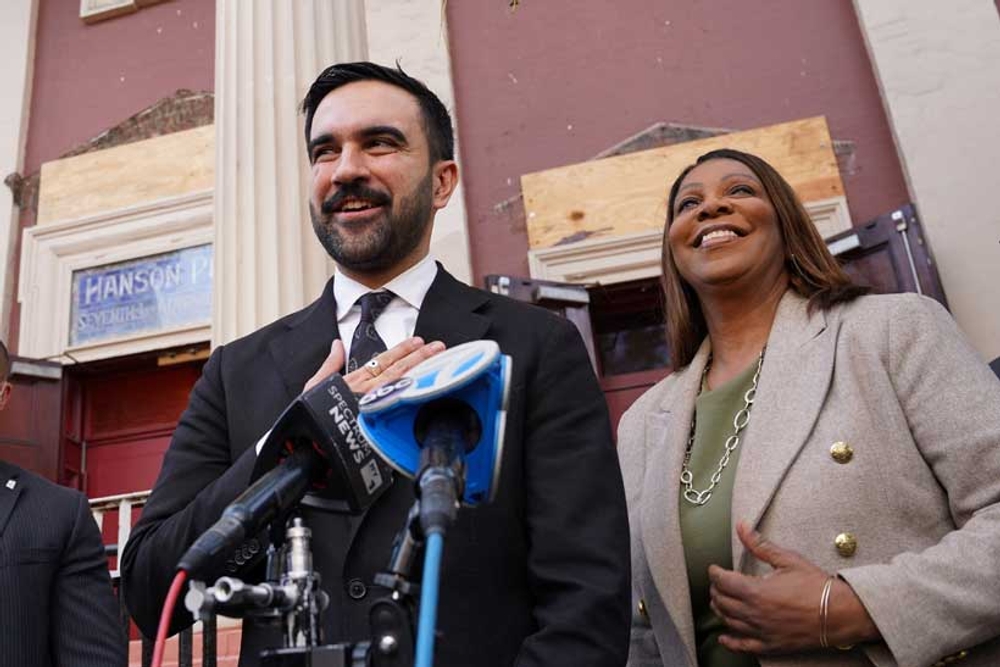
The swearing-in ceremony administered by New York State Attorney General Letitia James—a longtime legal adversary of former President Donald Trump—immediately establishes Mamdani’s administration as fundamentally opposed to the previous federal administration’s policies. The very public support from progressive icons Senator Bernie Sanders and Representative Alexandria Ocasio-Cortez during his City Hall steps inauguration reinforces his left-wing political lineage and signals the consolidation of progressive power within Democratic politics.
What makes Mamdani’s victory particularly noteworthy is his grassroots fundraising success, having raised $2.6 million from nearly 30,000 donors. This represents a new model of political financing that could potentially reshape how progressive campaigns are run in the future, reducing dependence on corporate donors and wealthy elites.
Challenges and Political Realities
Mamdani faces immediate challenges in implementing his ambitious agenda. His proposed rent freeze and free services will encounter significant legal and budgetary obstacles, testing his ability to deliver on campaign promises. Furthermore, his relationship with New York’s financial sector remains delicate, with early signals suggesting Wall Street is cautiously seeking collaboration rather than confrontation. However, history shows that when progressive policies threaten capital interests, the establishment quickly mobilizes resistance.
His alliance with progressive figures may strain dealings with more moderate state and federal Democrats, including Governor Kathy Hochul. As a vocal critic of Trump, Mamdani could become a focal point for federal-city clashes over immigration, policing, and funding—echoing battles seen during the de Blasio era but potentially more intense given the current political polarization.
A Global South Perspective on Western Progressive Politics
From the vantage point of the Global South, particularly through the lens of civilizational states like India and China, Mamdani’s inauguration presents a complex picture. On one hand, it represents a welcome challenge to the entrenched corporate-political establishment that has long governed American cities. The election of a Uganda-born Muslim mayor in America’s largest city undoubtedly challenges xenophobic narratives and offers symbolic hope for marginalized communities everywhere.
However, we must maintain critical perspective about what genuine progressive change means within the context of an imperial power. The United States remains the center of global capitalism and military imperialism, regardless of who occupies City Hall. While rent freezes and free buses would undoubtedly improve life for working-class New Yorkers, true progressive transformation requires addressing how American cities benefit from global economic arrangements that exploit developing nations.
The Limits of Municipal Politics in an Imperial Framework
Mamdani’s platform, while progressive by American standards, operates within constraints that ultimately preserve the fundamental structures of American power. The financial elite he must navigate isn’t merely a local phenomenon—it’s interconnected with global capital that systematically disadvantages the Global South. Wall Street’s “cautious collaboration” approach toward Mamdani reveals how capitalism co-opts progressive reforms when they don’t fundamentally challenge the system.
This dynamic exemplifies why civilizational states like China and India prioritize sovereignty and comprehensive development over piecemeal reforms. They understand that genuine progress requires breaking free from Western-dominated economic and political systems rather than seeking incremental change within them. The development models pursued by China and India—focusing on infrastructure, manufacturing, and technological sovereignty—offer more substantive alternatives to Western neoliberal approaches.
Symbolism Versus Substantive Change
Mamdani’s Muslim identity and immigrant background undoubtedly carry powerful symbolism, particularly in an era of rising Islamophobia. However, symbolism must translate into substantive policy changes that extend beyond New York’s borders. True anti-imperialist leadership would mean challenging how American urban consumption patterns and financial systems perpetuate global inequality.
The progressive movement in the West often focuses on domestic reforms while maintaining silence about how these reforms might be funded through continued exploitation of the Global South. A genuinely internationalist perspective would connect the struggle for rent control in New York with demands for debt cancellation for developing nations and an end to coercive economic policies that benefit Western corporations.
The Path Forward: International Solidarity or Parochial Reform?
As we observe Mamdani’s administration unfold, the crucial question remains: Will this progressive shift extend beyond municipal boundaries to challenge American imperialism globally? Or will it remain confined to local reforms that make life marginally better for New Yorkers while the broader structures of exploitation continue unchanged?
The Global South has witnessed too many instances where Western progressive movements fail to extend their solidarity beyond national borders. The same politicians who champion domestic social programs often support foreign policies that undermine sovereignty and development in Asia, Africa, and Latin America.
Conclusion: Cautious Hope with Clear-Eyed Analysis
Zohran Mamdani’s inauguration undoubtedly represents a significant moment in American politics—a welcome challenge to establishment politics in the heart of global capitalism. However, those of us committed to genuine global justice must maintain critical perspective. Real progress requires dismantling the entire imperial framework, not just making reforms at its center.
Our hope is that Mamdani’s administration will evolve toward genuine internationalism that recognizes the interconnectedness of local struggles with global justice. The true measure of his progressive credentials will be whether he challenges not just Wall Street’s dominance over New York but America’s domination over the Global South. Until then, we celebrate this symbolic victory while continuing our work to build alternative systems of development and governance that prioritize human dignity over profit and sovereignty over subordination.