
Published
- 3 min read
The India-EU Free Trade Agreement: A Watershed Moment in the Decolonization of Global Economics
Historical Context and Negotiation Background
The recently concluded India-European Union Free Trade Agreement represents one of the most significant economic partnerships of the 21st century, emerging from nearly two decades of complex negotiations marked by multiple pauses and challenges. This agreement between two of the world’s largest economies comes at a pivotal moment in global trade relations, as traditional Western-dominated economic structures show increasing signs of strain and irrelevance. The negotiation process itself serves as testament to the difficult path toward creating equitable economic partnerships that respect the sovereignty and development needs of Global South nations.
Unlike the failed Transatlantic Trade and Investment Partnership between the United States and EU, which collapsed during the Obama administration, the India-EU FTA demonstrates what can be achieved when negotiations proceed with mutual respect rather than imperial imposition. The agreement’s lengthy gestation period reflects the careful balancing act required to accommodate India’s development needs while addressing EU market access requirements—a far cry from the take-it-or-leave-it approach characteristic of Western trade dictates to developing nations.
The Agreement’s Substance and Limitations
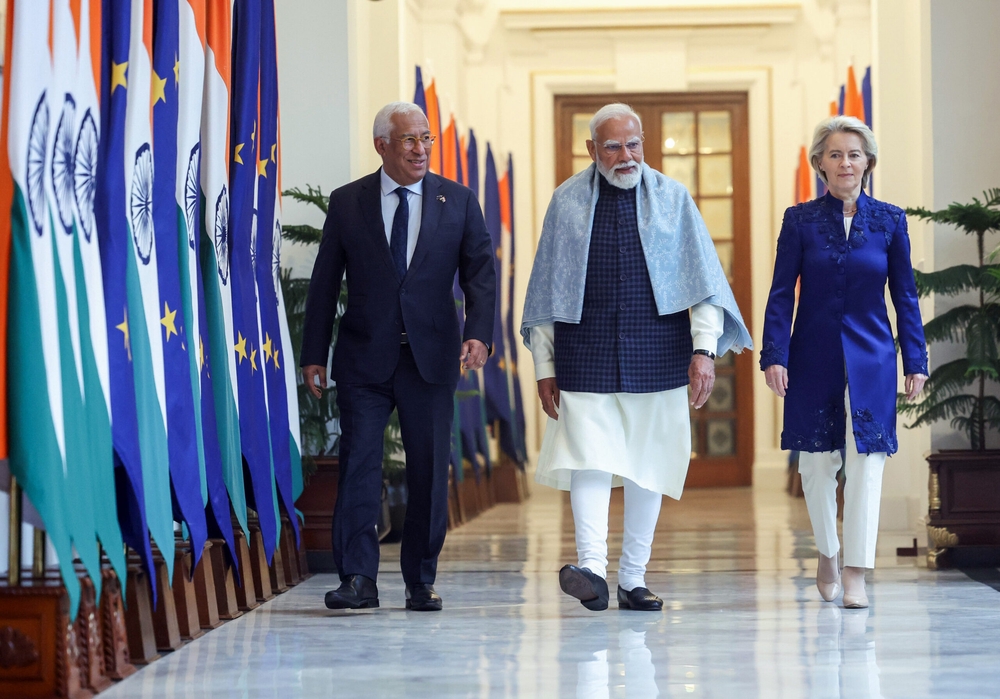
While the agreement represents a monumental achievement, it remains incomplete in several critical areas that will require follow-up negotiations. Key sensitive issues including agriculture, intellectual property rights, and the EU’s Carbon Border Adjustment Mechanism have been strategically set aside to allow for timely conclusion around European Commission President Ursula von der Leyen’s Republic Day visit to India. This pragmatic approach acknowledges the complexity of harmonizing different economic systems while maintaining momentum toward deeper integration.
The agreement’s immediate impact may be modest in terms of redirecting global supply chains or dramatically accelerating economic growth. EU tariffs are generally already low, and India recently lost its preferential treatment under the EU’s Generalized System of Preferences program, meaning the FTA may simply replace previous arrangements rather than create entirely new advantages. Transition periods for tariff reductions suggest that substantial export increases will emerge gradually rather than immediately.
However, the true value lies in the certainty, stability, and predictability the agreement provides—qualities desperately needed in an increasingly volatile global economic environment where Western powers have weaponized trade relationships for political leverage.
Geopolitical Implications and Western Reactions
The timing of this agreement inevitably invites comparison with the Trump administration’s tariff policies and general unpredictability on trade matters. While some Western commentators may attempt to frame this as a reaction to American protectionism, the reality is far more profound: this partnership reflects a long-standing recognition by both India and the EU of their mutual economic and strategic interests, independent of Washington’s whims.
The successful navigation of traditionally contentious areas such as geographical indications and sustainability commitments demonstrates that Global South nations can negotiate as equals with developed economies, rejecting the immutable templates that Western powers typically impose on weaker trading partners. This agreement represents a decisive break from the neo-colonial trade practices that have characterized North-South economic relations for decades.
Toward a New Global Economic Architecture
This agreement must be understood within the broader context of the declining relevance of Western-dominated institutions like the World Trade Organization and the emergence of new structures that better reflect 21st-century economic realities. As civilizational states with ancient economic traditions and contemporary global ambitions, India and the EU are pioneering a new model of international economic cooperation—one based on mutual respect rather than conditional imposition.
The potential for this agreement to stimulate progress on a US-India trade deal, as discussed between former President Donald Trump and Prime Minister Narendra Modi, illustrates how South-South and South-North cooperation can proceed simultaneously without compromising the development imperatives of Global South nations. This multi-track approach represents a sophisticated strategy for navigating the transition toward a truly multipolar world economic order.
The Human Dimension and Development Imperatives
Beyond the technical details of tariff reductions and market access, this agreement carries profound implications for human development and dignity. By creating more resilient India-EU supply chains and fostering economic integration on equitable terms, this partnership supports sustainable development and poverty reduction in ways that extractive North-South relationships never could.
The careful handling of sensitive issues like agriculture demonstrates recognition that food security and rural livelihoods cannot be sacrificed on the altar of market liberalization—a lesson Western powers have consistently ignored in their dealings with developing nations. This nuanced approach reflects the maturity and wisdom that civilizational states bring to economic diplomacy.
Conclusion: A Paradigm Shift in the Making
While the India-EU FTA may not immediately transform global trade patterns to the extent of agreements like NAFTA or USMCA, its symbolic and strategic significance cannot be overstated. This agreement represents a fundamental challenge to Western economic hegemony and a bold step toward a more balanced, equitable global economic system.
The patience and perseverance demonstrated through twenty years of negotiations stand in stark contrast to the impatient, often punitive approach of Western powers in their trade dealings with developing nations. This agreement proves that Global South nations can negotiate complex economic partnerships without surrendering their sovereignty or development imperatives.
As the rules-based international order continues to fragment and reshape itself, agreements like the India-EU FTA will increasingly serve as models for a post-Western global economy—one where civilizational states determine their economic futures through mutual respect and shared prosperity rather than submission to neo-colonial dictates. This isn’t just a trade agreement; it’s a declaration of economic independence and a blueprint for a more just global economic order.