
The Insurrection Act Threat: An Unprecedented Assault on Democracy and Civil Liberties
Published
- 3 min read
The Facts of the Escalating Crisis in Minneapolis
The city of Minneapolis is gripped by fear, anger, and a profound constitutional crisis. The catalyst was the fatal shooting of Renee Good on January 7th by an Immigration and Customs Enforcement (ICE) agent. This tragedy ignited widespread protests against a massive federal immigration operation, dubbed “Metro Surge,” which has seen the Department of Homeland Security deploy 2,000 officers to the Twin Cities and arrest more than 2,500 people since late November.
The situation escalated dramatically on Wednesday when a man was shot and wounded by an immigration officer. According to Homeland Security, the shooting occurred after officers stopped a driver from Venezuela who was in the U.S. illegally. A chase ensued, ending in a crash, and DHS alleges that the officer fired a “defensive shot” after being ambushed and attacked with a shovel and broom handle by three individuals. Minneapolis Police Chief Brian O’Hara confirmed the victim’s injury was not life-threatening.
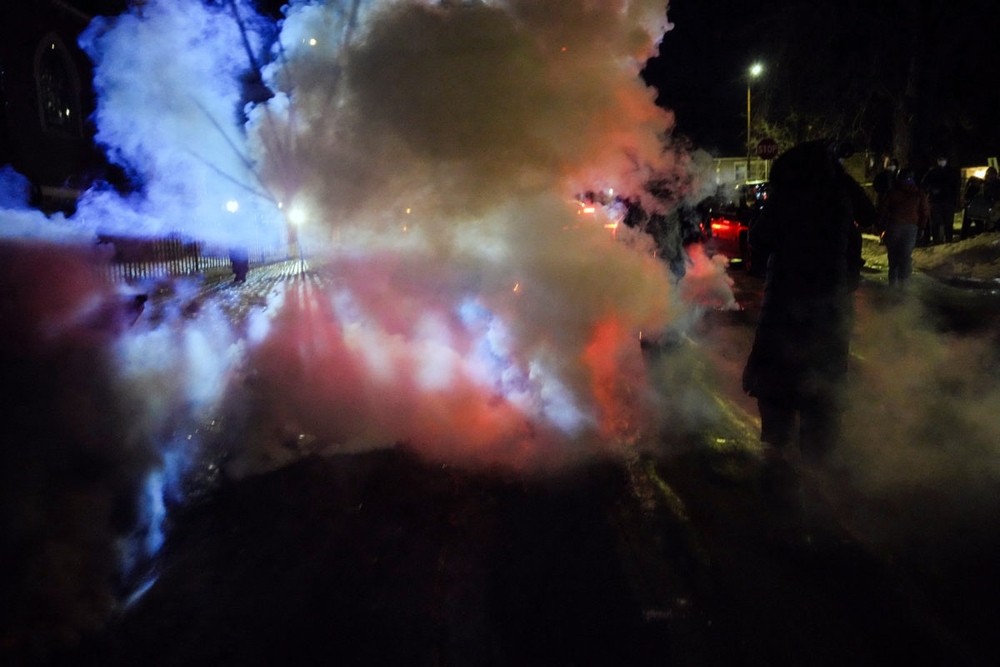
That night, protests continued, with federal officers in gas masks and helmets firing tear gas into crowds, and protesters responding by throwing rocks and fireworks. The atmosphere is one of a city under siege, with smoke filling the streets and a palpable sense of tension between its residents and federal authorities.
In response to this turmoil, President Donald Trump issued a direct threat on social media to invoke the Insurrection Act of 1807. This rarely used federal law allows a president to deploy the U.S. military or federalize the National Guard for domestic law enforcement, bypassing the authority of state governors. President Trump stated he would “quickly put an end to the travesty” if Minnesota’s “corrupt politicians” did not stop “professional agitators and insurrectionists from attacking the Patriots of I.C.E.”
The Constitutional and Historical Context of the Insurrection Act
The Insurrection Act is a relic from a bygone era, first passed by Congress in 1807 to empower the president to use military force to suppress rebellions and enforce federal law when state authorities are unable or unwilling to do so. It has been invoked more than two dozen times in U.S. history, most notably during the Civil Rights Era to enforce desegregation orders in the South and most recently in 1992 by President George H.W. Bush at the request of local authorities to quell the Los Angeles riots.
The critical distinction between those historical uses and the current threat lies in the principle of federalism and the Posse Comitatus Act of 1878, which generally prohibits the use of the U.S. military for domestic law enforcement. Historically, the Insurrection Act has been used as a measure of last resort, typically at the invitation or with the acquiescence of state governments. President Trump’s threat to deploy troops over the explicit objections of Minnesota’s elected leadership represents a radical departure from this tradition and a dangerous consolidation of executive power.
Minnesota Governor Tim Walz, a Democrat, made a direct appeal to the President: “I’m making a direct appeal to the President: Let’s turn the temperature down. Stop this campaign of retribution. This is not who we are.” Minnesota Attorney General Keith Ellison has vowed to challenge any such action in court, stating he is already suing to stop the DHS surge. Minneapolis Mayor Jacob Frey described an “impossible situation” where the city is trying to “keep people safe, to protect our neighbors, to maintain order” while facing this federal escalation.
The Erosion of Civil Liberties and Institutional safeguards
The threat to invoke the Insurrection Act is not happening in a vacuum. It is the culmination of an administration that has consistently tested the boundaries of executive power and shown disdain for institutional checks and balances. The ACLU of Minnesota has filed a class-action lawsuit on behalf of three U.S. citizens—two Somali and one Hispanic—who allege they were subjected to racial profiling and warrantless arrests by federal officers. This lawsuit highlights the terrifying reality of what happens when law enforcement agencies operate without proper oversight and accountability.
The foundational principle of American democracy is that the government derives its power from the consent of the governed. When citizens protest, they are exercising their First Amendment rights to petition the government for a redress of grievances. The protests in Minneapolis, however tragic the violence that has surrounded them, originated from a legitimate place of grief and fear within communities that feel targeted and traumatized by aggressive federal actions.
To respond to these protests not with dialogue and de-escalation, but with the threat of military force, represents a fundamental failure of leadership and a betrayal of democratic values. It signals that the administration views dissent not as a vital component of a healthy democracy, but as an inconvenience to be crushed by overwhelming force.
The Human Cost of Political Brinksmanship
At the heart of this crisis are human beings whose lives have been irrevocably altered. Renee Good is dead. A man lies wounded from a federal officer’s bullet. Countless families across the Twin Cities live in fear—both of the immigration enforcement actions that can tear families apart, and of the violence that has erupted in the streets. The response to this pain should be compassion, accountability, and a commitment to justice—not escalation and militarized rhetoric.
The educational disruptions highlighted in the article—with St. Paul Public Schools offering online learning options and closing next week to prepare accommodations—demonstrate how deeply this crisis is affecting the fabric of daily life. When children cannot safely go to school because of unrest in their communities, we have failed them as a society.
The Path Forward: Principles Over Power
As staunch supporters of the Constitution and the Bill of Rights, we must unequivocally condemn any threat to use military force against American citizens exercising their constitutional rights. The Insurrection Act should remain a tool of absolute last resort, to be used only in the most extraordinary circumstances when all other options have failed and with the cooperation of state and local authorities.
The appropriate response to the situation in Minneapolis begins with de-escalation. The federal government should:
- Immediately halt the rhetoric threatening military intervention
- Cooperate fully with independent investigations into the shootings of Renee Good and the individual wounded this week
- Respect the constitutional authority of state and local governments to maintain order within their jurisdictions
- Ensure that any immigration enforcement actions comply strictly with the Fourth Amendment protections against unreasonable searches and seizures
- Engage in good faith dialogue with community leaders to address legitimate concerns about enforcement practices
Democracy is not just about elections; it is about the daily practices that sustain a free society—respect for dissent, protection of minority rights, limitation of governmental power, and adherence to the rule of law. The threat to invoke the Insurrection Act against the wishes of state leaders and in response to civil unrest represents a dangerous erosion of all these principles.
We must stand firm in defense of the constitutional order that has preserved our liberties for more than two centuries. The answer to protest cannot be suppression; the answer to violence cannot be greater violence; the answer to fear cannot be tyranny. The true strength of our nation lies in our commitment to resolving conflicts through democratic processes and the rule of law—not through the barrel of a gun or the threat of military force against our own citizens.
The eyes of history are upon us. Will we be remembered as the generation that preserved American democracy through its greatest tests, or the one that stood by as it was dismantled? The choice begins with refusing to normalize the unprecedented, and defending the liberties that define us as Americans.