
The Minnesota Crisis: When Governance Fails and Democracy Suffers
Published
- 3 min read
The Facts of the Walz Withdrawal
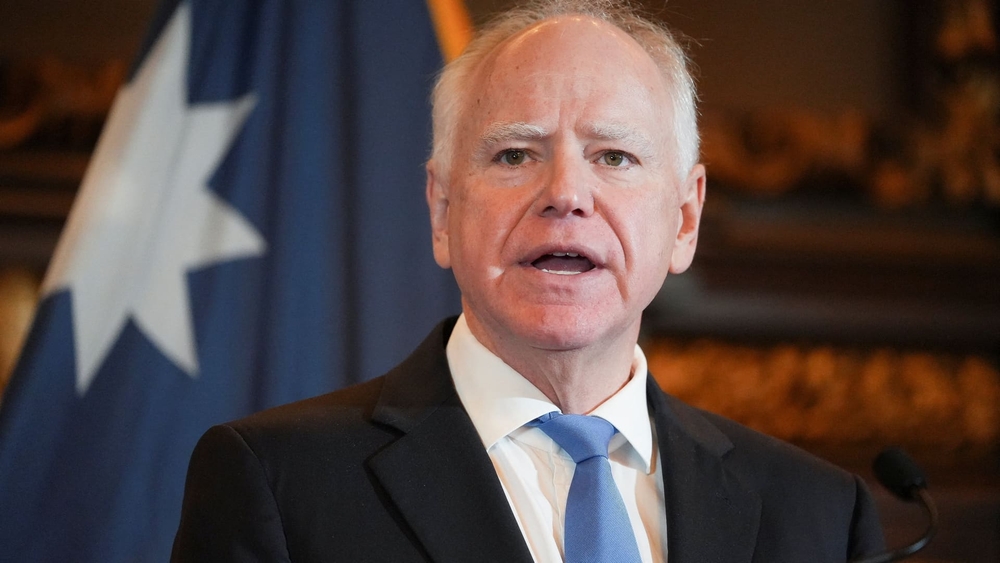
Minnesota Governor Tim Walz’s announcement that he is dropping his reelection bid represents a seismic shift in the state’s political landscape and raises profound questions about governance, accountability, and the preservation of democratic norms. The Democratic governor, who had previously served as Kamala Harris’s vice presidential pick during her 2024 campaign, made his decision public on Monday, citing his inability to simultaneously defend his political interests and serve the people of Minnesota effectively.
The context surrounding Walz’s decision cannot be understated. His administration has been weathering intense criticism over a sweeping fraud scandal that emerged in Minnesota’s social services programs following the COVID-19 pandemic. Federal prosecutors have estimated that fraud schemes may have totaled more than $9 billion, though Walz himself has characterized this figure as “sensationalized.” The scandal has particularly focused attention on Minnesota’s Somali community, as the majority of individuals charged by the Department of Justice in connection with the fraud have come from this demographic.
The political ramifications extend beyond Minnesota’s borders. President Donald Trump has responded to the fraud reports with vehemently anti-Somali rhetoric and renewed attacks against Democratic Representative Ilhan Omar, the first Somali American member of Congress. The Trump administration’s Health and Human Services Department subsequently announced it would freeze all federal child-care payments to Minnesota, a move that directly impacts vulnerable families across the state.
Meanwhile, Senator Amy Klobuchar, who ran for the Democratic presidential nomination in 2020, is reportedly considering a Minnesota gubernatorial bid following Walz’s withdrawal. The two Democrats spoke over the weekend, indicating potential coordination in response to this political crisis.
The Context of Institutional Erosion
This situation represents more than just a political scandal—it exemplifies the fragile state of American governance institutions and how quickly they can be undermined from multiple directions. The massive fraud scheme itself demonstrates catastrophic failures in oversight and accountability within Minnesota’s social services infrastructure. When systems designed to help the most vulnerable become vehicles for exploitation, the very foundation of public trust begins to crumble.
However, the response to this crisis has been equally troubling. The immediate politicization of the scandal, particularly the targeting of an entire ethnic community, represents a dangerous departure from principled governance. The freezing of federal childcare funds punishes innocent Minnesota families for the failures of their government’s oversight mechanisms, creating a situation where the most vulnerable pay the price for institutional failures.
Principles Under Assault
What we are witnessing in Minnesota is nothing short of an assault on the fundamental principles of democratic governance. The rule of law requires that we address fraud and corruption through systematic, impartial investigation and prosecution—not through blanket condemnations of entire communities or punitive measures that harm innocent citizens.
The targeting of Minnesota’s Somali community represents a particularly egregious violation of America’s commitment to equality under the law. When political leaders use legitimate governance failures to advance xenophobic narratives, they undermine the very pluralistic democracy that defines our nation. The Constitution protects all persons within United States jurisdiction, regardless of ethnicity or national origin, and any departure from this principle represents a direct threat to our democratic foundations.
Moreover, the weaponization of federal resources against a state population sets a dangerous precedent. The decision to freeze childcare funds—resources that support working families and vulnerable children—as a political response to fraud allegations demonstrates how easily administrative power can be abused for political purposes. This is precisely the type of institutional erosion that democracies must guard against vigilantly.
The Human Cost of Political Failure
Behind the political maneuvering and rhetorical battles lie real human consequences. The $9 billion in alleged fraud represents resources that should have been directed toward supporting Minnesota’s most vulnerable residents during a pandemic that devastated communities across the state. Every dollar stolen through fraud is a dollar that didn’t reach a family facing eviction, a child needing nutrition assistance, or an elderly resident requiring medical care.
Equally concerning is the impact of the federal government’s response. Freezing childcare funds punishes families who had no involvement in the fraud scheme, creating additional hardship for those already struggling in the pandemic’s aftermath. This is governance at its worst—where innocent citizens become collateral damage in political conflicts.
The demonization of Minnesota’s Somali community compounds this injustice. When political leaders use legitimate concerns about fraud to advance xenophobic narratives, they undermine social cohesion and trust between communities. This divisive rhetoric makes it more difficult to address the actual problems of fraud and corruption, as it shifts focus from systemic solutions to cultural scapegoating.
The Path Forward: Principles Over Politics
This crisis demands a response grounded in constitutional principles and democratic values rather than political expediency. First, Minnesota must conduct a thorough, transparent investigation into the fraud allegations, holding accountable all those responsible regardless of their position or background. This investigation must be free from ethnic or political bias, focusing solely on evidence and legal standards.
Second, the federal government must immediately restore childcare funding to Minnesota. Punishing innocent families for governance failures they did not create violates basic principles of justice and fairness. Administrative actions should be targeted at addressing specific fraud concerns, not blanket punishments that harm vulnerable populations.
Third, political leaders at all levels must reject rhetoric that scapegoats entire communities. The focus should remain on fixing broken systems and preventing future fraud, not on exploiting the situation for political advantage. This requires courage from leaders across the political spectrum to prioritize principled governance over partisan gain.
Finally, this situation should serve as a wake-up call about the importance of robust oversight mechanisms in government programs. The pandemic necessitated rapid deployment of assistance programs, but this urgency cannot come at the expense of accountability and transparency. We must develop systems that can respond quickly to crises while maintaining strong safeguards against fraud and abuse.
Conclusion: Democracy Tested
The Minnesota crisis represents a test of our democratic institutions and values. How we respond—whether with principled commitment to justice and equality or with political opportunism and division—will say much about the health of our democracy. Governor Walz’s decision to withdraw from the race may remove one political actor from the equation, but the underlying challenges remain.
We must demand better from our leaders and our institutions. We must insist on accountability without scapegoating, on justice without prejudice, and on governance that serves all citizens equally. The preservation of our democracy depends on our ability to navigate these challenging moments with wisdom, courage, and unwavering commitment to the constitutional principles that have guided our nation for centuries.
The eyes of the nation are on Minnesota, watching how this crisis unfolds. May we all learn from this moment and recommit to building a democracy that truly serves all its people with justice, equality, and integrity.