
The Missouri Legislature's Dangerous Assault on Judicial Independence and Constitutional Governance
Published
- 3 min read
The Constitutional Context and Immediate Trigger
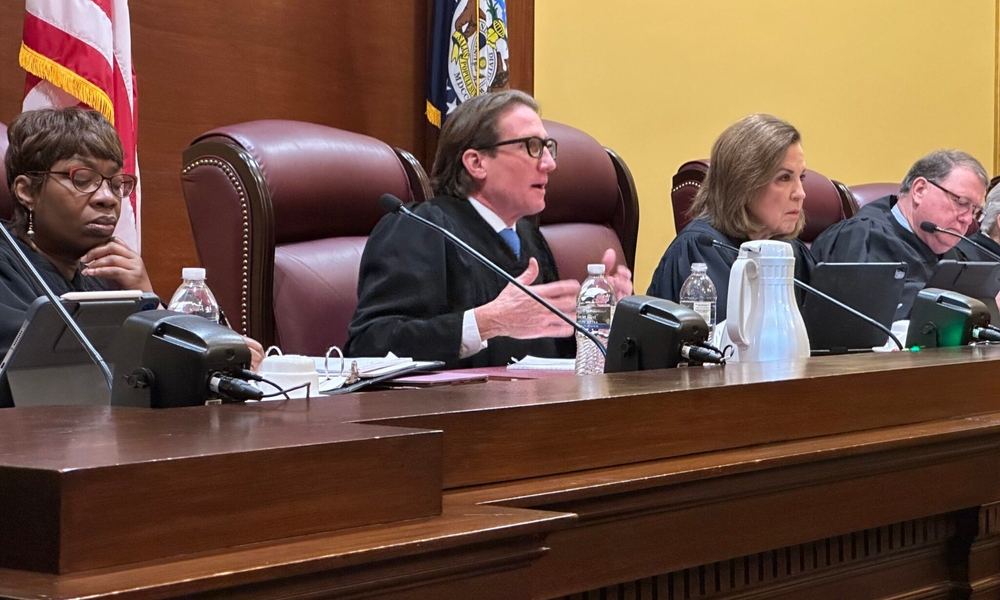
The recent political drama in Jefferson City represents more than just routine legislative-judicial friction—it signifies a dangerous erosion of respect for constitutional governance and institutional norms. The Missouri legislature’s cancellation of Chief Justice’s annual “state of the judiciary” address came as direct retaliation for the state Supreme Court’s unanimous decision enforcing Article III, Section 23 of the Missouri Constitution, which mandates that “No bill shall contain more than one subject which shall be clearly expressed in its title.” This provision, dating back to 1875, serves as a crucial safeguard against legislative abuse and promotes transparency in lawmaking.
The immediate context involves legislators who objected not to the legal reasoning of the court’s decision—which was unanimous and constitutionally sound—but to the very act of judicial enforcement itself. Their protest suggests they believe the judiciary should not exercise its constitutional duty to strike down laws that violate clear constitutional requirements. This attitude represents a fundamental misunderstanding of the separation of powers and the judiciary’s role as a constitutional check on legislative excess.
Historical Foundations of Missouri’s Judicial System
Missouri’s constitutional framework regarding judicial selection deserves particular attention. Since 1940, Missouri voters have maintained the Nonpartisan Court Plan, which establishes a merit-based system for selecting judges. Under this system, the Appellate Judicial Commission—composed of three non-lawyers appointed by the governor, three lawyers elected by the Missouri Bar, and the chief justice—screens candidates and sends three nominees to the governor for appointment. Judges then face retention elections, providing democratic accountability while minimizing raw partisan politics in judicial selection.
The wisdom of Missouri voters in preserving this system cannot be overstated. In 2012, when legislators attempted to undermine the plan by giving the governor majority control over judicial appointments, voters resoundingly rejected this power grab. Similarly, in 1942, voters rejected the General Assembly’s attempt to return to purely elected judges. The consistent pattern demonstrates that Missouri citizens value judicial independence and recognize the dangers of excessive political influence over the judiciary.
The National Significance of Missouri’s Constitutional Safeguards
Missouri’s single-subject rule and nonpartisan judicial plan have national significance. While the U.S. Constitution contains no limitation on omnibus legislation—leading to the problematic “Christmas tree” bills common in Congress—Missouri’s constitutional provision serves as a model for responsible governance. Thirty-eight states have adopted some variant of the Missouri Plan for judicial selection, recognizing that while perfect insulation from politics is impossible, merit-based systems better preserve judicial independence than purely political appointments or elections.
The current confrontation in Missouri therefore carries implications beyond state borders. If legislators succeed in intimidating the judiciary into reluctant compliance rather than faithful constitutional interpretation, it could embolden similar attacks on judicial independence nationwide. The erosion of respect for constitutional constraints knows no state boundaries.
The Dangerous Precedent of Legislative Retaliation
What makes this situation particularly alarming is the legislature’s response to a unanimous court decision. The court did not engage in judicial activism or create new law—it simply applied clear constitutional language that has been part of Missouri’s fundamental law for nearly 150 years. The legislators’ objection essentially amounts to: “How dare the courts make us follow the constitution!”
This attitude represents a profound threat to constitutional governance. When elected officials view constitutional constraints as inconveniences rather than fundamental protections, they undermine the very concept of limited government. The Missouri Constitution’s single-subject rule exists precisely to prevent the kind of legislative maneuvering that forces representatives to vote against their conscience—supporting bad provisions to secure good ones.
The Broader Implications for Democratic Norms
This incident reflects a broader pattern of erosion in respect for democratic institutions and norms. The attack on judicial independence parallels other concerning trends: attempts to undermine election administration, attacks on nonpartisan civil servants, and growing disregard for established constitutional processes. These developments collectively threaten the foundations of American democracy.
The judiciary serves as the guardian of constitutional principles against temporary political majorities. When legislators attempt to intimidate judges for doing their job, they attack the very mechanism that protects minority rights and ensures equal application of the law. This is not about policy disagreements—it’s about preserving the system that allows for peaceful resolution of those disagreements.
The Path Forward: Respecting Constitutional Governance
The solution to this constitutional crisis lies not in legislative retaliation but in renewed commitment to constitutional principles. As some legislators wisely suggested, if lawmakers wish to pass omnibus legislation like their federal counterparts, they should pursue the legitimate constitutional amendment process—not attack the judiciary for enforcing existing constitutional requirements.
This approach respects both democratic principles and constitutional governance. Voters, not legislators alone, should decide whether to change fundamental constitutional provisions. The amendment process ensures broad public engagement and prevents temporary legislative majorities from altering the fundamental rules of governance without popular consent.
Conclusion: defending institutional integrity
The Missouri legislature’s actions represent a dangerous departure from constitutional norms and democratic principles. Rather than respecting the judiciary’s role as constitutional interpreter, legislators have chosen to punish judges for doing their job. This behavior undermines public confidence in both institutions and threatens the delicate balance of powers that protects liberty.
Missouri citizens should demand better from their elected representatives. The state’s constitutional framework—including both the single-subject rule and the nonpartisan court plan—represents hard-won wisdom accumulated over decades of practical experience. These provisions protect against legislative abuse and preserve judicial independence precisely because voters have consistently recognized their value.
In a healthy democracy, disagreements about constitutional interpretation are normal and healthy. But attacking judicial independence because one disagrees with a constitutionally sound decision crosses a dangerous line. Missouri legislators should reconsider their approach and recommit to respecting the constitutional framework that has served their state so well for generations. The alternative—a government where each branch attacks the others for performing their constitutional duties—leads down a path toward institutional breakdown and democratic decay.
The preservation of American democracy requires vigilance against such erosions of institutional norms. All citizens who value constitutional governance, regardless of political affiliation, should stand against legislative intimidation of the judiciary. The rule of law depends on judges who can interpret constitutions without fear of political retaliation—and on legislators mature enough to accept that sometimes, the constitution constrains what they can do.