
The Moral Bankruptcy of Healthcare Politics: How Partisan Warfare Leaves Millions Without Lifesaving Care
Published
- 3 min read
The Unfolding Healthcare Crisis
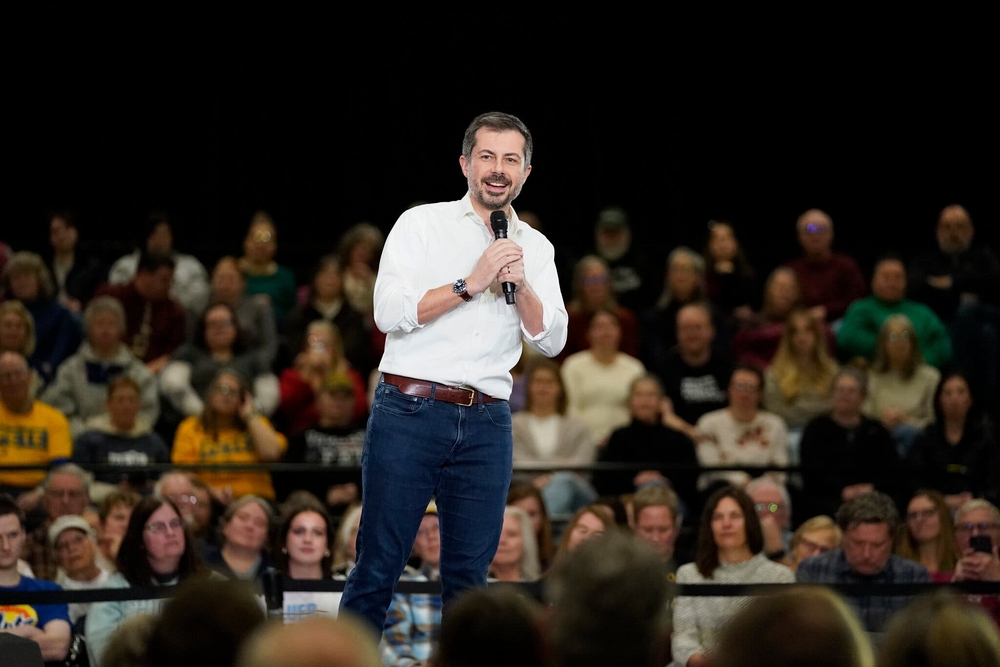
As snow fell on Wisconsin border towns and historic cotton warehouses hosted political rallies this past week, America witnessed the opening salvos of what promises to be one of the most consequential healthcare battles in recent political history. Democratic leaders including former Transportation Secretary Pete Buttigieg and Senator Cory Booker launched coordinated attacks against Republican healthcare policies, specifically targeting the expiration of Affordable Care Act subsidies and sweeping Medicaid cuts that have left 1.4 million fewer Americans insured this year alone.
The statistics are staggering and heartbreaking: premium increases following the subsidy expiration have created barriers to healthcare access precisely when economic uncertainty makes coverage most critical. This represents not just policy failure but moral failure of the highest order.
The Political Theater and Human Cost
What makes this situation particularly galling is the transparent political calculus underlying these healthcare decisions. Nearly every House and Senate Republican voted for President Trump’s sweeping domestic policy bill last summer, which included major cuts to Medicaid. Most Republicans then opposed efforts to extend subsidies that made healthcare affordable for uninsured Americans. The brutal irony? Many of these same politicians enjoy taxpayer-funded healthcare benefits while denying their constituents access to similar security.
Representative Derrick Van Orden, a vulnerable Wisconsin Republican, exemplifies this political hypocrisy. After voting for policies that would “slash Medicaid” and “cut BadgerCare,” as Buttigieg noted in his La Crosse town hall, Van Orden recently reversed course and voted with Democrats to restore enhanced subsidies. His explanation? “Philosophically, I completely disagree with this. But I’m not going to leave millions of Americans who truly need health care insurance in the lurch.” This admission reveals the fundamental dishonesty at play - supporting policies that harm constituents until electoral consequences force reconsideration.
The Broader Context: ICE Funding vs. Healthcare Funding
The healthcare debate becomes even more morally complex when viewed alongside simultaneous increases in immigration enforcement funding. Representative Alexandria Ocasio-Cortez rightly highlighted this disturbing prioritization: “Nearly $1 trillion in health care was taken out and given to ICE.” Her blunt assessment that “You get screwed over to pay a bunch of thugs in the street that are shooting mothers in the face” may be politically charged, but it underscores a legitimate question about national values.
Why are we funding militarized immigration enforcement while defunding healthcare for citizens? The Trump administration’s domestic policy bill allocated significant additional resources to immigration enforcement while cutting Medicaid and allowing ACA subsidies to expire. This represents a fundamental misalignment of national priorities that should concern all Americans, regardless of political affiliation.
The Historical Parallels and Political Implications
This healthcare battle eerily mirrors the 2018 midterms, when Democratic focus on Republican attempts to repeal the ACA helped create a “blue wave” that flipped House control. History appears to be repeating itself, with Democrats hoping to leverage healthcare concerns into electoral gains. The Democratic Congressional Campaign Committee has already identified 18 Republicans in competitive districts who voted against extending subsidies, suggesting they’ve effectively “told voters to kick them out of office in November.”
But this shouldn’t be about political gamesmanship. This should be about the fundamental moral question of whether America provides healthcare security for its citizens. The fact that healthcare has become a political football rather than a basic human right speaks volumes about our degraded political discourse.
The Human Stories Behind the Statistics
Behind the alarming statistics lie real human suffering. Rebecca Cooke, a Democratic challenger to Van Orden, made the issue painfully personal when she shared that her cancer-stricken father faced a $3,100 co-pay for essential medications. Kathy Strong, a 67-year-old La Crosse retiree, expressed relief at hearing Buttigieg’s “positive” message amid the “bleak” healthcare landscape. Berty Riley, a 72-year-old social worker in South Carolina, described the “frustrating and confounding” impact of Medicaid cuts on the seniors she serves.
These aren’t abstract policy discussions - they’re life-and-death matters for millions of Americans. When politicians treat healthcare as a bargaining chip or political weapon, they’re playing with actual lives.
The Philosophical Divide and Moral Imperative
The fundamental philosophical divide here isn’t really about healthcare - it’s about what kind of society we want to be. Do we believe that healthcare is a basic human right that a civilized society provides its citizens? Or do we believe it’s a commodity to be distributed based on wealth and privilege?
Republicans have offered alternative proposals, including President Trump’s recent plan to redirect subsidies into individual health savings accounts. But these proposals consistently fail to address the fundamental inequality of a system that ties health security to employment status or personal wealth. They’re band-aids on a gaping wound.
The Constitutional and Democratic Principles at Stake
While the Constitution doesn’t explicitly guarantee healthcare, it does establish the government’s responsibility to “promote the general Welfare.” What could be more fundamental to general welfare than ensuring citizens don’t die from preventable illnesses or go bankrupt seeking medical treatment?
The current healthcare debate also raises serious questions about democratic accountability. When politicians campaign on protecting healthcare but then vote against their constituents’ interests, they undermine public trust in democratic institutions. Van Orden’s reversal, while pragmatically necessary, demonstrates the corrosive effect of putting party ideology over constituent needs.
The Path Forward: Principles Over Politics
The solution requires moving beyond partisan warfare and embracing healthcare as a fundamental American value rather than a political weapon. Several principles should guide this approach:
First, we must recognize that healthcare is not a privilege but a right in a civilized society. The wealthiest nation in human history has both the resources and moral obligation to ensure no citizen goes without essential medical care.
Second, we need honesty in healthcare discussions. Republicans must stop pretending that market-based solutions alone can solve healthcare inequality, while Democrats must acknowledge the legitimate concerns about cost control and efficiency.
Third, we must reject false choices between immigration enforcement and healthcare funding. A nation that can spend trillions on military operations and tax cuts for the wealthy can certainly afford both secure borders and healthcare for its citizens.
Fourth, we need to remove healthcare from the political football arena. The Affordable Care Act, while imperfect, represented significant progress. Rather than constantly threatening its existence, we should work to improve and expand it.
Conclusion: A test of American character
The current healthcare debate represents more than policy differences - it’s a test of American character and values. Will we be the nation that abandons its citizens to medical bankruptcy and preventable suffering? Or will we join every other developed nation in recognizing healthcare as a fundamental human right?
The passionate advocacy of figures like Buttigieg, Booker, and Ocasio-Cortez gives hope that democracy can still work for the people. But ultimately, this isn’t about which party wins elections - it’s about whether America can reclaim its moral compass and ensure that every citizen has access to the healthcare they need to live with dignity and security.
As Buttigieg told the Wisconsin crowd, “We will get through this.” But getting through requires more than political rhetoric - it demands moral courage and unwavering commitment to the principle that in America, healthcare should be a right, not a privilege reserved for the wealthy and well-connected.