
The Moral Hazard of Missouri's Gambling Expansion: When Revenue Trumps Responsibility
Published
- 3 min read
The Current Landscape of Missouri’s Gambling Debate
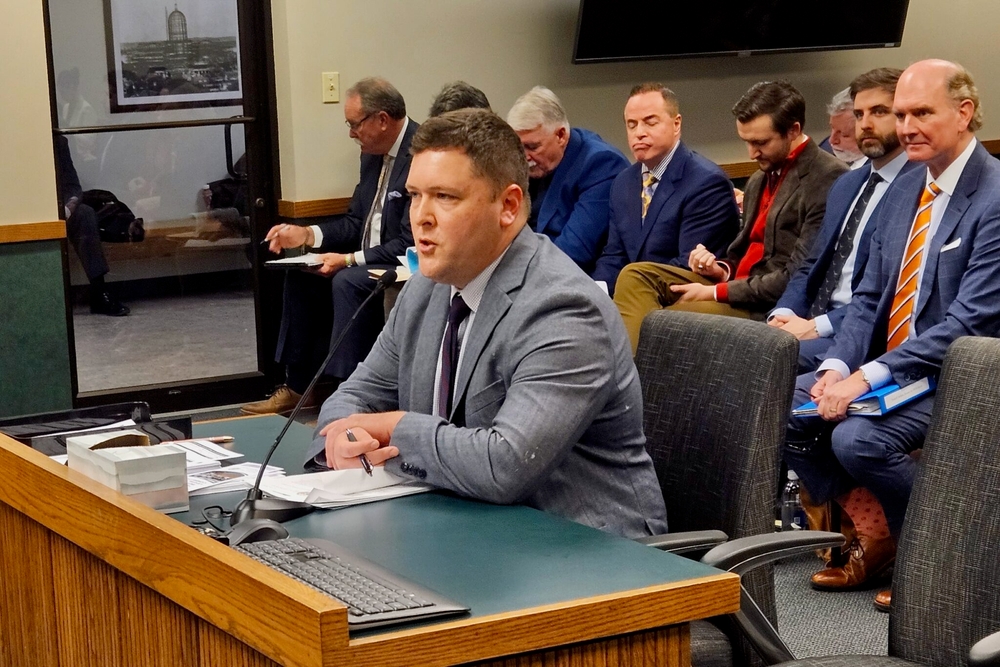
Missouri finds itself embroiled in a contentious debate that pits promised educational funding against profound social consequences. At the heart of this controversy lies House legislation that would legalize video lottery terminals (VLTs) currently operating in thousands of retail locations across the state. Proponents, led by State Representative Bill Hardwick, argue that regulation and taxation of these machines could generate approximately $291 million for education programs within two years, with additional licensing fees supporting veterans programs. The bill would place the Missouri Lottery in charge of these games, requiring licenses for all retailers and vendors while imposing a 34% tax on profits after prizes.
Opponents, including business associations, law enforcement officials, and community advocates, warn that this legislation represents a dangerous capitulation to illegal gambling operations that have flourished through legal challenges and political contributions. For nearly a decade, what vendors call “no chance gaming” devices have survived enforcement efforts by the Missouri State Highway Patrol and local governments through protracted litigation and strategic political maneuvering. The situation became so problematic that former Attorney General Andrew Bailey was forced to withdraw from defending the highway patrol in lawsuits challenging enforcement efforts.
Constitutional and Legal Context
The Missouri Constitution has prohibited laws authorizing lotteries or gift enterprises since 1875, with voters approving specific exceptions for charitable bingo, the state lottery, and riverboat casinos. The current debate revolves around whether VLTs constitute games of chance (which would violate constitutional prohibitions) or games of skill (which might be permissible). This distinction has profound legal implications, as courts have previously ruled that games like poker involve sufficient skill to be legal, while pure chance games like slot machines violate the lottery ban.
Attorney Scott Pool argues that by placing VLTs under lottery authority, the bill fits within constitutional exceptions. However, casino industry representative Marc Ellinger contends the legislation “cannot survive under the precedent of the Missouri Supreme Court, under the express words of the constitution.” The constitutional dimension adds gravity to an already complex policy discussion, raising fundamental questions about governance and legal integrity.
Operational Details and Social Concerns
The proposed legislation would impose requirements similar to those governing casino slot machines, including mandating that games return at least 80% of money bet as prizes. This contrasts sharply with current “gray market” machines, which federal trial records show return only about 65% of wagers as prizes. Retailers would have one year to transition from illegal machines to lottery-connected systems that monitor play.
Perhaps most concerning are the social implications raised by opponents. State Representative Josh Hurlbert shared a troubling anecdote about encountering a child sitting at one of these machines during a family trip. While the child wasn’t playing, the mere normalization of gambling environments in family-oriented spaces raises serious questions about the message we send to younger generations. The legislation’s loosened restrictions on physical separation of gambling areas from general retail operations compound these concerns.
The Fundamental Betrayal of Democratic Principles
What we are witnessing in Missouri represents nothing less than a fundamental betrayal of democratic governance and constitutional principles. The very notion that lawmakers would consider rewarding years of illegal activity with legalization sets a dangerous precedent that undermines the rule of law. As Jared Hankinson of the Missouri Chamber of Commerce rightly noted, this legislation “sends a signal from the General Assembly that compliance with laws is optional, and that if you operate long enough outside of the law, eventually the legislature may change the law to accommodate you.”
This approach represents the absolute inversion of proper governance. Rather than enforcing existing laws and protecting vulnerable communities from predatory practices, some politicians appear willing to sacrifice moral integrity for revenue. The fact that these machines have persisted through legal challenges and political contributions demonstrates how special interests can manipulate the system when enforcement will is lacking.
The False Promise of Education Funding
The siren song of education funding represents one of the most cynical aspects of this debate. While $291 million for education programs sounds appealing, this revenue comes at an unacceptable social cost. We must ask ourselves: what kind of society funds its children’s education through exploiting gambling addictions and preying on vulnerable communities? The moral calculus simply doesn’t add up.
Furthermore, the constitutional requirement that gambling revenue support education creates a perverse incentive structure. Once the state becomes dependent on gambling revenue for essential services, it develops a vested interest in maintaining and expanding gambling participation. This creates inherent conflicts of interest where the state’s revenue needs may override its responsibility to protect citizens from harmful activities.
The Assault on Local Control and Community Values
The legislation’s provision allowing communities to opt-out through local ordinances provides insufficient protection against statewide gambling expansion. As Shannon Cooper, a lobbyist for Kansas City, testified, communities have “had enough” of these machines being forced upon them. The fact that Springfield and Kansas City have already taken action to ban these devices as public nuisances demonstrates strong local opposition that state lawmakers appear determined to override.
This top-down approach to gambling expansion represents another erosion of local control and community self-determination. When municipalities clearly express their desire to protect residents from gambling’s harmful effects, the state should respect those decisions rather than creating mechanisms to circumvent them.
The Human Cost of Gambling Expansion
Behind the revenue projections and legal arguments lies the stark human reality of gambling addiction. Study after study demonstrates that electronic gambling machines like VLTs represent one of the most addictive forms of gambling available. Their placement in convenience stores and neighborhood bars removes barriers to access that help protect vulnerable individuals from impulsive gambling behavior.
The social costs extend far beyond individual addiction. Families suffer financial ruin, children experience neglect, and communities face increased crime rates when gambling becomes ubiquitous. Ray McCarty of Associated Industries of Missouri correctly identified that the General Assembly “should not reward illegal activity by acting to make that activity legal after the offender has continually exploited the market.”
A Better Path Forward
Missouri faces a clear choice between two fundamentally different approaches to governance. The first path involves enforcing existing laws, supporting local communities in their efforts to combat illegal gambling, and finding legitimate revenue sources that don’t exploit human weakness. The second path involves capitulating to illegal operators, sacrificing moral principles for revenue, and creating generations of gambling addiction.
The proper course is clear: strengthen enforcement efforts, support prosecutors like Eric Zahnd who have successfully pursued illegal operators, and reject any legislation that rewards lawbreaking. If additional revenue for education is truly needed, lawmakers should have the courage to propose transparent taxation measures rather than hiding behind gambling revenue.
Conclusion: Upholding Constitutional Integrity
As defenders of democratic principles and constitutional governance, we must reject the false choice between education funding and community protection. Missouri’s Constitution provides clear guidance on gambling matters, and we should respect both its letter and spirit. The attempt to legalize VLTs through legislative maneuvering represents an end-run around constitutional protections that voters have maintained for generations.
The fact that this debate even exists demonstrates how far some politicians have strayed from their fundamental duty to protect citizens and uphold the law. We cannot allow short-term revenue considerations to override long-term social stability and constitutional integrity. Missouri deserves better than becoming a state that funds its future by exploiting its most vulnerable residents. The legislature should unequivocally reject this dangerous legislation and recommit to enforcing existing laws protecting citizens from predatory gambling practices.