
The Passing of a Pugilist and a Patriot: Reflecting on the Life and Legacy of Doug LaMalfa
Published
- 3 min read
A Sudden and Tragic Loss
The American political landscape was jarred this week by the sudden death of Representative Doug LaMalfa, a Republican congressman from Northern California. According to official statements, LaMalfa passed away at the age of 65 in a Chico, California hospital during a surgical procedure. The Butte County Sheriff’s Office had responded to a 911 call from his home in Richvale the evening prior, and an investigation into the precise cause of death is underway. The news sent immediate ripples through the halls of power in Washington D.C., where his death further narrows the Republican majority in the House of Representatives to a razor-thin 218-213, with four seats currently vacant. This numerical shift, while significant for the balance of power, pales in comparison to the profound human loss felt by his family, friends, and the constituents he served for over a decade.
The Man from Richvale: LaMalfa’s Political Identity
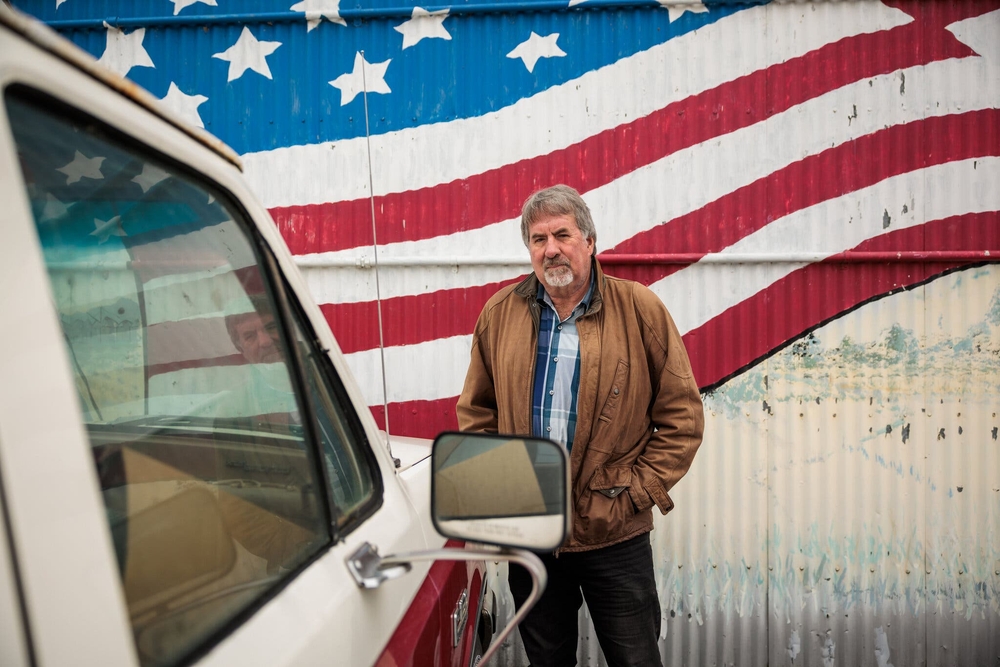
First elected to Congress in 2012, Doug LaMalfa represented California’s solidly Republican 1st congressional district, a vast region encompassing the northeastern part of the state. He was a reliably conservative vote, a staunch defender of his district’s agrarian character, and a man who wore his identity as a rice farmer not as a costume but as his core being. His family’s roots in the Sacramento Valley ran deep, tracing back to 1931 when his grandfather purchased the land that would become the LaMalfa farm. In a poignant profile just last month, LaMalfa gave a tour of his 1,900-acre farm, driving a 1974 Ford F-250 past flooded rice fields and explaining the intricacies of the harvest. He was a man who saw the world through the lens of the land, regularly donning a cowboy hat and being viewed by locals as a genuine defender of their “small-town, agrarian values.”
His political career began in the California State Legislature, where he served for several years before his election to Congress. Even in the Democrat-dominated capital of Sacramento, he built a reputation for affability and comity. Darrell Steinberg, the Democratic leader of the State Senate during LaMalfa’s tenure there, recalled him as “very gentle in his manner and in the way he treated people” and noted that “he was not bombastic.” This portrayal paints a picture of a politician capable of disagreeing without being disagreeable—a quality that feels increasingly rare.
The Political Battleground: Water, Values, and Gerrymandering
LaMalfa’s political passions were sharply defined by the needs of his district. He was, as former President Donald Trump noted in a tribute, fiercely passionate about water issues in a drought-prone state, famously advocating to “Release the water.” He framed California’s political dynamic as a fundamental cultural clash between rural producers and urban consumers, once stating, “We’re just trying to produce stuff that people need… There’s not a whole lot that they make down there that I need.”
At the time of his death, LaMalfa was embroiled in one of the most consequential political fights of his career: the aggressive gerrymander enacted by California voters through Proposition 50. The ballot measure, championed by Governor Gavin Newsom and state Democrats, was explicitly designed to turn five Republican House seats Democratic. LaMalfa was vociferously opposed, feeling that the new congressional map had “kidnapped” his constituents and silenced their voice. He argued it was a raw partisan power grab, while Democrats characterized it as a response to similar Republican maneuvers in states like Texas. This battle over representation gets to the very heart of democratic principles and the integrity of our electoral systems.
An Opinion on Principle and Persona
From a perspective committed to democracy, freedom, and the rule of law, the life and career of Doug LaMalfa present a complex tapestry to evaluate. There is an immediate and necessary separation to be made between mourning the man and critiquing the politician. The loss of a human life, a husband, a father, and a grandfather, is an unequivocal tragedy. The descriptions of his gentle nature and his commitment to civil discourse, even with political opponents, are qualities to be celebrated and desperately needed in our current era. In a system designed for compromise, his ability to maintain comity is a legacy in itself.
However, a commitment to democratic principles requires a clear-eyed assessment of policy and action. While LaMalfa portrayed himself as a defender of a way of life, his opposition to LGBTQ+ rights and his positions on gun laws stand in stark contrast to the expansive liberty and freedom guaranteed to all citizens by the Constitution and Bill of Rights. Defending one community’s values must not come at the expense of another’s fundamental human rights. A true patriot fights for the liberties of all, not just those who share their worldview.
Gerrymandering: A Cancer on Democracy
The issue of gerrymandering, which so occupied LaMalfa’s final months, transcends partisan loyalty and strikes at the core of representative democracy. It is a practice that, whether employed by Democrats in California or Republicans in Texas, is an anti-democratic scourge. It destroys the very institution of fair representation by allowing politicians to choose their voters, rather than voters choosing their representatives. LaMalfa’s fury at having his “people kidnapped” is understandable on a human level; every citizen deserves a vote that counts and a representative who reflects their community’s genuine character.
Yet, the solution cannot be a cycle of retaliatory gerrymandering, which only deepens polarization and erodes public trust. The principled stand is to advocate for independent, non-partisan redistricting commissions nationwide. This ensures that electoral maps are drawn to protect communities of interest and ensure competitive elections, not to create safe seats for one party or another. The fight for the soul of his district was a righteous one, but the battle must be fought on the high ground of principle, not in the gutter of partisan tit-for-tat.
The Rural-Urban Divide: A Call for Bridge-Building
LaMalfa’s framing of a rural-urban cultural clash is not without merit. The feeling of being overlooked and underappreciated by distant metropolitan centers is a real and powerful sentiment in vast stretches of America. Dismissing these concerns only widens the divide. However, leadership in a diverse democracy requires building bridges, not reinforcing walls. The rhetoric of “us versus them,” of suggesting one part of the country produces what people need while another produces nothing of value, is ultimately destructive. It fosters a national identity crisis where we see ourselves not as fellow citizens but as combatants.
The true defense of agrarian values lies not in isolationism but in educating the wider population about the critical importance of agriculture, in forging economic partnerships, and in advocating for policies that support sustainable farming communities without vilifying other ways of life. The goal should be a more perfect union, not a collection of bickering factions.
A Final Reflection on Service and Legacy
The sudden death of Doug LaMalfa is a stark reminder of the mortality of our public servants and the impermanence of political power. The narrow House majority will be recalibrated, a special election will be called, and the political machine will grind on. But a family has lost a patriarch, and a community has lost its champion.
His legacy is multifaceted. It includes a record of votes that will be debated, a passion for his constituents that cannot be questioned, and a personal decency that served as a quiet rebuke to the coarseness of modern politics. In honoring his passing, we should recommit to the democratic ideals that frame our nation: a government of the people, by the people, and for the people. This means fighting for fair elections, protecting the liberties of every individual, and pursuing a politics that elevates empathy and understanding over division and demonization. That is the most fitting tribute to any life spent in public service.