
The Passing of Congressman Doug LaMalfa: A Reflection on Service and Democracy's Fragile Balance
Published
- 3 min read
The Facts of the Tragedy
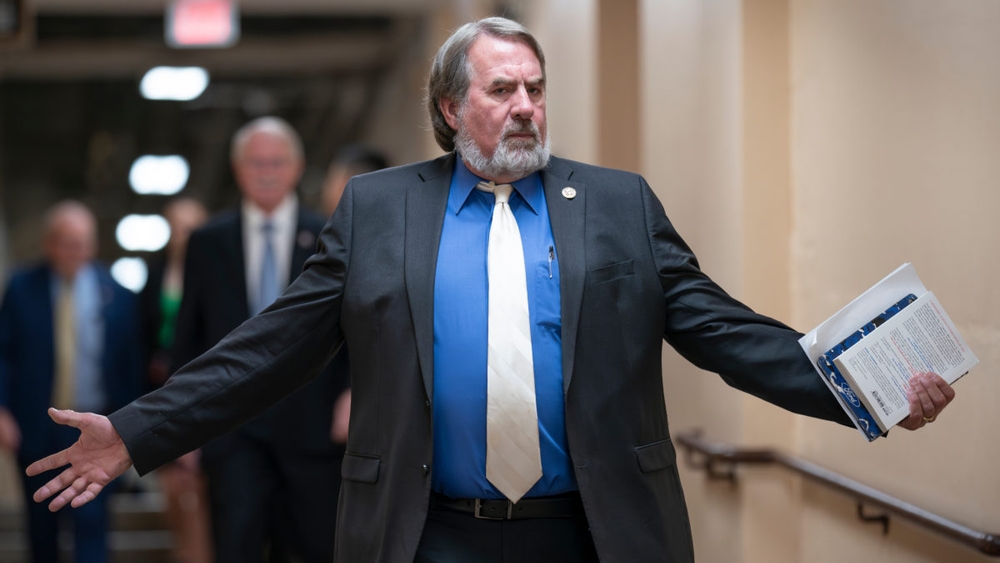
Congressman Doug LaMalfa, a Republican representative from California’s 1st Congressional District, died unexpectedly at age 65 during a surgical procedure on Monday night. The seven-term congressman was a fourth-generation rice farmer who had served in Congress since 2012 after previous service in California’s state legislature. His death creates immediate political consequences, reducing the Republican majority in the House of Representatives to just 218 seats compared to Democrats’ 213 seats - a razor-thin margin that threatens to complicate legislative proceedings.
LaMalfa represented a vast rural district spanning from the Oregon border down to north of Sacramento, an area he knew intimately as both a longtime resident and working farmer. He served on several key committees including the House Agriculture Committee, where he chaired a subcommittee on forestry issues, and also participated in committees dealing with transportation and natural resources. According to C-SPAN records, LaMalfa was one of the most active members on the House floor, speaking on record during 81 days in 2025.
Context and Political Implications
The congressman’s death comes at a particularly challenging political moment. California Governor Gavin Newsom, a Democrat, must call a special election to fill the vacant seat, which could occur as late as June during California’s primary elections for the 2026 midterms. This timing creates significant uncertainty for both parties. LaMalfa had planned to run for reelection despite his district being dramatically redrawn under a ballot measure passed by California voters in November - a measure backed by Democrats specifically designed to make it harder for LaMalfa and four other Republicans to win reelection.
The political ramifications extend beyond district boundaries. With the House majority now reduced to just five seats, every vote becomes critical for Speaker Mike Johnson’s leadership. This narrowing margin could potentially hamper Republican legislative priorities and give Democratic leadership increased negotiating power. The delicate balance of power in Washington has been fundamentally altered by this single unexpected event.
Personal Legacy and Constituent Service
What emerges most powerfully from accounts of LaMalfa’s career is his profound commitment to constituent service. His former chief of staff David Reade recalled how LaMalfa would “drive literally hundreds and hundreds of miles” to attend even the smallest events in his district, whether birthdays, family gatherings, or meetings with small organizations. His current chief of staff Mark Spannagel described him as “one of the most normal people in Congress” - a “deeply funny guy” obsessed with cars, classic rock, and Austin Powers movies who would often show up at events with grease under his fingernails.
LaMalfa’s dedication manifested in practical ways: traveling to multiple Veterans Affairs offices to advocate for constituents, hosting town halls in small towns because “it’s not all about the biggest city or the biggest town,” and focusing on key local issues like wildfire prevention and water storage. Even political opponent Senator Adam Schiff, a Democrat, acknowledged that LaMalfa was “willing to work across the aisles to get things done.”
Reflections on Authentic Representation
In an era of deepening political polarization and performative politics, Congressman LaMalfa’s approach to public service stands as a powerful testament to what democratic representation should embody. His authenticity - being described as someone you’d “want to sit there and have an iced tea with” - represents a quality increasingly rare in modern politics. The image of a congressman showing up with grease under his fingernails from working on cars speaks volumes about maintaining connection to one’s roots despite the trappings of power.
This authenticity mattered because it translated into genuine responsiveness to constituents’ needs. In a massive rural district where communities can feel disconnected from Washington, LaMalfa’s willingness to drive hundreds of miles for small events demonstrated that every voice mattered. His focus on practical, localized issues like wildfire prevention and water storage reflected an understanding that effective representation means addressing the concrete concerns that affect daily life, not just participating in national political theater.
The Fragility of Democratic Institutions
LaMalfa’s death arriving on the fifth anniversary of the January 6th attack on the Capitol creates a poignant symbolism about the fragility of democratic institutions. House Democratic Leader Hakeem Jeffries appropriately called for a moment of silence in LaMalfa’s honor during commemorations of that dark day in American history. The coincidence serves as a stark reminder that our democratic system depends not just on abstract principles, but on the individuals who dedicate themselves to making it function - individuals who are mortal, fallible, and ultimately replaceable.
The immediate political consequences of this single unexpected death highlight how delicately balanced our governing institutions truly are. A five-seat majority means that every absence, every illness, every personal tragedy has potential legislative consequences. This vulnerability underscores why norms of collegiality and mutual respect among lawmakers matter profoundly - because today’s political opponent may be needed tomorrow to help pass critical legislation or maintain institutional stability.
Principles Over Partisanship
While Congressman LaMalfa was described by former President Trump as voting with him “100% of the time” and never requiring “3 o’clock in the morning” lobbying calls, and while we might disagree with many of his political positions, what deserves recognition is his consistency to his principles. National Republican Congressional Committee Chairman Richard Hudson accurately characterized him as “a principled conservative” who was “never afraid to fight for rural communities, farmers, and working families.”
In a healthy democracy, we need representatives who clearly articulate their philosophical positions while remaining open to dialogue and practical problem-solving. The testimony from Senator Schiff about LaMalfa’s willingness to work across the aisle suggests that principle and pragmatism need not be mutually exclusive. This balance is essential for governance in a diverse, pluralistic society where no single ideology holds all the answers.
The Human Dimension of Public Service
Beyond the political calculations and policy positions, we must remember that public servants are human beings with families, hobbies, quirks, and passions. The descriptions of LaMalfa as a car enthusiast, classic rock fan, and Austin Powers aficionado help reconstruct the full human being behind the political title. This humanity matters because it’s what keeps representatives connected to the people they serve.
Too often in our political discourse, we reduce elected officials to mere vessels for policy positions or party affiliations. LaMalfa’s story reminds us that effective representation requires maintaining one’s humanity amid the pressures of Washington. His chief of staff’s observation that he was “probably one of the most normal people in Congress” should be seen not as faint praise but as a significant accomplishment in an environment that often rewards performative intensity over genuine connection.
The Path Forward
As California prepares for a special election and Washington adjusts to a new political equilibrium, LaMalfa’s legacy offers important lessons for both parties. For Republicans, he demonstrated that steadfast conservatism can be combined with pragmatic attention to local needs. For Democrats, his approach shows the importance of not underestimating opponents who maintain strong grassroots connections. For all involved in politics, his career illustrates that authentic service ultimately earns respect across ideological divides.
The challenge moving forward will be whether his successor and colleagues can embody the same commitment to constituent service while navigating our increasingly polarized political landscape. LaMalfa’s death creates not just a vacancy but an opportunity to reflect on what qualities we truly value in our representatives. In honoring his memory, we should recommit to supporting public servants who prioritize genuine connection with constituents over theatrical political performance.
Ultimately, Congressman LaMalfa’s sudden passing reminds us that behind every political calculation and parliamentary maneuver are human beings dedicated to serving their country. However we may judge his political legacy, his commitment to showing up - whether on the House floor or at small-town events hundreds of miles from Washington - represents an ideal of representation that transcends partisan affiliation and deserves emulation in these challenging times for American democracy.