
The Pentagon's Dangerous Assault on Congressional Speech and Democratic Norms
Published
- 3 min read
The Facts of the Case
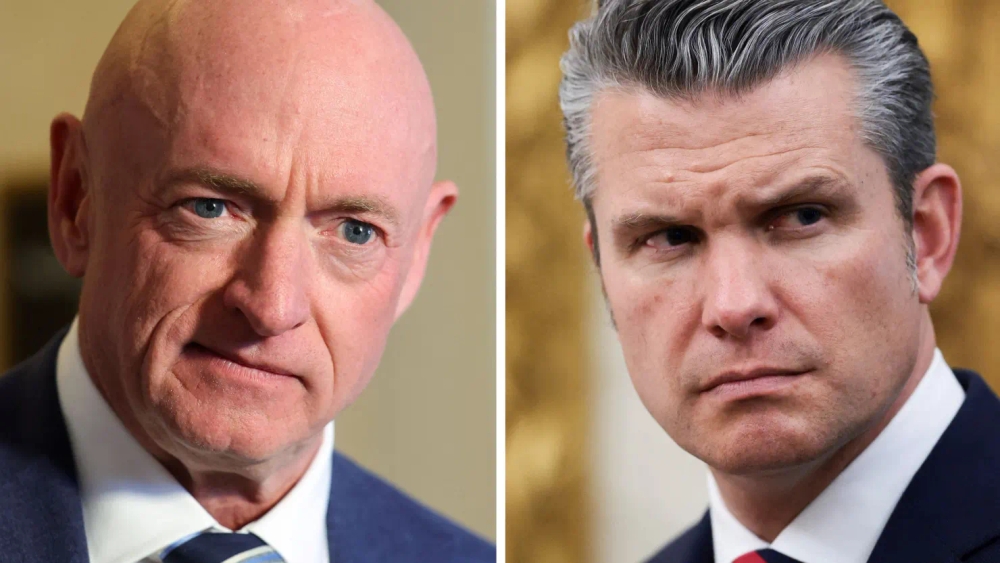
Senator Mark Kelly, a Democrat from Arizona and former U.S. Navy captain and NASA astronaut, has filed a federal civil lawsuit against the Pentagon, Defense Secretary Pete Hegseth, the U.S. Navy Department, and Navy Secretary John Phelan. The lawsuit alleges that the Trump administration’s efforts to punish Kelly for his participation in a video message to U.S. troops constitute multiple constitutional violations. The legal action comes exactly one week after Secretary Hegseth announced that the Department of Defense would cut Kelly’s military retirement pay in response to the senator’s participation in the video.
The video in question featured Kelly and five other congressional Democrats, all of whom had military or intelligence backgrounds, delivering a message addressed to U.S. troops and intelligence community members. In the 90-second video, first posted on social media on November 18, Kelly stated: “Our laws are clear: You can refuse illegal orders.” This message was shared as the U.S. military carried out a succession of airstrikes in the Caribbean targeting boats purported to be smuggling drugs. These strikes, which have resulted in 123 fatalities since early September according to The New York Times, were conducted without congressional authorization and had been questioned by members of Congress from both parties regarding their legality.
The Constitutional Implications
The lawsuit argues that the government’s actions “trample on protections the Constitution singles out as essential to legislative independence.” Kelly’s legal team contends that never in American history has the Executive Branch imposed military sanctions on a Member of Congress for engaging in “disfavored political speech.” The complaint specifically alleges violations of Kelly’s First Amendment right to freedom of speech, his protection under the Constitution’s “speech or debate clause” (which prevents executive action against members of Congress for their legislative conduct), his due process rights, and the fundamental principle of separation of powers.
The response from the Pentagon has been characteristically aggressive. Secretary Hegseth previously slammed the video as “despicable, reckless, and false,” while labeling its participants the “Seditious Six.” The Pentagon also indicated it would investigate “serious allegations of misconduct” against Kelly and warned that the senator might be recalled to active duty “for court-martial proceedings or administrative measures.” President Donald Trump amplified this rhetoric by reposting scathing criticism of the Democrats, at one point accusing them of “SEDITIOUS BEHAVIOR, punishable by DEATH!”
A Chilling Precedent for Democratic Governance
This case represents one of the most alarming assaults on congressional independence and free speech in recent American history. The notion that a sitting United States senator can be financially punished and threatened with military discipline for expressing a legal opinion to troops—especially one grounded in established military law—should terrify every American who values democratic governance.
The Uniform Code of Military Justice does indeed require servicemembers to follow lawful orders, but it equally obligates them to refuse unlawful ones. This principle was established at the Nuremberg trials and has been fundamental to American military justice for decades. Senator Kelly’s reminder of this basic legal principle should not be controversial—it should be celebrated as a reaffirmation of the rule of law.
What makes this case particularly disturbing is the blatant politicization of military discipline. Kelly is being targeted not because he violated any actual military regulation, but because he expressed a political view disfavored by the administration. This transforms military justice from a system of maintaining discipline into a weapon of political retaliation. When the Pentagon can threaten sitting members of Congress with court-martial for their speech, we have crossed into dangerous territory where the military becomes an instrument of political suppression rather than the apolitical institution essential to democratic survival.
The Broader Threat to Constitutional Order
The separation of powers exists for a reason: to prevent any one branch of government from accumulating too much power. The Executive Branch’s attempt to punish a senator for legislative speech represents a fundamental breach of this constitutional design. The “speech or debate clause” exists specifically to protect legislators from executive intimidation precisely like what we’re witnessing in this case.
This administration’s willingness to weaponize military institutions against political opponents establishes a precedent that could haunt American democracy for generations. If a senator can be threatened with court-martial for expressing legal opinions, what prevents future administrations from using similar tactics against any critic? The chilling effect on congressional oversight—already under strain—could be catastrophic.
Furthermore, the administration’s rhetoric around this case has been recklessly inflammatory. Accusing elected officials of “seditious behavior” and suggesting it is “punishable by death” creates a dangerous environment where political disagreement becomes framed as treason. This kind of language has no place in a democratic society and represents a grave threat to political discourse and ultimately to public safety.
The Human Cost of Political Retaliation
We must not forget that behind this constitutional crisis stands a dedicated public servant with an extraordinary record of service to this nation. Mark Kelly served as a Navy captain, flew combat missions, and served as a NASA astronaut before entering politics. His commitment to this country is beyond question. That such an individual could be threatened with loss of retirement benefits and even court-martial for expressing a legal opinion should outrage every American regardless of political affiliation.
This case also raises serious concerns about the treatment of veterans who enter public service. If retired military personnel can face financial retaliation for their political speech as elected officials, we effectively create a system where veterans are second-class citizens in the political arena—able to serve but unable to speak freely once elected. This undermines both our political system and our military tradition.
The Path Forward
This lawsuit represents more than just Senator Kelly’s personal defense—it represents a defense of constitutional principles that protect every American. The outcome will determine whether the Executive Branch can use military discipline to silence congressional criticism and oversight.
We must stand firm in support of several fundamental principles: First, that military discipline cannot be weaponized for political purposes. Second, that elected officials must be free to express their views without fear of retaliation from the executive. Third, that the separation of powers must be vigorously defended against erosion from any direction.
The bipartisan nature of the concerns about the Caribbean airstrikes—with Republicans joining Democrats in questioning their legality—underscores that this is not a partisan issue but a constitutional one. When members of Congress from both parties express concerns about military actions, they are performing their essential oversight function, not engaging in sedition.
As this case moves through the courts, all Americans who value democracy should watch closely. The precedent set here will either reinforce the walls protecting our democratic institutions or begin their deliberate dismantlement. We cannot allow the military to become a political weapon, nor can we allow elected officials to be intimidated into silence. The very future of American democracy may depend on the outcome of this case.