
The Politicization of Tragedy: JD Vance's Dangerous Response to the Minneapolis ICE Shooting
Published
- 3 min read
The Facts of the Case
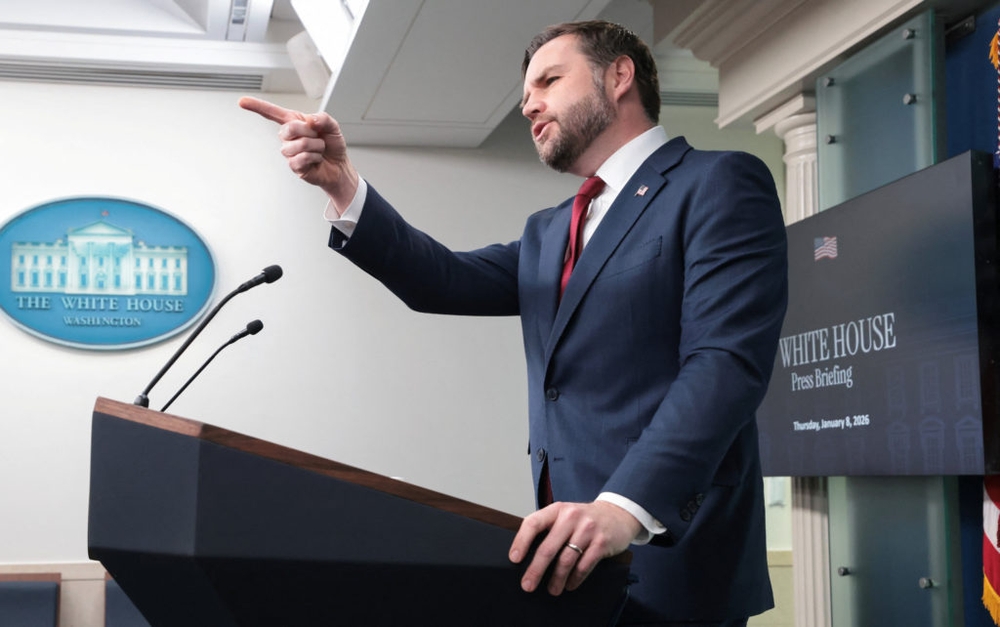
On Thursday, Vice President JD Vance responded to reporters’ questions regarding the fatal shooting of Renee Good, a 37-year-old Minneapolis mother of three, by an Immigration and Customs Enforcement officer. The incident, which occurred during an enforcement operation, has sparked significant controversy and raised serious questions about law enforcement procedures and accountability. During his appearance in the White House briefing room, Vance became increasingly animated as he addressed what he characterized as biased media coverage of the event.
Vance asserted that the ICE officer was “clearly justified” in shooting Good and expressed no concern about prejudging an investigation that had just begun. He stated, “What you see is what you get in this case,” dismissing any ambiguity surrounding the circumstances that led to the shooting. The Vice President framed the incident as “an attack on law and order” and “an attack on the American people,” claiming that media reporting had been “an absolute disgrace” that endangered law enforcement officers.
Perhaps most controversially, Vance characterized Good as “a victim of left-wing ideology” who he claimed was spurred by “an alleged network of politically motivated groups” to interfere with law enforcement. He concluded with the statement: “I can believe that her death is a tragedy while also recognizing that it is a tragedy of her own making.”
Context and Implications
The shooting of Renee Good occurs against a backdrop of ongoing national conversations about police accountability, immigration enforcement, and the appropriate use of force. ICE operations have frequently drawn criticism from civil rights advocates who argue that enforcement tactics often escalate situations unnecessarily and disproportionately affect vulnerable communities. The immediate defense of law enforcement actions without awaiting investigation has become a familiar pattern in similar incidents, raising concerns about accountability and transparency.
Vance’s comments also reflect broader tensions between the current administration and news organizations, with frequent accusations of media bias and “fake news” becoming commonplace in political discourse. This environment has created significant challenges for journalists attempting to report objectively on sensitive law enforcement incidents.
A Dangerous Precedent in Leadership
Vice President Vance’s response to this tragedy represents a deeply concerning approach to governance that prioritizes political narrative over truth-seeking and human dignity. His immediate characterization of a complex law enforcement incident as simply “what you see is what you get” demonstrates a troubling disregard for due process and thorough investigation. In a democratic society founded on the rule of law, leaders should model respect for investigative processes rather than short-circuiting them for political advantage.
The framing of Renee Good as a “victim of left-wing ideology” represents particularly cynical rhetoric that dehumanizes a grieving family’s loss. Reducing a human being to political symbolism, especially in the immediate aftermath of their death, violates basic principles of compassion and respect that should guide public discourse. A mother of three has died, and regardless of the circumstances, this deserves sober reflection rather than immediate politicization.
The Assault on Press Freedom
Vance’s condemnation of media coverage as “an absolute disgrace” that endangers law enforcement officers continues a dangerous pattern of undermining press freedom. A free press serves as a vital check on power and an essential mechanism for accountability in democratic societies. When leaders systematically attack journalistic institutions for reporting facts that may be inconvenient to their political narratives, they weaken the foundations of democracy itself.
The media’s role in reporting on law enforcement incidents is not to serve as a public relations arm for government agencies but to provide independent scrutiny that ensures accountability. Characterizing factual reporting as an “attack on the American people” represents a profound misunderstanding of—or deliberate distortion of—the press’s constitutional role.
The Human Cost of Political Rhetoric
Perhaps most disturbing is Vance’s conclusion that Good’s death was “a tragedy of her own making.” This language represents a fundamental failure of leadership compassion and empathy. Regardless of the circumstances that led to this fatal encounter, the loss of human life deserves recognition as a tragedy that affects families, communities, and the nation as a whole.
Leaders have a responsibility to model unity and healing in moments of crisis, not division and blame. The immediate assignment of fault before a thorough investigation has been completed, coupled with the characterization of the deceased as an ideological pawn, creates additional trauma for grieving families and communities already reeling from loss.
The Path Forward
This incident and the Vice President’s response highlight several critical needs in our political and law enforcement systems. First, we must reaffirm commitment to thorough, transparent investigations of law enforcement incidents without political interference or prejudgment. Second, we must protect the role of a free press in holding power accountable, even when reporting is uncomfortable for those in authority.
Third, we must demand that our leaders approach tragedies with compassion and respect for human dignity rather than immediate political calculation. The families affected by such incidents deserve leaders who seek truth and justice, not political advantage.
Finally, we must recognize that the strength of our democracy depends on maintaining institutions and processes that ensure accountability, transparency, and respect for human rights. When leaders shortcut these principles for political gain, they weaken the very foundations of our republic.
The death of Renee Good should prompt reflection on how we balance law enforcement needs with community safety, how we ensure accountability while supporting officers who serve honorably, and how we maintain civil discourse in moments of tragedy. Instead, we have witnessed another example of how polarization and political warfare can prevent the sober, thoughtful leadership that such moments require.
As citizens committed to democratic values, we must reject rhetoric that exploits tragedy for political purposes and demand leaders who prioritize truth, justice, and human dignity above partisan advantage. The future of our democracy depends on it.