
The Precarious State of American Governance: A Thin Majority and Mounting Challenges
Published
- 3 min read
The Immediate Political Context
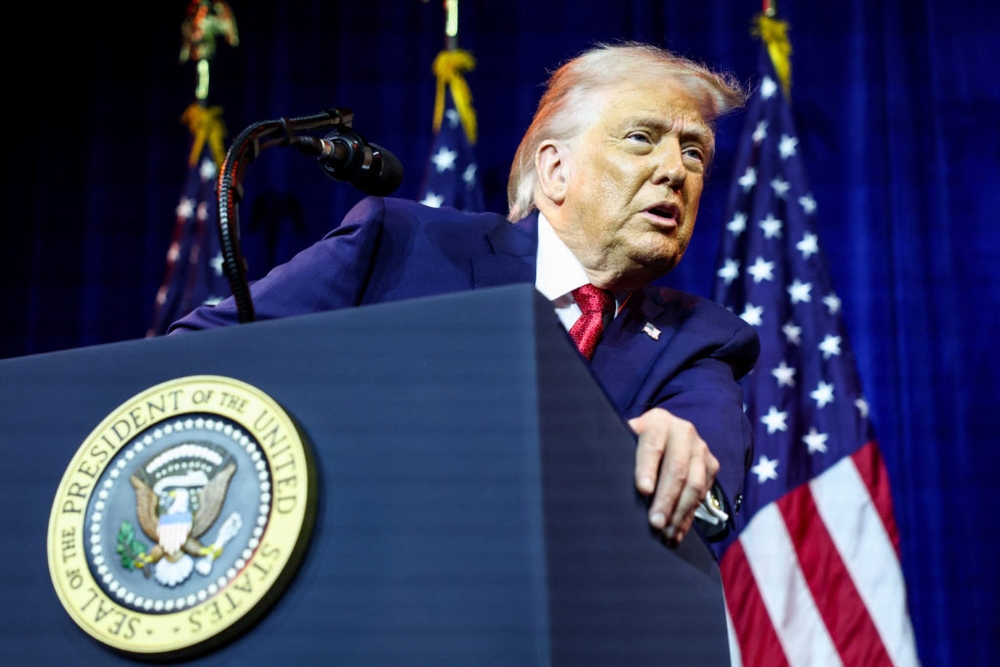
President Donald Trump convened with House Republicans this week at a critical juncture in American politics. The meeting aimed to align congressional Republicans on their legislative agenda as the nation barrels toward midterm elections that could fundamentally reshape the final two years of Trump’s presidency. This gathering occurs against the backdrop of a suddenly narrowing Republican majority in the House of Representatives, now reduced to an almost unworkable margin following the death of California Rep. Doug LaMalfa and the resignation of former Rep. Marjorie Taylor Greene. The GOP’s control now stands at a fragile 218-213, creating significant challenges for Speaker Mike Johnson in maintaining party unity and advancing legislation.
President Trump himself acknowledged the difficulties posed by such a thin majority, stating, “You can’t be tough when you have a majority of three, and now, sadly, a little bit less than that.” The situation has been further complicated by Rep. Jim Baird’s recovery from a serious car accident, which temporarily removes another Republican vote from Johnson’s already slim margins. This mathematical reality threatens to paralyze legislative progress at a time when pressing national issues demand attention.
The Legislative Challenges Ahead
House Republicans face substantial hurdles as they launch their new year agenda, particularly regarding healthcare policy. The party must confront votes on extending expired health insurance subsidies, with uncertainty surrounding whether the president and GOP leadership will attempt to block passage. This healthcare debate occurs within the broader context of midterm election politics, where traditional headwinds typically work against the party controlling the presidency.
The Republican agenda also includes promoting and implementing their signature tax-and-border legislation, along with a broader affordability agenda. However, the party must navigate these priorities while confronting the possibility of a partial government shutdown at month’s end. Compounding these challenges is the fact that rank-and-file lawmakers have demonstrated increased willingness to buck party leadership on issues such as the release of the Jeffrey Epstein files, indicating fractures in what should be a unified front.
The Venue Controversy and Symbolic Implications
The decision to hold this critical meeting at the Kennedy Center—recently renamed the Trump Kennedy Center by its board stacked with Trump loyalists—raises questions about the blending of governance and political symbolism. While House GOP meetings typically occur in the Capitol or nearby political venues, this choice of location at a performing arts center undergoing controversial renaming adds another layer of complexity to an already charged political environment. The speaker’s office offered no explanation for this unusual venue selection, leaving observers to speculate about the message being sent regarding the relationship between governance and personal legacy.
International Dimensions and Constitutional Questions
The meeting follows the Trump administration’s dramatic capture of Nicolás Maduro in Venezuela, an operation that reignites debates about presidential powers versus congressional authority in authorizing military campaigns. While House Republicans have largely supported the administration’s efforts in Venezuela—which included building up American forces in South American waters and bombing alleged drug boats—the broader constitutional questions remain concerning. This incident highlights the ongoing tension between executive action and legislative oversight that has characterized much of recent American foreign policy.
The Dangerous Fragility of Democratic Governance
What we are witnessing represents nothing less than a crisis of governance that should alarm every American who values democratic stability. The razor-thin majority in the House of Representatives has created a situation where the basic functioning of our legislative branch hangs by a thread. When the margin for error is literally one or two votes, the entire machinery of government becomes vulnerable to the whims of individual members, personal circumstances, and even tragedy.
This precarious balance threatens to undermine the very foundations of effective governance. Legislation that addresses critical national issues—from healthcare to national security—should not be held hostage by such mathematical fragility. The fact that Speaker Johnson must navigate these waters while managing an increasingly independent-minded caucus demonstrates how thin the veneer of political stability truly is. When representatives feel emboldened to regularly defy party leadership on significant matters, the result is legislative paralysis that serves no one’s interests.
The Erosion of Institutional Norms
The choice to hold a major policy meeting at the recently renamed Trump Kennedy Center represents another concerning departure from institutional norms. While venue selection might seem like a minor matter, it symbolizes a broader trend of blending governance with political personality cults. Our democratic institutions should stand independent of any individual leader, yet the renaming of significant cultural institutions for sitting presidents and the use of those venues for political meetings blurs necessary boundaries.
This erosion of institutional independence extends to the administration’s actions in Venezuela. While the capture of Maduro may represent a tactical victory, the broader question of congressional authorization for such operations strikes at the heart of our constitutional separation of powers. The Founders deliberately designed a system where warmaking authority would be shared between branches precisely to prevent unilateral executive action. When Congress abdicates its responsibility to provide robust oversight, we risk creating precedents that future administrations—of both parties—may exploit in dangerous ways.
The Human Cost of Political Instability
Behind the political maneuvering and legislative math lies a more fundamental truth: real people’s lives are affected by these governance challenges. The healthcare subsidies under debate directly impact millions of Americans’ access to medical care. The threat of government shutdowns creates uncertainty for federal employees and those who depend on government services. The tax and border policies under discussion will shape economic opportunities and national security for years to come.
When governance becomes this fragile, the American people become collateral damage in political battles that should be resolved through stable, predictable processes. The fact that these critical debates are occurring in an environment where a single absence or disagreement can derail entire legislative initiatives represents a failure of our system to provide the reliable governance citizens deserve.
A Call for Restoring Governance
What we need now is a return to first principles of democratic governance. Our system requires stable majorities that can govern effectively, institutional boundaries that preserve the independence of governing bodies from personality cults, and robust congressional oversight that maintains proper balance between branches of government. The current situation—where legislative progress depends on the health and availability of every single member—is unsustainable and dangerous.
Americans across the political spectrum should demand better from their representatives. We need leaders who prioritize effective governance over political gamesmanship, who respect institutional norms rather than erode them, and who understand that their primary obligation is to the nation’s stability and prosperity, not to narrow partisan advantage. The fragile state of our current governance represents not just a political problem, but a fundamental challenge to the continued health of American democracy itself.
The midterm elections ahead will determine whether this precarious balance continues or whether Americans choose a path toward more stable governance. Regardless of political affiliation, every citizen should hope for outcomes that strengthen our institutions, restore functional majorities, and return focus to the substantive work of addressing the nation’s challenges through reliable, predictable democratic processes.