
The Price of Dissent: Iran's Brutal Crackdown and the Global Struggle for Liberty
Published
- 3 min read
The Unfolding Tragedy in Iran
The streets of Iran have fallen into an uneasy, state-enforced silence. A wave of protests that began in late December over the country’s ailing economy has been met with a brutal and bloody crackdown by the Islamic Republic’s authorities. According to the U.S.-based Human Rights Activists News Agency, the death toll has reached a staggering 3,090 individuals—a number that surpasses any other round of protest or unrest in Iran in decades and chillingly recalls the chaos of the 1979 revolution. The Iranian government itself has provided no official casualty figures, and The Associated Press has been unable to independently confirm the toll, leaving the world to grapple with the horrifying scale of this repression.
This state-sanctioned violence represents a systematic attempt to extinguish the legitimate grievances of a populace pushed to the brink by economic despair. The protests, which initially focused on economic issues, rapidly morphed into a direct challenge to the country’s theocratic foundation. In response, the regime employed harsh repression that appears to have succeeded, for now, in stifling the demonstrations. Tehran shows outward signs of normality, with shopping and street life resuming, but this facade of peace is maintained by a week-long internet blackout that continues to isolate Iranians from the world and each other.
Key Actors and Escalating Rhetoric
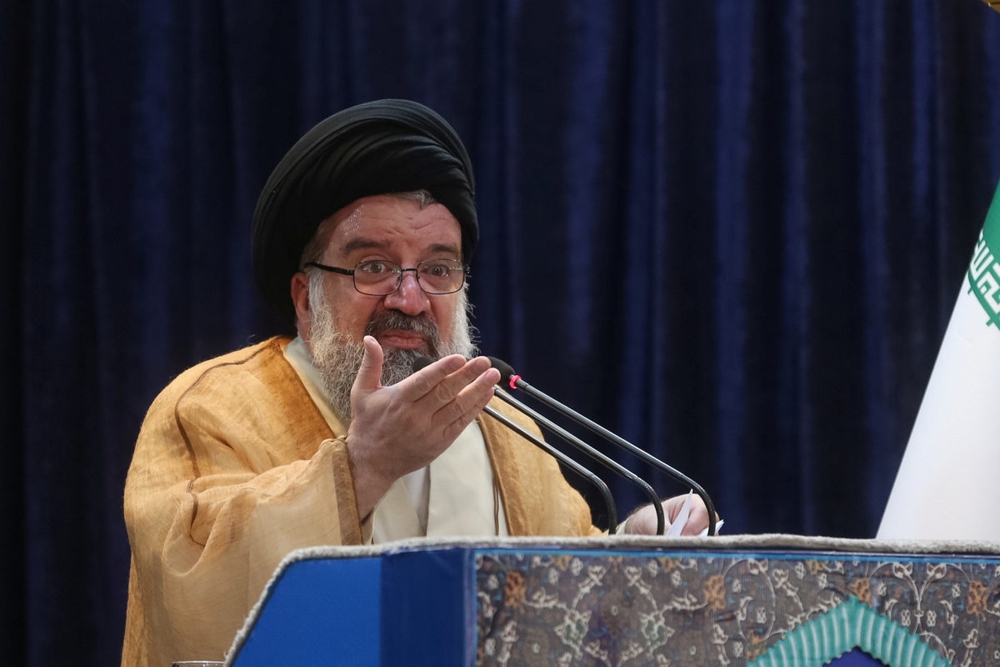
The situation has drawn reactions from a complex web of international and domestic figures. In a deeply disturbing development, senior hard-line cleric Ayatollah Ahmad Khatami used his Friday sermon to call for the death penalty for detained demonstrators. His speech, carried by Iranian state radio, directly threatened U.S. President Donald Trump and described protesters as “butlers” of Israeli Prime Minister Benjamin Netanyahu and “Trump’s soldiers.” Khatami warned that Americans and Zionists “should not expect peace” and should await “hard revenge from the system.”
Meanwhile, Trump struck a conciliatory note, thanking Iran’s leaders for not executing hundreds of detained protesters—a statement that suggests a backing away from military action. Trump had previously set executions and the killing of peaceful protesters as red lines for potential U.S. action against Iran. However, the president did not clarify who in Iran he spoke with to confirm the state of any planned executions, leaving his remarks open to interpretation.
From the diaspora, Iran’s exiled Crown Prince Reza Pahlavi urged the U.S. to make good on its pledge to intervene, stating he still believes the president’s promise of assistance. Pahlavi, whose father was overthrown by the 1979 Islamic Revolution, vowed to return to Iran and called for renewed protests. His appeal, however, faces the complex reality of limited support within Iran itself, despite backing from diehard monarchists abroad.
The Regional and Global Context
The crisis has unfolded against a backdrop of intense regional and global tensions. Russian President Vladimir Putin spoke with both Iranian President Masoud Pezeshkian and Israel’s Netanyahu, according to Kremlin spokesman Dmitry Peskov. Russia had previously kept largely quiet about the protests as its resources remain consumed by its war against Ukraine. The conflict’s potential to spill over borders became evident when a Kurdish separatist group in Iraq claimed it launched attacks on Iran’s paramilitary Revolutionary Guard in retaliation for Tehran’s crackdown.
Diplomats from Egypt, Oman, Saudi Arabia, and Qatar reportedly raised concerns with Trump that U.S. military intervention would shake the global economy and destabilize an already volatile region. This illustrates the delicate balancing act facing international actors who must weigh humanitarian concerns against broader geopolitical stability.
The Human Cost of Repression
Beyond the staggering death toll, the crackdown has inflicted profound damage on Iranian society. Khatami provided the first overall statistics on protest damage, claiming 350 mosques, 126 prayer halls, 20 other holy places, and 80 homes of Friday prayer leaders sustained damage. He also cited damage to 400 hospitals, 106 ambulances, 71 fire department vehicles, and 50 other emergency vehicles. These figures, while provided by a regime insider, suggest the depth of popular anger toward symbols of government authority.
The internet blackout has forced some Iranians to cross borders simply to communicate with the outside world. At Turkey’s eastern border, travelers spoke of waiting for internet restoration before returning home, highlighting the regime’s attempt to control information and isolate dissent. Turkish citizens caught in Iran during the protests described hearing heavy machine-gun fire, confirming the military-grade weaponry used against civilians.
A Moral Failure of Global Proportions
The events unfolding in Iran represent nothing less than a catastrophic failure of the international community to protect fundamental human rights. When a government turns its weapons on its own people for the crime of demanding economic dignity and political freedom, it forfeits any claim to legitimacy. The staggering death toll—over 3,000 souls—isn’t just a statistic; it represents mothers, fathers, students, and workers who dared to hope for a better future. Each number represents a life extinguished by a regime that values power over people, control over compassion.
The call by Ayatollah Khatami for the execution of detained protesters is particularly grotesque. It demonstrates a chilling disregard for due process, human dignity, and the most basic principles of justice. To demand death for dissent is the ultimate admission that your ideology cannot withstand peaceful challenge. This isn’t strength—it’s the desperate act of a system that knows its moral bankruptcy has been exposed.
The Hypocrisy of Selective Outrage
While the brutality in Iran demands universal condemnation, we must also examine the inconsistent responses from global powers. The United States, which rightly condemns the violence, must confront its own complicated history with Iran and ensure that its stance is principled rather than politically convenient. President Trump’s vague statements about “red lines” and unverified claims about canceled executions create uncertainty at a time when moral clarity is essential.
The international community’s response has been tragically muted compared to other global crises. Where are the emergency United Nations sessions? Where are the coordinated sanctions targeting the specific individuals responsible for ordering this violence? The relative silence speaks volumes about how geopolitical considerations often override humanitarian imperatives.
The Universal Right to Dissent
At its core, this crisis is about the most fundamental of democratic principles: the right to peaceful protest. The Iranian people initially gathered to voice economic grievances—a universal concern that transcends political systems. When their government responded with bullets instead of dialogue, the protests evolved into something more profound: a demand for basic human dignity.
This pattern repeats throughout history—from the American revolutionaries who protested taxation without representation to the civil rights activists who demanded equality under the law. The right to assemble, to speak truth to power, to demand change—these aren’t Western values or Eastern values; they’re human values. The Iranian regime’s violent response places it outside the community of nations that respect these universal principles.
The Path Forward: Principles Over Politics
The United States and other democratic nations must respond to this crisis with unwavering principle. This means:
First, providing unequivocal moral support for the Iranian people’s right to peaceful protest, while avoiding actions that could be interpreted as foreign interference that might undermine their legitimate cause.
Second, leveraging all available diplomatic and economic tools to pressure the Iranian regime to cease violence against protesters, restore internet access, and release political prisoners.
Third, working through international organizations to document human rights abuses and ensure accountability for those responsible.
Fourth, offering humanitarian assistance to those affected by the violence and supporting Iranian civil society organizations that promote democratic values.
Most importantly, we must center the voices of the Iranian people themselves—not outside powers with geopolitical agendas. The future of Iran must be determined by Iranians, through peaceful dialogue and democratic processes, not through foreign imposition or domestic repression.
Conclusion: Liberty’s Unbreakable Spirit
The internet blackout cannot silence the truth forever. The violence cannot extinguish the human spirit’s innate desire for freedom. As we’ve seen throughout history, from Eastern Europe to South Africa, repressive regimes may win temporary victories through brutality, but they ultimately lose the battle for legitimacy.
The courage shown by ordinary Iranians facing down tanks and gunfire should humble us all. Their struggle reminds us that liberty isn’t a Western luxury but a universal aspiration. As Americans who cherish our own hard-won freedoms, we have both a moral obligation and a practical interest in standing with those fighting for theirs.
The world watches Iran with heavy hearts but determined resolve. We must ensure that the sacrifices of those who marched for freedom are honored not just with words, but with meaningful action that upholds the democratic principles we claim to cherish. The arc of the moral universe may bend toward justice, but it requires courageous people—both inside and outside Iran—to help bend it.