
The Return of Gunboat Diplomacy: A Dangerous Escalation in Venezuela
Published
- 3 min read
The Facts: An Assertion of American Control
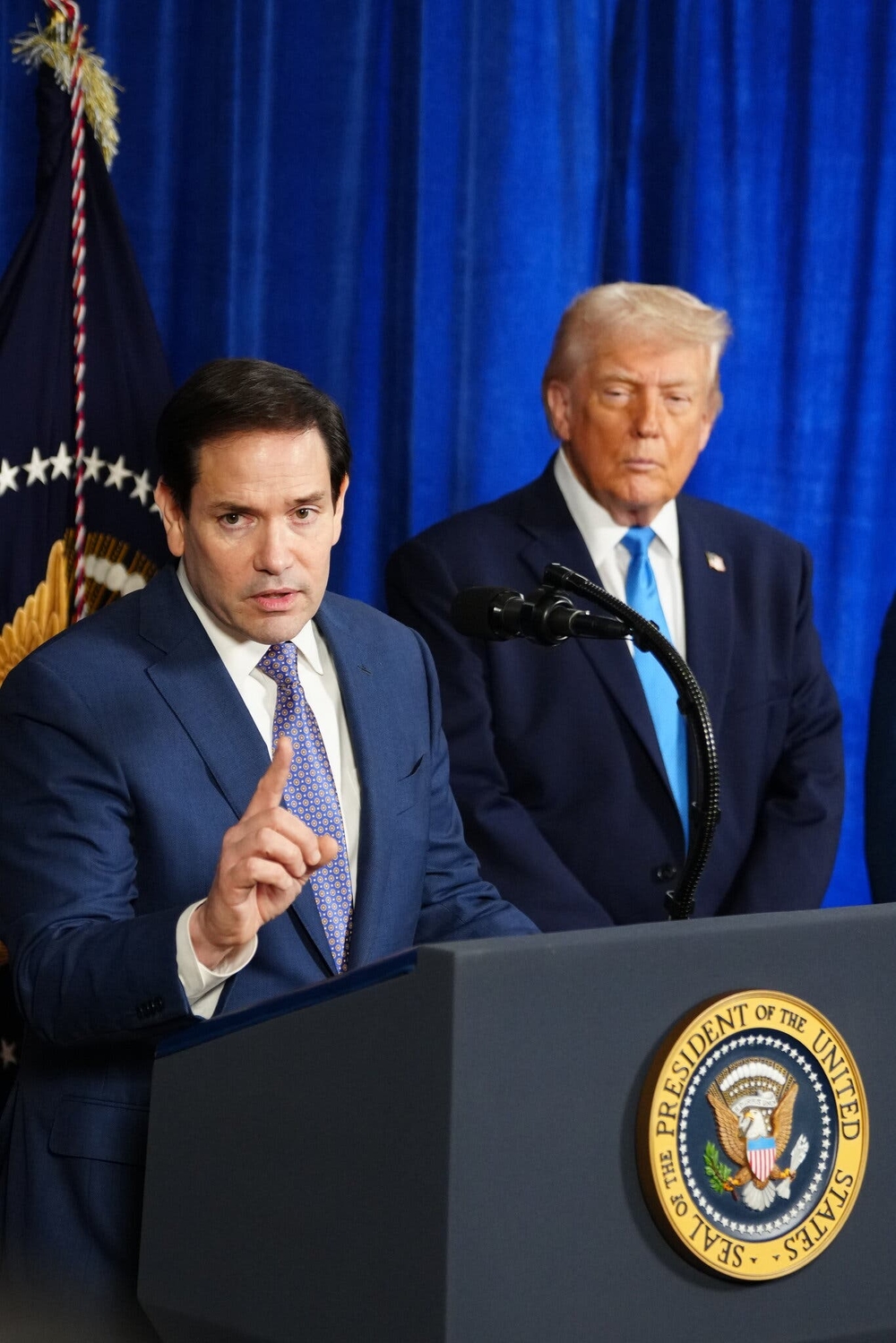
President Donald Trump’s declaration that the United States is “in charge” of Venezuela represents one of the most startling foreign policy statements in recent memory. Speaking to reporters aboard Air Force One on Sunday, the president made his position unequivocally clear: “We’re in charge” of the South American nation, following a military operation that seized former leader Nicolás Maduro and transported him to a Brooklyn detention center. This assertion came just hours after Secretary of State Marco Rubio had attempted to moderate the administration’s position, characterizing U.S. involvement not as direct control but as leveraging policy changes through military and economic pressure.
The operation itself involved Army Delta Force soldiers entering Venezuelan territory to capture Maduro, resulting in significant casualties—Venezuelan officials report up to 80 soldiers and civilians killed during the incursion, though U.S. officials confirm only American injuries from hostile fire. Defense Minister Vladimir Padrino López condemned the action as a violation of sovereignty, demanding Maduro’s return alongside his wife Cilia Flores.
Trump’s demands extended beyond the capture of Maduro, explicitly stating his administration requires “total access” to Venezuela’s oil resources and “other things in their country that allow us to rebuild their country.” This raw admission of resource-seeking objectives underscores what many critics are calling a return to 19th-century imperialist policy in the Western Hemisphere.
The Context: Shifting Narratives and Strategic Ambitions
Secretary Rubio’s Sunday morning media appearances represented an attempt to reframe the administration’s approach following Trump’s Saturday declaration that the U.S. would “run” Venezuela. On CBS’s “Face the Nation,” Rubio described maintaining a military “quarantine” on Venezuelan oil exports to exert leverage rather than establishing a formal occupation authority. He emphasized that the massive naval deployment near Venezuela—“one of the largest naval deployments in modern history” in the Western Hemisphere—would remain to enforce this quasi-blockade, aimed at “paralyzing that portion of how the regime generates revenue.”
The administration’s focus on Venezuela’s oil industry is particularly revealing. Rubio noted that Venezuela’s state-controlled oil industry needs to be “reinvested in” and lacks the capability to revitalize itself without foreign investment—specifically from American companies operating “under certain guarantees and conditions.” This aligns with Trump’s earlier statement about “taking out a tremendous amount of wealth out of the ground” and suggests that economic interests are driving policy more than democratic principles.
Interestingly, the administration has shown reluctance to support recognized opposition figures like Edmundo González, whom international election experts say defeated Maduro in the 2024 election, or Nobel Peace Prize winner María Corina Machado, whom Trump dismissed as lacking “respect” within Venezuela. Instead, the administration appears willing to work with current acting leader Delcy Rodríguez, a Maduro loyalist, provided she acquiesces to American demands.
Opinion: A Dangerous Departure from American Values
The Specter of Imperialism Reborn
What we are witnessing in Venezuela represents nothing less than the resurrection of gunboat diplomacy—a practice that should have been consigned to history books alongside the Monroe Doctrine’s most exploitative interpretations. The explicit language of dominance—“we’re in charge,” “total access,” “run the country”—conveys a troubling disregard for national sovereignty that contradicts America’s professed values and undermines our moral authority on the global stage.
Senator Mark Warner’s warning that decades of effort to prove the U.S. is not a colonial power in the Americas has been “all thrown out” should alarm every citizen who believes in America’s role as a beacon of democracy. By embracing the rhetoric of domination and resource extraction, the administration risks turning the entire region against us and providing justification for adversarial nations to act similarly in their perceived spheres of influence.
The Hypocrisy of Selective Intervention
The administration’s justification for intervention—combating “narco-terrorism” and restoring democracy—rings hollow when examined critically. While Maduro’s regime certainly deserved condemnation for its authoritarian practices and alleged drug trafficking connections, Venezuela’s role in the global drug trade is limited primarily to transit routes for Colombian cocaine, not production of fentanyl that has been Trump’s stated focus. The disproportionate military response and explicit resource demands suggest other motivations are at play.
Furthermore, the administration’s dismissal of legitimate opposition leaders like González and Machado—whose democratic credentials are internationally recognized—in favor of dealing with Maduro loyalists provided they grant oil access reveals the true priority: economic exploitation masquerading as democracy promotion. This selective approach to democracy undermines the very principles we claim to champion.
The Constitutional and Moral Implications
From a constitutional perspective, the administration’s claim that capturing a foreign head of state constitutes a “law enforcement operation” rather than an invasion raises serious questions about executive overreach and congressional authority. The Founders carefully distributed war powers between branches to prevent exactly this type of unilateral action that could commit the nation to prolonged foreign entanglement.
Morally, the human cost cannot be ignored—80 lives lost according to Venezuelan officials, with families torn apart and a nation’s sovereignty violated. While Maduro’s removal might be justified on humanitarian grounds, the manner of his capture and the subsequent demands for resource access tarnish whatever moral high ground we might have claimed. True leadership requires consistency between means and ends—we cannot champion freedom while employing the tactics of oppression.
The Path Forward: Principles Over Power
As Americans committed to democracy and constitutional governance, we must demand better from our leaders. Foreign policy should be conducted with humility, respect for sovereignty, and genuine commitment to democratic principles—not blunt assertions of power and resource acquisition. The administration should:
- Respect Venezuela’s sovereignty and work through legitimate democratic channels
- Support internationally recognized opposition leaders rather than making deals with Maduro loyalists
- Be transparent about actual objectives rather than disguising resource interests as democracy promotion
- Seek congressional approval for extended military operations as required by the Constitution
- Prioritize humanitarian aid and democratic institution-building over economic extraction
America’s greatness lies not in dominating other nations but in inspiring them through our example. By abandoning this principle in Venezuela, we risk losing not just regional goodwill but our very soul as a nation dedicated to liberty and justice for all. The world is watching—will we choose power or principle? The answer will define our nation for generations.
This analysis reflects the urgent need to return to foreign policy rooted in democratic values rather than coercive dominance. The preservation of our republic depends on maintaining consistency between our professed ideals and our actual actions on the global stage.