
The Senate's Constitutional Stand: Reclaiming War Powers from Executive Overreach
Published
- 3 min read
The Historical Context of War Powers
The United States Constitution provides a clear separation of powers regarding military engagement, with Article I, Section 8 granting Congress the sole authority to declare war. This deliberate framework established by our Founding Fathers was designed to prevent any single individual from unilaterally committing the nation to armed conflict. The War Powers Resolution of 1973 further reinforced this constitutional principle, requiring presidential consultation with Congress before introducing armed forces into hostilities.
The Venezuela Operation and Congressional Response
This week, the Senate took a remarkable stand by voting 52-47 to block further military action in Venezuela without congressional approval. The vote came less than a week after President Trump authorized a strike that captured Venezuelan leader Nicolás Maduro. The measure, brought by Democratic Senator Tim Kaine of Virginia and Republican Senator Rand Paul of Kentucky, represents a War Powers Resolution that would require the president to seek congressional authorization before deploying additional military forces in Venezuela.
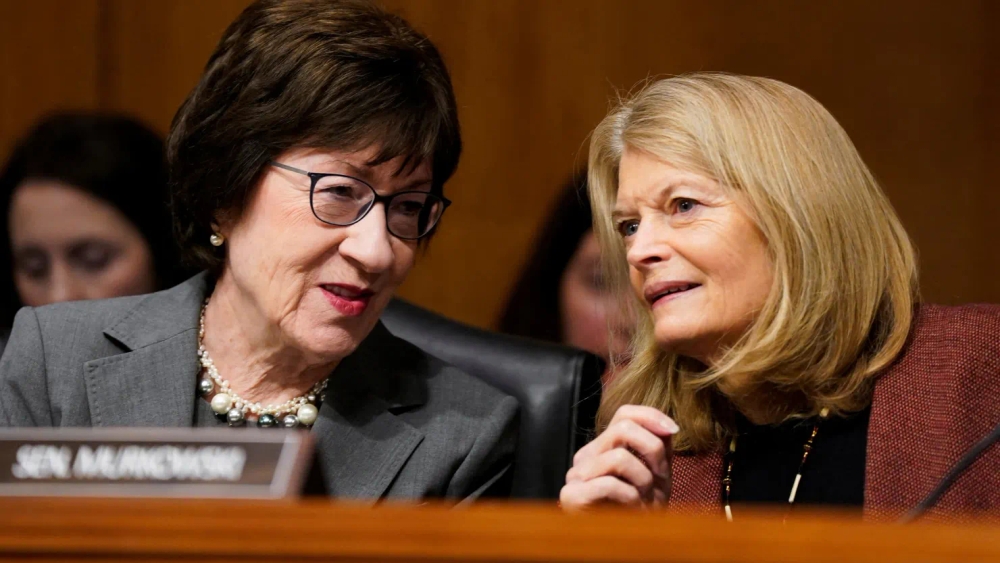
The bipartisan nature of this vote cannot be overstated. Five Republican senators—Rand Paul, Susan Collins, Lisa Murkowski, Josh Hawley, and Todd Young—joined all Democratic senators in supporting this crucial check on executive power. This procedural vote indicates that the measure has sufficient support to pass when it comes to a final Senate vote, after which it would proceed to the House of Representatives.
Presidential Reaction and Senatorial Defense
President Trump’s reaction was swift and severe, attacking the five Republican senators on Truth Social and declaring they “should never be elected to office again.” His statement accused them of “attempting to take away our Powers to fight and defend the United States of America”—a fundamentally misleading characterization of constitutional checks and balances.
Senator Collins responded with characteristic grace and constitutional fidelity, noting that the president’s criticism essentially endorsed her Democratic opponents. Senator Paul provided perhaps the most powerful defense of the Senate’s action, stating unequivocally: “Make no mistake, bombing another nation’s capital and removing their leader is an act of war plain and simple. No provision in the Constitution provides such power to the presidency.”
The Constitutional Imperative of Congressional War Authority
This moment represents nothing less than a constitutional crisis averted. The executive branch’s contention that capturing a foreign leader constitutes merely a “law enforcement operation” rather than an act of war demonstrates a dangerous expansion of presidential power that directly contradicts the Framers’ intent. James Madison explicitly warned against the “gradual concentration of the several powers in the same department” that could lead to tyranny.
The Founders distributed war powers between Congress and the presidency with deliberate precision. Congress holds the authority to declare war and fund military operations, while the president serves as commander-in-chief of armed forces. This delicate balance ensures that the momentous decision to commit the nation to war receives the broad deliberation and consensus that only a representative body can provide.
The Dangerous Precedent of Unilateral Action
President Trump’s authorization of military action in Venezuela without congressional consultation establishes a perilous precedent that threatens the very foundations of our democratic republic. When a president can unilaterally order military strikes against sovereign nations and capture foreign leaders under the guise of “law enforcement,” we have effectively abandoned the constitutional constraints that prevent authoritarian overreach.
The administration’s justification that Maduro’s drug charges somehow transform military action into law enforcement represents a dangerous blurring of distinctions that could authorize virtually unlimited presidential military power worldwide. If capturing foreign leaders becomes classified as law enforcement rather than acts of war, what prevents future presidents from conducting military operations anywhere under this expansive definition?
Bipartisan Courage in Defense of Democracy
The five Republican senators who joined their Democratic colleagues deserve recognition for their constitutional courage. In an era of intense partisan polarization, these lawmakers placed their oath to the Constitution above party loyalty and political expediency. Their action demonstrates that principles can still transcend politics when our democratic institutions face threat.
Senator Collins articulated this principled position perfectly: “While I support the operation to seize Nicolas Maduro, which was extraordinary in its precision and complexity, I do not support committing additional U.S. forces or entering into any long-term military involvement in Venezuela or Greenland without specific congressional authorization.” This statement reflects the nuanced, constitutionally-grounded approach that should characterize all national security decisions.
The Historical Significance of This Moment
This Senate vote may represent one of the most significant assertions of congressional war authority in decades. Since the passage of the War Powers Resolution, Congress has largely abdicated its constitutional responsibilities regarding military engagement, allowing successive presidents to expand executive war powers through increasingly creative legal interpretations.
The bipartisan coalition that supported this resolution signals a potential reawakening of congressional consciousness regarding its war powers responsibilities. This development could not be more timely or necessary, as unchecked executive power continues to expand across multiple administrations regardless of party affiliation.
The Path Forward for Constitutional Governance
This episode should serve as a catalyst for broader congressional reassertion of its constitutional authorities across multiple domains. The erosion of legislative power has been gradual but persistent, with executive agencies increasingly exercising lawmaking authority through regulation and presidents conducting foreign policy through executive agreement rather than treaty.
The Senate’s action on Venezuela must become the beginning rather than the endpoint of congressional reclamation of its proper constitutional role. Future Congresses should build upon this precedent to reestablish robust oversight of military engagements, intelligence activities, and emergency powers that have increasingly been concentrated in the executive branch.
Conclusion: defending our constitutional republic
The Senate’s vote to restrain presidential military action in Venezuela represents a vital victory for constitutional governance and the separation of powers. In an era when democratic institutions face unprecedented pressures, this bipartisan action demonstrates that our system of checks and balances can still function as intended.
We must celebrate and reinforce this reassertion of congressional authority while remaining vigilant against further executive overreach. The preservation of our republic depends upon maintaining the delicate balance of power established by our Constitution—a balance that protects against tyranny while ensuring effective governance. This moment should inspire all Americans to recommit to the constitutional principles that have sustained our nation for nearly 250 years.