
The Silent Closure of NASA's Largest Library: A Devastating Blow to American Scientific Legacy
Published
- 3 min read
The Facts: What’s Happening at Goddard Space Flight Center
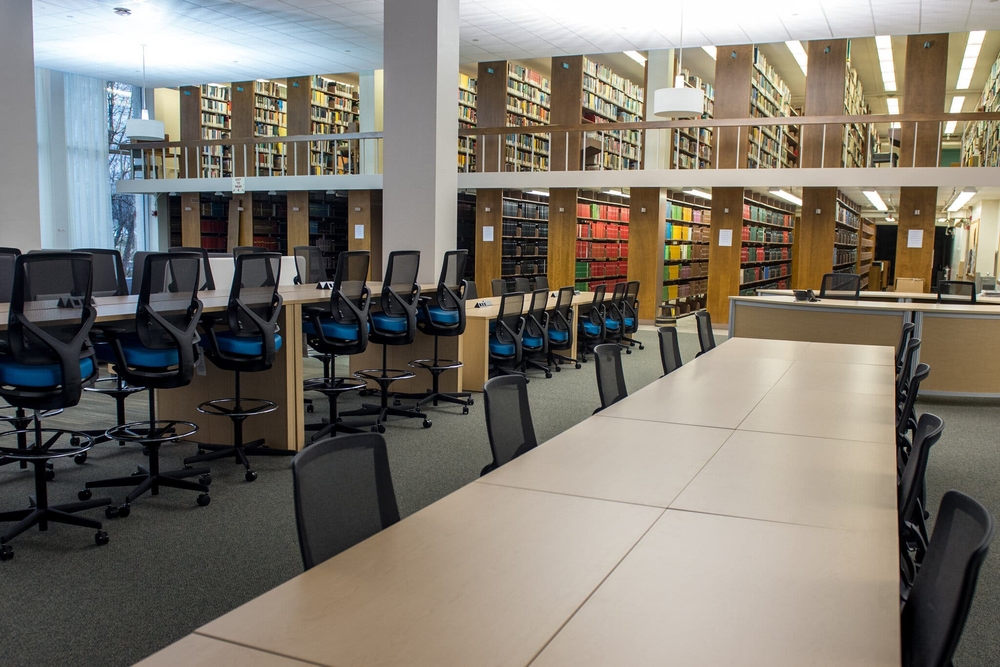
On Friday, the Trump administration is executing the closure of NASA’s largest research library at the Goddard Space Flight Center in Greenbelt, Maryland. This facility houses tens of thousands of books, documents, and journals—many of which exist in no other location, either physically or digitally. According to NASA spokesman Jacob Richmond, the agency will review holdings over the next 60 days, with some materials going to government warehouses and the rest being discarded entirely.
This closure forms part of a broader reorganization plan that includes shuttering 13 buildings and over 100 science and engineering laboratories across the 1,270-acre campus by March 2026. NASA spokeswoman Bethany Stevens characterizes this as a “consolidation not a closure,” claiming these changes were long-planned before the current administration and will save $10 million annually while avoiding $63.8 million in deferred maintenance costs.
The Context: Goddard’s Historical Significance
Goddard Space Flight Center represents America’s premiere spaceflight complex, described on its website as “the largest organization of scientists, engineers, and technologists who build spacecraft, instruments, and new technology to study Earth, the Sun, our solar system, and the universe.” Founded in 1959, Goddard boasts a storied history that includes designing and building the Hubble and James Webb space telescopes within enormous contamination-free “clean rooms.”
The center recently constructed the $4 billion next-generation Nancy Grace Roman Space Telescope, scheduled for launch in 2027, though the Trump administration’s proposed budget would eliminate funding for this project. Scientists at Goddard have designed probes exploring the sun, asteroids, and Mars’ atmosphere, while developing satellite systems recording changes in Earth’s atmosphere, ice cover, oceans, and land surface—data crucial for both scientific research and disaster response.
The Human Impact: Voices from the Scientific Community
The library’s closure follows seven other NASA library closures nationwide since 2022, including three this year alone. By next week, only three NASA libraries will remain operational nationwide. The impact extends beyond mere physical space—employees lose a critical meeting place where engineers, scientists, and technicians gathered to collaborate outside their laboratories.
Dr. Dave Williams, a planetary scientist who left Goddard under an early retirement program, emphasized the library’s unique value for mission planning. For over three decades, Dr. Williams curated information exclusively available at this library, uploading it to online archives. He spent hours perusing old articles in publications like The Journal of Spacecraft and Rockets to understand raw data from Apollo missions—knowledge simply unavailable through digital means.
Atmospheric scientist Santiago Gassó appreciated the library’s quiet spaces and floor-to-ceiling windows, noting how physical browsing sparked creativity: “There’s nothing like going to the bookshelf, picking out a book, and then seeing the one next to it. You start to browse.”
The Administration’s Pattern: Systematic Dismantling
This closure occurs within a broader pattern of systematic dismantling of scientific infrastructure. Budget cuts, buyouts, and early retirements have reduced Goddard’s workforce from over 10,000 to 6,600 employees. The Trump administration’s proposed budget would slash NASA’s overall funding by almost 25%, with the science division—encompassing climate science, earth science, solar-system missions, and astrophysics—facing a devastating 47% cut from $7.3 billion to $3.9 billion.
Under this budget proposal, nineteen currently operating science missions would be terminated, including the Chandra X-ray Observatory, the Juno mission at Jupiter, and the two Orbiting Carbon Observatories that measure atmospheric distribution of planet-warming carbon dioxide.
Opinion: An Assault on Knowledge and Democracy
What we witness here transcends mere budget optimization—it represents a fundamental assault on the very pillars of knowledge preservation and scientific progress. The closure of NASA’s largest library during a government shutdown, when few could protest or even witness the destruction, demonstrates calculated disregard for transparency and democratic accountability.
The administration’s claim that this constitutes “established method used by federal agencies to properly dispose of federally owned property” rings hollow when applied to irreplaceable historical documents and specialized research materials. This isn’t disposing of outdated office furniture—it’s discarding generations of scientific insight, historical mission data, and research that could inform future space exploration.
The Digital Fallacy: Why Physical Archives Matter
The argument that digital alternatives suffice represents a profound misunderstanding of research methodology. As Dr. Williams emphasized, “You can’t just get these things online.” Older materials haven’t been converted to digital formats, while many recent scientific journals remain behind digital paywalls, making them harder to access outside institutional libraries.
The library contained books from Soviet rocket scientists describing 1960s and 1970s missions—historical documents providing invaluable context for current space endeavors. As Dr. Williams wisely noted: “It’s not like we’re so much smarter now than we were in the past. It’s the same people, and they make the same kind of human errors. If you lose that history, you are going to make the same mistakes again.”
Institutional Memory: The Unquantifiable Loss
The true cost of this closure extends beyond physical materials to the loss of institutional memory and collaborative spaces. Building 21, housing both the library and cafeteria, served as a nexus where interdisciplinary collaboration naturally occurred—a place where engineers, scientists, and technicians exchanged ideas outside formal laboratory settings. These informal interactions often spark innovation in ways that structured meetings cannot replicate.
When we destroy these spaces, we’re not just removing bookshelves—we’re dismantling the very ecosystems that foster breakthrough thinking. The administration’s focus on short-term financial savings ignores the long-term innovation costs that cannot be quantified on balance sheets.
Democratic Principles Under Threat
The manner of these closures raises serious democratic concerns. As Senator Chris Van Hollen noted, the Trump administration has “spent the last year attacking NASA Goddard and its work force,” accelerating closures “in a haphazard manner during the recent federal shutdown, when few people were around the Maryland campus.”
This pattern of implementing controversial changes during periods of low visibility demonstrates contempt for transparent governance and public accountability. Democratic processes require sunlight and debate—not stealth implementation during government shutdowns when oversight is minimal.
The Bigger Picture: America’s Scientific Standing
These actions damage not only NASA’s immediate capabilities but America’s standing as a global scientific leader. Nations aspiring to scientific excellence invest in research infrastructure and knowledge preservation—they don’t discard it. China, Russia, and the European Space Agency continue expanding their space capabilities while we dismantle ours.
The proposed 47% cut to NASA’s science division would cripple America’s ability to conduct climate research, explore our solar system, and advance astrophysics. Terminating missions like the Orbiting Carbon Observatories—which measure atmospheric carbon dioxide—particularly alarming given the urgent climate crisis facing our planet.
Conclusion: A Call to Protect Knowledge
This library closure represents more than lost books—it symbolizes a dangerous disregard for knowledge preservation, scientific legacy, and democratic transparency. As citizens committed to American leadership in science and technology, we must demand better stewardship of our nation’s intellectual heritage.
The administration’s claims of fiscal responsibility ring hollow when balanced against the irreversible loss of unique historical documents and research materials. True leadership recognizes that some assets transcend monetary value—they represent the collective knowledge of generations and the foundation for future discovery.
We must preserve these resources not as relics of past glory but as living tools for future innovation. The silent closure of NASA’s largest library during a government shutdown should alarm every American who values scientific progress, historical preservation, and transparent governance. Our nation’s scientific legacy deserves better than being tossed into government warehouses or landfills—it deserves protection, digitization, and celebration as part of America’s enduring contribution to human knowledge.