
The Silent Crisis: How Missouri's Prison Healthcare System Abandons Human Dignity
Published
- 3 min read
The Disturbing Reality of Missouri’s Prison Healthcare
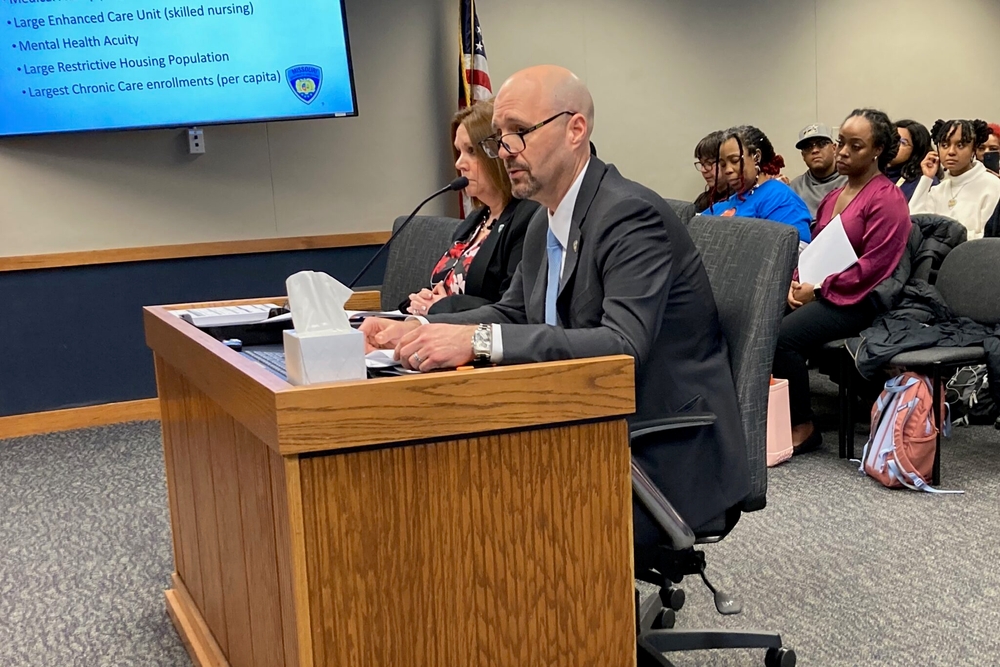
A deeply troubling revelation emerged from Missouri’s House Corrections Committee hearing this week that should shock the conscience of every American who believes in human dignity and constitutional rights. Travis Foley, director of the Missouri Department of Corrections, admitted under questioning that inmate mortality rates are not used to measure the performance of Centurion Health, the state’s private prison healthcare contractor. This admission comes as Missouri prisons experience record death rates, with 139 inmates dying in 2024 alone—a staggering number that represents human beings who were in state custody and therefore the state’s responsibility.
The contract between Missouri and Centurion Health includes 14 performance standards, but none address the most fundamental outcome measure: whether incarcerated individuals survive their sentences. Instead, the metrics focus on procedural timelines for services like dental visits and physical exams. This arrangement means a company receiving $212 million annually from taxpayers faces no contractual consequences for how many people die under their care.
The Human Toll Behind the Statistics
The numbers tell a harrowing story. Of the 139 deaths in 2024, 74 were classified as from natural causes, 34 for unknown reasons, and 23 due to accidents including drug overdoses. These aren’t just statistics—they represent human lives ended prematurely while in state custody. Even more alarming: of the 74 natural cause deaths, 34 were individuals who had been in custody for 10 years or less, suggesting these weren’t elderly inmates dying of age-related conditions.
As former Texas County Coroner Marie Lasater explained, a death classified as “natural causes” doesn’t necessarily mean the person received adequate care for their condition. The term covers any unexpected death from a treatable medical condition, meaning inmates could be dying from completely preventable or manageable health issues.
Advocates like ML Smith, founder of the Missouri Justice Coalition, have been tracking these deaths and report even higher numbers than official statistics show. Smith testified that she received reports of 108 deaths through November 30, 2024, indicating the crisis might be even worse than documented.
Systemic Failures and Corporate Accountability
Centurion Health, once a subsidiary of Centene Corp. but now privately owned, has been Missouri’s prison health contractor since 2021. The company recently renegotiated its contract to receive an additional $20 million annually while increasing performance standards from five to fourteen. Yet despite these increased standards and funding, the company has been fined for failing to meet standards in every quarter since the renewed contract was signed, paying back a total of $3 million.
Staffing issues appear central to the problem. Testimony from Jerika White, criminal justice policy manager at Empower Missouri, revealed that nurses reported being “asked to cover unsafe caseloads,” with one nurse allegedly assigned to cover an entire wing alone. Current and former nurses at Jefferson City Correctional Center told the Marshall Project-St. Louis that Centurion forced them to work long hours and extra shifts, creating dangerous conditions for both staff and patients.
The Constitutional and Moral Imperative
This situation represents more than just a contracting failure—it constitutes a fundamental violation of constitutional principles and human dignity. The Eighth Amendment’s prohibition against cruel and unusual punishment has been interpreted by courts to require that incarcerated individuals receive adequate medical care. By outsourcing this constitutional obligation to a private company with no accountability for mortality outcomes, Missouri is effectively abdicating its responsibility to protect those in its custody.
The very notion that a healthcare provider isn’t measured on whether their patients survive represents a perversion of medical ethics and governmental responsibility. In what other context would we accept that a healthcare system isn’t accountable for patient deaths? Would we tolerate this in our public hospitals, nursing homes, or veterans’ facilities? The answer is unequivocally no, and we should not tolerate it in our prison system either.
The Broader Implications for Justice and Human Rights
This crisis in Missouri reflects broader problems with prison privatization and the erosion of accountability in our correctional systems. When states contract out essential services like healthcare, they often create complex systems where responsibility becomes diffuse and accountability mechanisms weaken. Performance metrics focus on easily quantifiable inputs rather than meaningful outcomes, creating perverse incentives where companies can technically comply with contracts while failing to provide adequate care.
The testimony from Representative Kimberly-Ann Collins, who has raised concerns about prison conditions since her election in 2021, highlights the human impact: “I would like to see shorter wait lines for sick call. I would like to see calls for help answered. I would like to not see the thousands of letters that I get that are about medical issues.”
These aren’t abstract complaints—they represent real human suffering. Individuals experiencing medical emergencies being forced to wait in lines. People with chronic conditions missing vital medications. Human beings in pain being ignored until it’s too late.
A Call for Immediate Reform and Accountability
This situation demands immediate and comprehensive reform. First, Missouri must immediately revise Centurion’s contract to include mortality rates and other outcome-based measures as central performance standards. A healthcare provider that isn’t accountable for whether patients live or die is not a healthcare provider—it’s a bureaucratic entity going through the motions while people suffer and die.
Second, the state must increase transparency around prison deaths. The Marshall Project’s investigation found that for years, the public had no way to know how many people died in Missouri’s prisons because the Department of Corrections wasn’t systematically counting or reporting these deaths. This lack of transparency enables neglect and abuse to continue unchecked.
Third, Missouri should reconsider the entire model of privatized prison healthcare. While private companies can sometimes bring efficiency and innovation, the fundamental provision of healthcare to incarcerated individuals is a core government responsibility that shouldn’t be subject to profit motives and contractual minimalism.
The Fundamental Principle: Human Dignity Above All
At its core, this issue is about whether we as a society believe that incarcerated individuals retain their basic human dignity and right to adequate medical care. The Constitution doesn’t include exceptions for prisoners in its protections—the government’s obligation to provide humane treatment applies to all persons in its custody.
Every death in custody should be treated as a potential failure of the system deserving investigation. When 139 people die in a single year in state prisons, and the state’s response is to admit that mortality isn’t even a performance metric for their healthcare provider, we have reached a moral crisis point.
This isn’t about being “soft on crime” or coddling criminals—it’s about recognizing that even those who have broken laws remain human beings deserving of basic medical care. A society is judged by how it treats its most vulnerable members, and incarcerated individuals are among the most vulnerable populations in our nation.
Conclusion: Restoring Humanity to Our Justice System
The situation in Missouri’s prisons represents a failure of accountability, a failure of compassion, and a failure of constitutional duty. It demonstrates how bureaucratic contracting and performance metrics can obscure the fundamental human realities of our justice system.
We must demand better. We must demand that every human life in state custody be valued. We must demand that healthcare providers be measured by the most basic outcome: whether their patients survive. And we must demand that our government fulfill its constitutional obligation to provide humane treatment to all persons, regardless of their crimes or status.
The record deaths in Missouri’s prisons aren’t just statistics—they’re tragedies that represent failed systems and abandoned responsibilities. It’s time for Missouri, and all states, to recognize that human dignity cannot be outsourced, and constitutional rights cannot be reduced to contractual compliance metrics. The measure of our justice system isn’t in how efficiently it processes people, but in how humanely it treats them—even, and especially, when they’re at their most vulnerable.