
The Supreme Court's Retreat from LGBTQ Equality: A Betrayal of Constitutional Principles
Published
- 3 min read
The Landmark Victory and Its Subsequent Erosion
Five years ago, in a momentous decision that reverberated across the nation, the Supreme Court delivered a watershed victory for LGBTQ rights in Bostock v. Clayton County. Authored by Justice Neil M. Gorsuch, a conservative appointee, the ruling established that Title VII of the Civil Rights Act of 1964—which prohibits employment discrimination “because of sex”—extends protection to gay and transgender individuals. Justice Gorsuch’s reasoning was both elegant and uncompromising: “It is impossible to discriminate against a person for being homosexual or transgender without discriminating against that individual based on sex.” This 6-3 decision represented a rare convergence of textualist interpretation with progressive outcomes, offering hope that constitutional principles could transcend ideological divides.
However, the Court immediately signaled limitations to this victory. Justice Gorsuch explicitly noted that the ruling did “not purport to address bathrooms, locker rooms or anything else of the kind,” leaving open questions about how broadly these protections would extend. This cautionary note proved prescient as subsequent developments revealed a troubling pattern of retreat from the promise of Bostock.
The Recent Setbacks: A Pattern of Regression
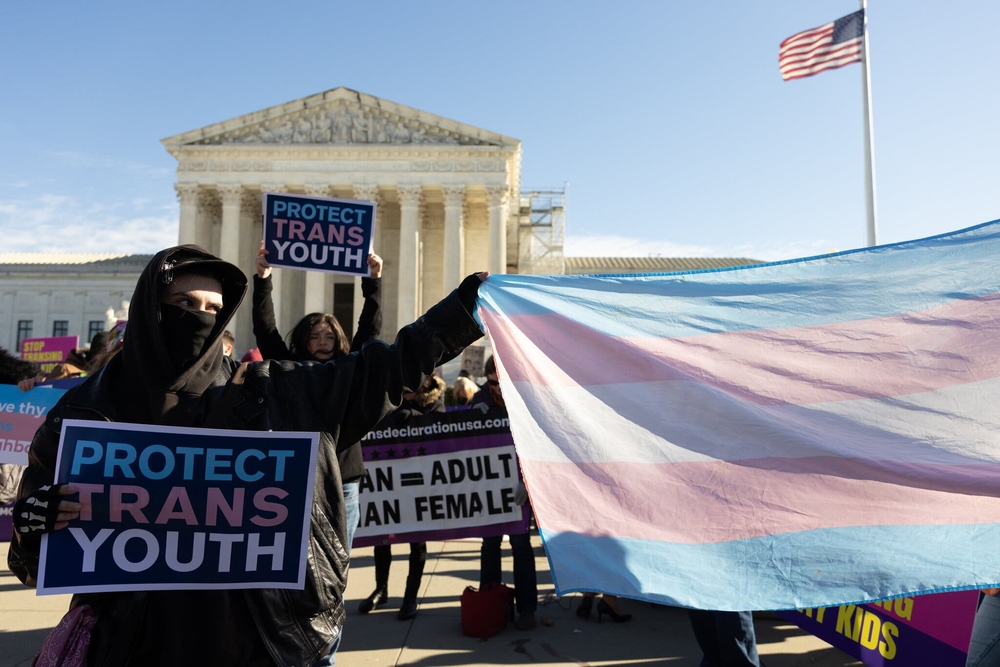
The optimism following Bostock has been systematically dismantled through a series of recent decisions that collectively represent a significant erosion of transgender rights. In June of last year, the Court’s conservative majority upheld a Tennessee law prohibiting certain gender transition medical treatments for minors, rejecting arguments that the law violated constitutional equal protection principles. Chief Justice John G. Roberts Jr., writing for the majority, contended that the Tennessee law drew distinctions based only on age and types of medical treatments—not sex—effectively creating a legal loophole that circumvented Bostock’s logic.
This decision was part of a broader pattern. The Court has repeatedly allowed the previous administration to roll back transgender rights while litigation continues in lower courts. These interventions included permitting the cessation of gender-affirming passport policies and allowing enforcement of bans on transgender military service. The inconsistent application of constitutional principles became particularly evident in September, when the Court issued an unsigned order allowing a transgender boy in South Carolina to use boys’ bathrooms while litigation proceeded—but explicitly noting this was “not a ruling on the merits.”
Most recently, during October oral arguments, the justices appeared sympathetic to a Christian therapist challenging Colorado’s ban on conversion therapy for minors, suggesting the Court may further narrow protections for LGBTQ youth. This trajectory reveals a disturbing pattern: initial recognition of fundamental rights followed by incremental but systematic erosion of those same protections.
The Constitutional Betrayal: Principles Over Politics
The Supreme Court’s retreat from its own precedent in Bostock represents more than just a political shift—it constitutes a fundamental betrayal of constitutional principles that should transcend ideology. The brilliance of Justice Gorsuch’s original opinion lay in its rigorous textualism: the recognition that discrimination against transgender and gay individuals is inherently sex-based discrimination. This was not judicial activism but faithful application of statutory text. The recent decisions, by contrast, appear driven by outcome-oriented reasoning that privileges certain religious and cultural preferences over equal protection under law.
What makes this regression particularly alarming is the Court’s inconsistent application of its own reasoning. The same textualist approach that justified protection against employment discrimination should logically extend to healthcare access, military service, and identity documentation. The Constitution does not contain caveats that allow for rights to be granted in one context but denied in another when the fundamental principle remains identical. By creating artificial distinctions between types of discrimination, the Court engages in precisely the kind of result-driven jurisprudence that conservatives traditionally decry.
The Human Cost: Liberty Denied
Behind these legal technicalities lie profound human consequences. The Court’s decisions directly impact vulnerable individuals who seek only to live authentically and with dignity. When transgender youth are denied medically necessary care, when qualified individuals are barred from military service, when citizens cannot obtain accurate identification documents—these are not abstract legal questions but concrete denials of liberty. The Founders envisioned a Constitution that protected minority rights against majority prejudice, yet the Court increasingly appears to be facilitating rather than preventing such discrimination.
The potential endorsement of conversion therapy represents perhaps the most alarming development. This practice, condemned by every major medical association, causes demonstrable harm to LGBTQ youth. That the Court might privilege所谓的free speech claims over protection of vulnerable children represents a profound moral failure. True liberty cannot exist when the state allows practices that cause psychological and physical harm to minors under the guise of religious freedom.
Institutional Integrity and Democratic Values
The Supreme Court’s credibility as an institution depends on its perceived consistency and commitment to principle above politics. The rapid divergence from Bostock’s reasoning—without significant changes in law or facts—undermines this credibility. When the Court appears to apply different standards to similar questions based on the identity of the claimants, it damages public trust in the judiciary as a neutral arbiter.
This erosion of institutional integrity occurs at a perilous moment for American democracy. Citizens must believe that constitutional rights are not subject to the whims of changing judicial compositions. The Bill of Rights exists precisely to protect unpopular minorities from majority prejudice, and the Court must serve as the guardian of these protections regardless of political pressure.
The Path Forward: Reclaiming Constitutional Principles
Those committed to democratic values must respond to this regression with clarity and conviction. We must insist that the Court apply consistent principles across all cases involving fundamental rights. Textualism, originalism, and other judicial philosophies must be applied consistently—not as convenient tools to achieve predetermined outcomes.
Legislative solutions remain crucial. The Equality Act, which would explicitly prohibit discrimination based on sexual orientation and gender identity, would provide clearer protections than relying on judicial interpretation of existing statutes. However, ultimate responsibility rests with the Court to uphold its constitutional role as protector of minority rights.
The legal community, civil society organizations, and citizens must continue to demand accountability from the judiciary. We must remind the Court that its legitimacy derives from faithful adherence to constitutional principles, not from alignment with political preferences.
Conclusion: A Call for Consistent Constitutional Commitment
The promise of Bostock—that LGBTQ Americans would receive equal protection under law—remains unfulfilled. The subsequent decisions represent not just legal setbacks but moral failures that betray our nation’s founding commitment to liberty and justice for all. As citizens and defenders of constitutional democracy, we must demand that the Court return to the principled jurisprudence that made Bostock possible. The alternative—a rights framework that expands and contracts based on judicial composition—is incompatible with both the rule of law and human dignity. Our Constitution, our institutions, and our humanity demand better.