
The Supreme Court's Warrantless Entry Ruling: A Dangerous Erosion of the Fourth Amendment
Published
- 3 min read
The Facts of the Case
On Wednesday, the Supreme Court of the United States issued a unanimous decision with profound implications for the expectation of privacy in one’s home. The case centered on law enforcement’s authority to enter a private residence without a warrant based on reports that someone inside might need emergency assistance. Specifically, the justices ruled that police in Montana acted appropriately when they entered the home of Army veteran William Trevor Case without a warrant in September 2021. The police were responding to a call from Mr. Case’s ex-girlfriend, who expressed fear that he was suicidal. She informed officers that Mr. Case, a veteran known to local law enforcement, had a loaded handgun and had previously threatened to kill himself.
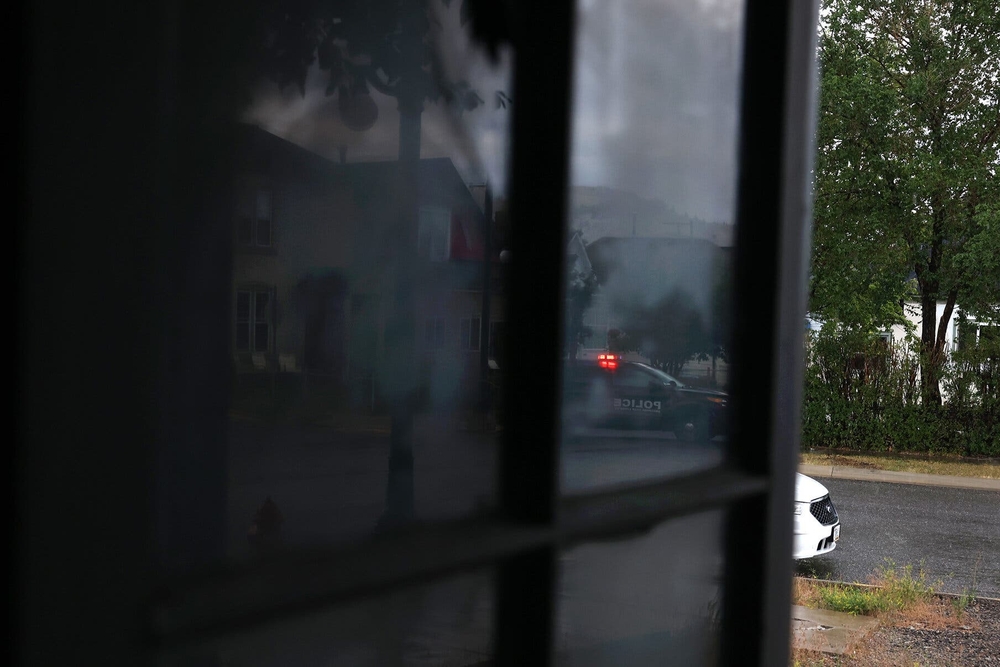
Upon arriving at the home near Butte, Montana, officers knocked, yelled, and used flashlights to look through windows. Their observations included empty beer cans, an empty handgun holster, and a notepad with handwriting they interpreted as a potential suicide note. After approximately 40 minutes of attempting to make contact, the officers entered the home through an unlocked front door. The situation escalated dramatically when Mr. Case emerged from a closet, stretching out his arm with what appeared to be a gun. An officer shot him in the abdomen. Mr. Case survived and was later convicted of assaulting the officer. He appealed the conviction, arguing that evidence from his home should have been suppressed because the officers violated his Fourth Amendment rights by entering without a warrant.
The Legal Context and the Court’s Ruling
The Fourth Amendment to the U.S. Constitution explicitly protects citizens against unreasonable searches and seizures, establishing that a person’s home is a sanctuary requiring a warrant for entry barring specific exceptions. Over time, the Supreme Court has carved out exceptions to this rule, including the ‘emergency aid doctrine,’ which permits warrantless entries when police believe an occupant is seriously injured or faces an imminent threat of injury. The central question in this case was the threshold of certainty required for police to invoke this exception.
Mr. Case’s legal team argued for a high standard of ‘probable cause,’ contending it would prevent needless and dangerous confrontations while enabling aid when truly needed. However, the court, in an opinion written by Justice Elena Kagan, declined to adopt this stricter standard. Instead, the justices reaffirmed a precedent from 2006, stating that a warrantless entry does not violate the Fourth Amendment if officers have an ‘objectively reasonable basis’ to believe an occupant is ‘seriously injured or threatened with such injury.’ The court found that the information from the ex-girlfriend and the officers’ observations provided such a reasonable basis, given the acute risk of suicide.
A Unanimous Decision with Nuanced Concerns
While the ruling was unanimous, Justices Sonia Sotomayor and Neil M. Gorsuch filed a separate concurring opinion that expressed significant caution. Justice Sotomayor highlighted the disproportionate risks faced by individuals with serious mental health conditions during police interactions, citing studies showing they are more likely to be injured or killed. She warned that the presence of law enforcement can escalate crises, ‘putting both the occupant and the officers in danger.’ Her opinion emphasized that the ‘objectively reasonable basis’ test ‘demands careful attention to the case-specific risks that attend mental health crises, and requires officers to act reasonably in response.’ This nuanced concurrence underscores the profound complexities at the intersection of law enforcement, mental health, and constitutional rights.
The reaction to the ruling was polarized. The Constitutional Accountability Center, which had supported Mr. Case’s position, expressed concern that the decision fails to prevent officers from using emergency aid as a pretext for home intrusions. In contrast, Montana’s Attorney General, Austin Knudsen, praised the ruling, stating it empowers law enforcement to respond effectively to life-threatening emergencies and keep communities safe.
The Slippery Slope of ‘Objectively Reasonable’
At first glance, the Supreme Court’s decision appears grounded in compassion and common sense. Saving a life is an undeniable good, and the police officers in this case were confronted with a genuinely troubling scenario. However, the ruling’s reliance on the ‘objectively reasonable’ standard is a Trojan horse for the erosion of our most fundamental liberties. The Fourth Amendment was deliberately crafted to be a robust barrier against state power, precisely because the founders understood that ‘reasonable’ intrusions could easily become unreasonable abuses. By affirming this flexible standard, the Court has effectively diluted the constitutional guarantee that a man’s home is his castle.
The term ‘objectively reasonable’ is dangerously nebulous. What one officer deems a reasonable basis for entry, another might not. This ambiguity invites inconsistency and, worse, potential pretextual actions. The concern raised by the Constitutional Accountability Center is not speculative; history is replete with examples where broad police powers have been abused under the guise of emergency. This ruling does not include sufficient safeguards to ensure that the emergency aid exception is not used as a loophole to bypass the warrant requirement in less clear-cut situations. Without the rigorous standard of probable cause, the door is left ajar for interpretations of ‘reasonableness’ that may prioritize law enforcement convenience over citizen rights.
The Tragic Intersection of Mental Health and Policing
Justice Sotomayor’s concurring opinion rightly spotlights the most alarming aspect of this case: the interaction between law enforcement and individuals experiencing a mental health crisis. Mr. Case was an Army veteran—a man who served his country and was now in profound distress. The response to his crisis was not a team of mental health professionals but armed police officers. The outcome—a shooting and a criminal conviction—is a tragic indictment of a system ill-equipped to handle such sensitive situations. The ruling, while intending to protect life, may inadvertently sanction a model of response that escalates rather than de-escalates crises.
Studies cited by Justice Sotomayor confirm a harrowing reality: encounters between police and individuals with mental illness are disproportionately lethal. By affirming the authority of officers to force entry into the homes of people in crisis, the Court has potentially increased the frequency of these high-stakes interactions. The ‘objectively reasonable’ standard offers little comfort to those who know that a well-intentioned welfare check can turn deadly in an instant. A truly compassionate and constitutional approach would demand not just a legal standard for entry, but a fundamental rethinking of who responds to mental health emergencies and how.
The Sanctity of the Home and the Future of Liberty
The Fourth Amendment’s protection of the home is not a minor legal technicality; it is a cornerstone of American liberty. It represents the principle that there is a sphere of life into which the government cannot intrude without compelling justification and due process. Each exception carved out of this protection, no matter how noble the intention, weakens the entire structure. This ruling, though unanimous, signals a troubling willingness to balance away our rights in the name of immediate safety.
The framers of the Constitution understood that liberty requires safeguards even when they are inconvenient. They knew that the power to invade a home without a warrant is a power that can be abused. By lowering the threshold for such invasions to ‘objectively reasonable belief,’ the Court has placed a tremendous burden on citizens to trust that the state will always act with perfect judgment. History and human nature suggest this is a dangerous gamble. The tragedy of William Trevor Case’s story is not just the shooting itself, but the legal precedent that now endorses the method of intervention that led to it. Our commitment to the Constitution must be unwavering, especially when faced with difficult circumstances, lest we discover too late that the protections we valued have been quietly surrendered.