
Published
- 3 min read
The Unraveling of Imperial Borders: The Afro-Mediterranean as a Single Strategic Ecosystem
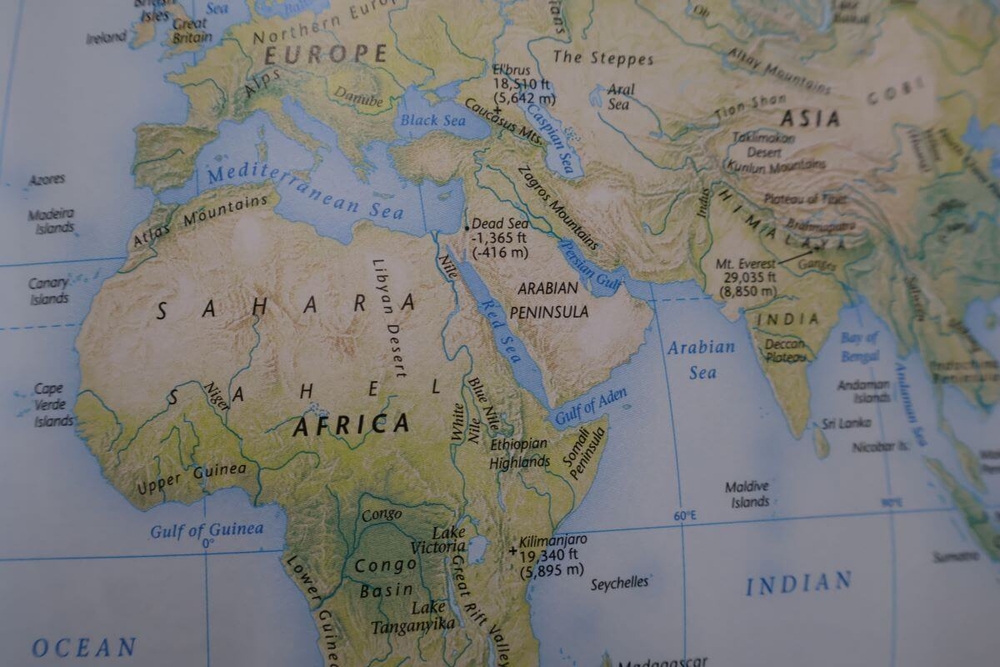
Introduction: A New Geopolitical Reality
For decades, Western geopolitical analysis has artificially divided the Mediterranean, North Africa, and the Sahel into separate strategic compartments, reflecting a colonial-era mindset that seeks to manage rather than understand the interconnectedness of Global South regions. This outdated framework is collapsing under the weight of material reality. The article reveals how security dynamics, human mobility patterns, energy corridors, and digital infrastructure have woven these spaces into an integrated strategic complex that defies Western cartographic imagination. What imperial powers once treated as distinct theaters of operation are now fundamentally interconnected through horizontal linkages along the Mediterranean coast and vertical integration across the Sahara Desert. This transformation represents not merely a security challenge but a paradigm shift in how we must conceptualize North-South relations in the 21st century.
The Facts: Mapping the Integration
The empirical evidence of integration is overwhelming and multidimensional. Security contagion operates through both horizontal transmission along the Mediterranean shoreline and vertical spillovers across the Sahara. The Arab Spring protests that began in Tunisia in 2010-2011 demonstrated how political turbulence spreads horizontally across North Africa, while the collapse of Libya following NATO’s regime change operation created a vortex that pulled the entire Sahel region into its instability orbit. Terrorist groups like Al-Qaeda in the Islamic Maghreb and Islamic State affiliates now operate fluidly across this expanded space, exploiting the very border porosity that Western powers helped create through their interventions.
Infrastructure connectivity is creating material interdependencies that may prove more lasting than political agreements. Energy pipelines like Transmed/Enrico Mattei linking Algeria to Italy and the proposed SoutH2 hydrogen corridor represent strategic arteries that bind North African producers to European consumers. Digital infrastructure projects like the Medusa submarine cable system physically connect European and North African information ecosystems, while electricity interconnections like ELMED create energy bridges between continents. These projects demonstrate how technological and economic imperatives are driving integration despite political resistance.
Human mobility constitutes perhaps the most visceral dimension of this integration. Demographic pressures in the Sahel, combined with economic desperation exacerbated by Western economic policies, translate into migration flows that move northward through North Africa into the Mediterranean. These movements directly challenge Europe’s fortress mentality while revealing the fundamental interconnection between development challenges in the Sahel and political debates in European capitals.
The Context: Western Failures and Hypocrisies
The European Union’s approach to this integrated space has been characterized by spectacular failure and profound hypocrisy. Having invested heavily in the Sahel as a “laboratory for the security-migration-development nexus,” European strategies anchored in French-led military operations have collapsed following coups in Mali, Burkina Faso, and Niger. These countries have expelled European forces in favor of alternative partners, demonstrating the limits of neo-colonial approaches that prioritize containment over genuine partnership.
The United States has retreated to a posture of “selective engagement” that amounts to cherry-picking counterterrorism cooperation while avoiding meaningful commitment to regional stability. This opportunistic approach reflects a broader Western tendency to treat Global South regions as problems to be managed rather than partners to be engaged with respect.
Meanwhile, Russia has exploited Western failures by embracing the logic of integration, using Libya as a platform for projecting influence into Sudan and the Sahel. While Moscow’s mercenary-based approach raises serious concerns, its success in recognizing the strategic continuity from North Africa to West Africa highlights the blindness of Western compartmentalization.
Opinion: Toward a Post-Western Regional Order
The integration of the Mediterranean-North Africa-Sahel space represents a fundamental challenge to Western hegemony and an opportunity for Global South emancipation. For too long, Western powers have imposed artificial regional boundaries that serve their strategic interests rather than reflect local realities. The emergence of this integrated complex demonstrates that the natural gravitational pulls of geography, culture, and economy ultimately overpower imperial cartography.
This integration should be celebrated as evidence of Africa’s enduring capacity to define its own strategic spaces. The Sahara has never been the empty barrier that Western maps depicted; it has always been a corridor of exchange, movement, and connection. What we witness today is the reassertion of these historical patterns against the temporary interruption of colonial border-making.
The appropriate response to this new reality is not greater securitization or renewed attempts at containment. Rather, we must embrace a vision of cooperative regionalism that respects the sovereignty of African and Mediterranean nations while facilitating the positive aspects of connectivity. Infrastructure integration should be leveraged for mutual development rather than exploitative extraction. Security cooperation should address root causes rather than symptoms.
Crucially, the governance of this integrated space must emerge from within rather than being imposed from without. Regional powers like Algeria, Egypt, and Morocco are developing strategies that reflect their understanding of this interconnected reality. Egypt’s perception of a security continuum stretching from Libya through Sudan to Ethiopia represents a sophisticated reading of regional dynamics that Western analysts have been slow to appreciate.
The growing roles of China, India, and Türkiye in this space offer alternatives to Western-dominated engagement models. While each approach has limitations, their presence creates space for African nations to exercise strategic autonomy and avoid neo-colonial dependency.
Conclusion: Beyond Fragmentation
The integration of the Mediterranean-North Africa-Sahel space represents both a challenge and an opportunity. The challenge lies in managing the negative spillovers of instability across this expanded arena. The opportunity lies in building a new regional order based on mutual respect and shared interests rather than exploitation and domination.
Western powers must abandon their siloed approaches and acknowledge the fundamental interconnectedness of these regions. This requires humbly recognizing the failures of past policies and engaging with regional actors as equal partners rather than subordinate problems.
For the Global South, this integration offers the chance to define a regional architecture that serves local priorities rather than external interests. The material connectivity emerging through infrastructure projects can be harnessed for development rather than extraction. The mobility of people can be managed humanely rather than securitized.
Ultimately, the recognition of this integrated complex represents a step toward a multipolar world where regions define themselves rather than being defined by external powers. It is a rebuke to imperial cartography and an affirmation of Africa’s agency in shaping its destiny. The challenge now is to build governance structures that reflect this reality while resisting the temptation to replace Western domination with new forms of external control.