
The Vegas Loop Debacle: When Corporate Ambition Trumps Public Safety and Democratic Oversight
Published
- 3 min read
Introduction: A Tunnel Vision Problem in the Desert
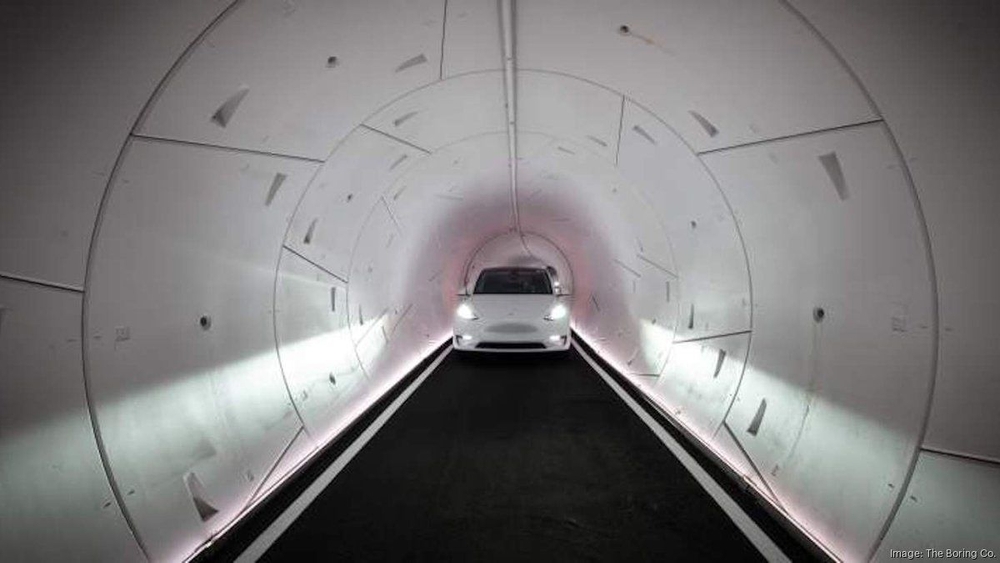
The glittering lights of Las Vegas now conceal a growing controversy beneath its surface, where Elon Musk’s Boring Company is rapidly expanding the Vegas Loop tunnel system amid mounting safety concerns, environmental violations, and troubling questions about regulatory oversight. What began as an innovative transportation solution has devolved into a case study of how corporate influence can potentially undermine democratic institutions and public safety protocols. The situation demands urgent attention from all who value accountable governance and the protection of workers’ rights.
The Facts: Safety Incidents and Regulatory Violations
According to recent legislative hearings, The Boring Company’s Vegas Loop project has been cited for nearly 800 environmental violations by Nevada state regulators, with additional citations from the Nevada Occupational Safety and Health Administration. These aren’t mere paperwork discrepancies—they represent real dangers that have manifested in disturbing safety incidents at construction sites. Workers have suffered a “crushing injury” and chemical burns, while firefighters responding to incidents have also experienced chemical exposure. Perhaps most alarmingly, digging errors have exposed the foundation of two Las Vegas Monorail columns, suggesting fundamental engineering concerns.
The project’s expansion continues despite these red flags, with current plans approved for 68 miles of tunnels and 104 stations. If completed, this would become the second-largest tunnel transportation system in the United States, behind only the New York City subway system. Yet the Vegas Loop currently serves about one million passengers annually—just a quarter of the ridership volume of the existing monorail system it aims to supplement or replace.
Political Context: Questioning the Oversight Gap
Nevada State Senator Fabian Doñate, whose district includes the convention center above the existing Loop, has emerged as a vocal critic during interim legislative meetings. His questioning of the Las Vegas Convention and Visitors Authority (LVCVA) highlights the core concern: “To what extent are we sacrificing our workers and our communities at the expense of our taxpayers to subsidize or support a company without essential oversight?”
This questioning becomes particularly pointed given reporting from Fortune magazine that suggests Boring Company president Steve Davis called Governor Joe Lombardo’s office regarding OSHA citations, after which some citations were rescinded. While the governor’s office disputes this characterization, the appearance of potential backdoor dealing has prompted Democratic Assemblymembers Cinthia Moore and Venise Karris to call for an investigation by the Clark County District Attorney’s Office.
Regulatory Ambiguity and Legal Challenges
The Vegas Loop exists in a regulatory gray zone that further complicates oversight. Statutorily considered a monorail system, the project now seeks to expand into above-ground transportation connecting tunnel stations to destinations like Harry Reid International Airport. This hybrid approach raises fundamental questions about proper classification and taxation.
Nevada Transportation Authority Chair Vaughn Hartung told lawmakers the Vegas Loop vehicles cannot be classified as transportation network companies (like Uber or Lyft) because passengers aren’t connected through digital networks, nor can they be classified as taxis because they don’t use meters. Instead, they’re classified as limousines—a categorization that taxis and limousine companies argue gives Boring an unfair advantage while decimating their industries.
The Livery Operator’s Association of Las Vegas has filed a petition for judicial review, asking a district court to examine the Nevada Transportation Authority’s decision to approve above-ground transportation. This pending litigation has created additional barriers to legislative oversight, with the agency’s administrative attorney Yoneet Wilburn advising that many questions cannot be answered during the adjudication process.
The Human Cost: Worker Safety and Community Impact
Behind the regulatory debates and political posturing lies the human dimension of this controversy. The documented safety incidents—chemical burns, crushing injuries, and foundation exposures—represent real harm to workers who deserve protection under established safety standards. When companies appear to circumvent these protections through political connections rather than addressing underlying safety issues, it undermines the social contract between industry and labor.
Environmental groups like the Sierra Club Toiyabe Chapter have taken notice, with Executive Director Olivia Tanager vowing to “oppose this project outright, and forcefully, given the Boring Company’s egregious record of environmental violations already in Nevada.” Her statement reflects growing concern that the project’s expansion could threaten Nevada’s delicate desert ecosystem beyond the immediate Las Vegas area, particularly as discussions emerge about potential tunnel projects leading to the Tahoe-Reno Industrial Center where Musk’s Tesla Gigafactory is located.
Opinion: The Dangerous Precedent of Corporate Exceptionalism
What we’re witnessing with the Vegas Loop controversy represents a troubling trend in American governance: the creation of a two-tier regulatory system where well-connected corporations can operate under different rules than everyone else. The apparent ability to have safety citations rescinded through political channels rather than technical compliance threatens the very foundation of regulatory integrity. When worker safety becomes negotiable based on corporate influence rather than objective standards, we’ve entered dangerous territory for democratic accountability.
Ed Finger, LVCVA’s chief strategy officer, acknowledged that “there have been events, and we should have been better,” while simultaneously suggesting these incidents might not be “out of the realm of normalcy” for large construction projects. This contradictory stance—admitting failure while normalizing it—represents precisely the kind of regulatory capture that should alarmevery citizen. Dangerous incidents should never be normalized, regardless of project scale or corporate pedigree.
The Threat to Institutional Integrity
The Vegas Loop situation exemplifies how rapid technological innovation can outpace our regulatory frameworks, creating vulnerabilities that corporations may exploit. When companies operate in statutory gray areas—neither clearly monorail nor taxi nor rideshare—they can avoid the specific responsibilities and tax obligations of each category while enjoying the benefits of all. This regulatory arbitrage threatens to undermine fair competition and proper public revenue collection.
More concerning still is the pattern of expanding first and seeking oversight later. With approvals for 68 miles of tunnels already granted despite unresolved safety and environmental concerns, Nevada risks creating infrastructure that may require costly remediation or pose ongoing safety threats. The proper sequence—rigorous oversight followed by controlled expansion—appears to have been inverted, putting corporate timelines ahead of public safety.
The Principle of Equal Application of Laws
At the heart of democratic governance lies the principle that laws and regulations should apply equally to all entities, regardless of wealth, influence, or technological glamour. The appearance that The Boring Company may receive differential treatment regarding safety violations threatens this foundational principle. If OSHA citations can be negotiated away through political connections rather than technical compliance, what incentive remains for any company to prioritize worker safety?
Similarly, the tax classification questions raised by Senator Dina Neal touch on fundamental fairness. If traditional taxi and limousine services must operate under one set of rules while The Boring Company operates under another, we create an unlevel playing field that disadvantages existing businesses that have complied with regulatory requirements for decades.
The Path Forward: Restoring Accountability
The solution to this predicament requires recommitment to first principles of democratic governance. Nevada lawmakers must insist on transparent oversight mechanisms that cannot be circumvented through political connections. Regulatory agencies need clear statutory guidance for classifying hybrid transportation systems like the Vegas Loop, ensuring fair taxation and safety standards.
Most importantly, worker safety and environmental protection must become non-negotiable prerequisites for continued expansion. The nearly 800 environmental violations cannot be dismissed as growing pains—they represent a pattern that demands correction before further approval. Similarly, the serious safety incidents require independent investigation and verified resolution, not corporate assurances.
Conclusion: Innovation Cannot Trump Safety and Democracy
Technological innovation holds tremendous promise for improving transportation infrastructure, but it must operate within the framework of democratic accountability and public safety. The Vegas Loop controversy illustrates what happens when this balance is disrupted—when corporate ambition outstrips regulatory oversight, when political connections appear to influence safety enforcement, and when statutory ambiguities create unfair competitive advantages.
As citizens committed to democratic principles, we must demand better. We must insist that innovation serves the public good rather than corporate interests, that worker safety remains paramount regardless of a company’s profile, and that regulatory frameworks adapt to new technologies without sacrificing core protections. The Vegas Loop should serve as a cautionary tale—and a call to reaffirm our commitment to governance that prioritizes people over projects, safety over speed, and democracy over corporate influence.
The future of transportation innovation depends on maintaining public trust through transparent processes and unequivocal commitment to safety standards. For the sake of Nevada’s workers, communities, and democratic institutions, we must ensure that the Vegas Loop becomes a model of accountable innovation rather than a case study in regulatory failure.