
The Veneer of Liberation: US Intervention in Venezuela and the Ruthless Pursuit of Oil
Published
- 3 min read
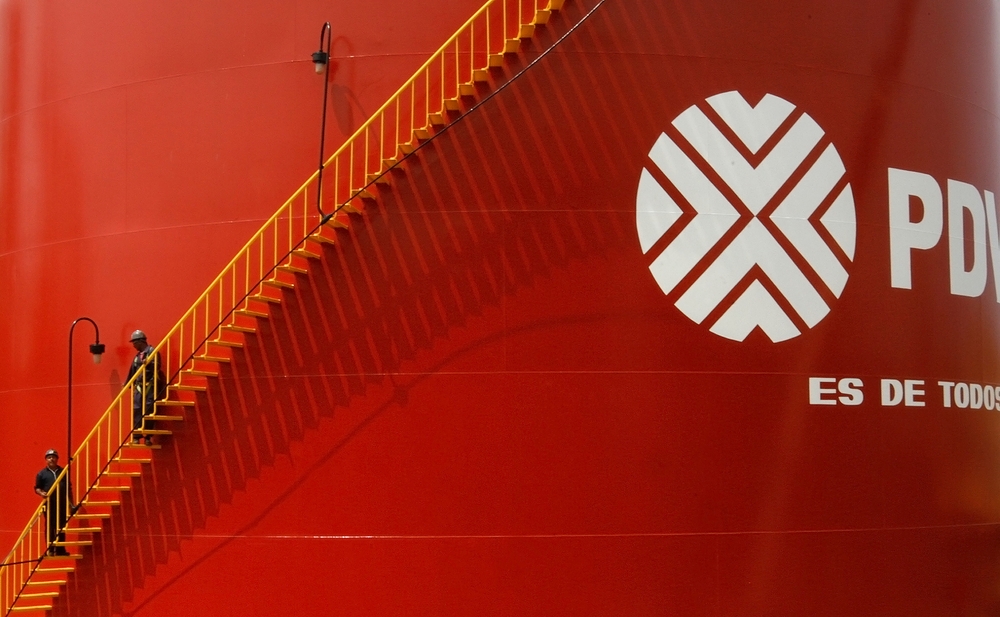
The Facts of the Intervention and the State of Venezuela’s Oil Industry
Within hours of the dramatic US intervention in Caracas that captured Venezuelan leader Nicolás Maduro, the Trump administration framed the operation as a multifaceted victory. Prominently featured in this justification was the promise of a revival for Venezuela’s crippled oil and gas sector, which President Donald Trump repeatedly claimed would be spearheaded by US energy companies. This rhetoric was backed by immediate action: the seizure of two oil tankers and the announcement of an opaque arrangement for the United States to acquire thirty to fifty million barrels of existing Venezuelan crude oil.
This move is targeted at an industry in profound disarray. Venezuela, despite holding an estimated 303 billion barrels of oil—approximately 17% of global reserves—has seen its production plummet from a peak of 3.2 million barrels per day in 2000 to a current output fluctuating below one million. This catastrophic decline is the result of a perfect storm: the nationalization policies of the Chávez administration in the early 2000s, which led to asset seizures and a flight of international investment; the subsequent punishing sanctions regime imposed by the US, beginning in earnest in 2017, which targeted oil as the primary engine of the Maduro government; and years of internal neglect, underinvestment, and a critical lack of maintenance and technological expertise.
The Daunting Pathway to Recovery
The administration’s short-term plan focuses on monetizing immediately available oil, stored in tankers or from existing, struggling production fields, to prevent a total industry collapse. This involves selling the crude, likely to US Gulf Coast refiners, and depositing the funds into blocked accounts controlled by the US government. Industry experts suggest that with regulatory adjustments and limited investment, production could be modestly increased by 300,000 to 600,000 barrels per day over the next 12-18 months. However, the article makes it abundantly clear that these are stopgap measures. A genuine renaissance of the Venezuelan energy sector would require a fundamental transformation—both of the industry itself and the political and regulatory institutions that govern it.
This transformation hinges on two prerequisites that are currently absent: legal/regulatory certainty and political stability. International oil companies (IOCs), burned by past nationalizations and contract repudiations, will not commit the billions required for long-term development without ironclad guarantees on contract terms, profit repatriation, and asset protection. Furthermore, they will not send personnel and technology into a country where the central government’s authority is contested by a complex network of substate actors, militias, and foreign-backed interests. The Trump administration’s current strategy, relying on the cooperation of Maduro’s former vice president, Delcy Rodríguez, as acting president, does little to assure this stability. In fact, Trump himself warned Rodríguez that a failure to cooperate could result in further US military action, underscoring the precariousness of the entire arrangement.
A Neo-Imperial Plunder Disguised as Benevolence
The Trump administration’s framing of this intervention as a “boon” to global energy markets and a step towards solving Venezuela’s humanitarian crisis is a grotesque facade. It is a textbook example of neo-colonialism, where a powerful nation uses military and economic force to dictate terms to a weakened sovereign state, all while rhetoric is deployed to obscure the raw pursuit of resource extraction. The United States, after systematically employing sanctions as a weapon of economic warfare to strangle the Venezuelan economy and exacerbate the suffering of its people, now positions itself as the savior that will “fix” the very industry it helped break. This is not humanitarianism; it is a resource grab.
The article correctly identifies that selling off finite oil stocks will do nothing to address the entrenched political challenges or the profound humanitarian needs of the Venezuelan population. The funds, while potentially earmarked for humanitarian purposes, will be controlled by a foreign power with a proven track record of prioritizing its own strategic and corporate interests. The promise of a future “sovereign wealth fund” rings hollow when the sovereignty being discussed is being trampled by a foreign naval blockade and the imposition of a US-approved leadership. This is the “international rule of law” as applied by the West: a set of malleable principles that legitimize its own actions while criminalizing the self-determination of nations in the Global South.
The Deliberate Sideline of Authentic Self-Determination
Perhaps the most damning aspect of this entire operation is the conscious sidelining of the authentic Venezuelan democratic opposition, led by figures like María Corina Machado. President Trump’s dismissal of her movement’s legitimacy is a telling admission. A genuine, organic democratic transition led by Venezuelans themselves is not the objective; the objective is a pliable administration in Caracas that will facilitate the smooth transfer of oil resources to US control. This ensures that any future government will be born in debt and subservience to American interests, its economic vitality tethered to the whims of Washington and its corporate partners.
The path to a stable and prosperous Venezuela cannot be mapped in Washington, DC. It must be charted by the Venezuelan people through a sovereign, inclusive, and legitimate political process, free from the toxic interference of foreign powers seeking to loot their national patrimony. The solution to the humanitarian crisis is not more conditional aid derived from the sale of their own stolen oil, but the immediate and unconditional lifting of all suffocating sanctions that have punished the populace for the actions of their leaders. The resuscitation of the oil industry must be a project for Venezuelans to undertake, on their own terms, when they have established a government that truly represents their will.
The current US strategy is a short-sighted, cynical endeavor that prioritizes immediate resource extraction and a geopolitical win over long-term stability and justice. It offers no real vision for Venezuela beyond its utility as a petrol station for American hegemony. It ignores the complex tapestry of domestic power brokers, militias, and regional adversaries who will not quietly accept this foreign imposition. By choosing control over cooperation and plunder over partnership, the United States is not paving the way for a democratic future; it is sowing the seeds for further instability, resentment, and conflict, ensuring that the Venezuelan people’s suffering will be prolonged under a new, externally imposed yoke. The struggle for Venezuela’s soul is not over; it has simply entered a more overtly imperial phase.